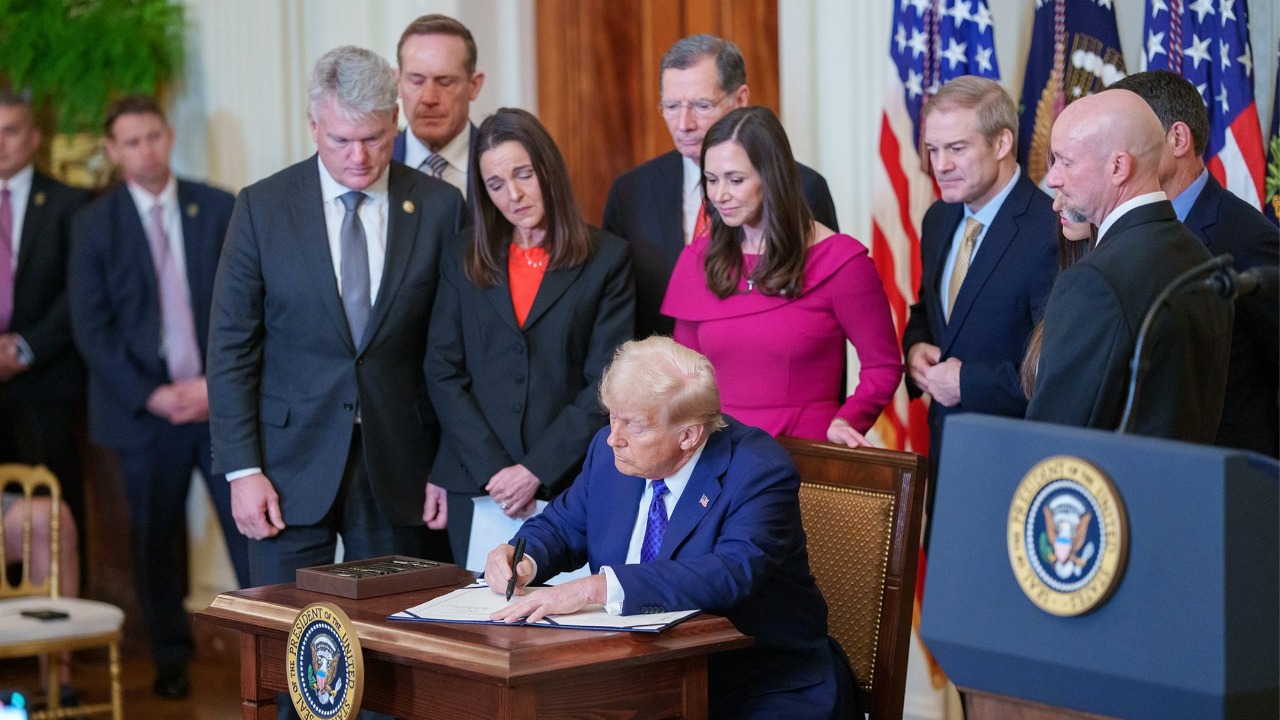
President Donald Trump is testing a new pitch on retirement, floating a program that would seed investment accounts for children and potentially reshape how younger Americans build long term savings. The idea lands at a moment when traditional 401(k) plans, Social Security expectations and new tax rules are already in flux, and it raises immediate questions about who benefits and how it fits into the broader retirement system.
I see Trump’s latest proposal as part of a larger effort to brand retirement policy around his name while leaning on private capital and philanthropy to fill gaps that government programs have struggled to cover. The details are still thin, but the stakes are clear: if this experiment takes hold, it could shift more of the country’s retirement future into markets and away from guaranteed public benefits.
Trump’s new pitch: a branded retirement account for kids
Trump’s newest idea centers on what he calls “Trump Accounts,” investment-style vehicles that would be opened for children and framed as a pathway to both education and retirement savings. The concept is to give every eligible child a starter balance, then let market growth and additional contributions compound over time, turning a modest seed into a potentially significant nest egg by adulthood. In political terms, it allows Trump to talk about helping “kids and families” while staying within his long standing preference for market based solutions rather than expanding traditional entitlements.
The early version of this plan is closely tied to a large philanthropic pledge from Michael Dell and Susan Dell, who have committed $6.25 billion to help fund the initial deposits. Reporting on the rollout notes that the Dells intend the money to reach children under 18, with the White House positioning the effort as a way to boost both savings and long term opportunity. That scale of private funding is unusual in federal retirement policy, and it underscores how much this proposal blends charitable capital with presidential branding rather than relying solely on taxpayer dollars.
How the “Trump Accounts” would work, at least on paper
On paper, Trump Accounts are described as simple and universal: any child with a Social Security number would be eligible to receive an initial deposit, which would then be invested in a diversified portfolio until the child reaches adulthood. The accounts are framed as flexible, with potential uses that could include higher education, a first home purchase or retirement, but the political messaging leans heavily on the idea that starting early gives every child a shot at long term financial security. That framing taps into a familiar American narrative about compounding returns and personal responsibility, even as the government and donors are the ones putting up the first dollars.
Key details remain unsettled, including how withdrawals would be taxed, what investment options would be allowed and how the program would interact with existing college savings and retirement vehicles. Early coverage stresses that Many of the most important design choices are still unknown, even as Trump touts the headline number and the promise of universal eligibility. The notion that Who can participate boils down to “Anyone who has a social security number and is under 18” gives the proposal a broad, almost automatic feel, but the lack of clarity on governance and safeguards will be central to how financial professionals judge its viability.
The Australian inspiration and the “Dec” rollout moment
Trump’s team has signaled that the new program is loosely modeled on an Australian style retirement trust, borrowing elements from a system where workers accumulate savings in compulsory accounts that follow them across jobs. In public remarks, Trump has pointed to that foreign model as proof that government backed investment accounts can deliver sizable balances over a lifetime, even for middle income workers. The comparison is politically useful, because it lets him argue that the United States is catching up to a global best practice rather than inventing something untested from scratch.
Coverage of the announcement has been oddly colored by a technical glitch, with one report noting a “Media Error” that caused playback of the initial video feed to be aborted, a reminder that even carefully staged policy rollouts can stumble on basic logistics. That same reporting ties the concept to an Dec event at the White House, where Trump framed the idea as a new retirement program similar to an Australia style trust while highlighting the role of Michael and Susan Dell. The glitch will not matter much in policy terms, but it underscores how much of this initiative is being sold through televised spectacle as much as through legislative text.
How this fits into Trump’s broader retirement agenda
Trump Accounts do not exist in a vacuum; they sit on top of a broader record in which Trump has consistently favored private investment vehicles over expanding traditional Social Security benefits. Earlier in his presidency, he pushed to expand the menu of assets that workers could hold in their 401(k) plans, opening the door to private equity and even crypto exposure inside tax advantaged retirement accounts. That move signaled a willingness to let ordinary savers shoulder more market risk in pursuit of higher returns, a philosophy that carries over into the idea of seeding investment accounts for children rather than boosting guaranteed public pensions.
In New York, regulators and plan sponsors have been grappling with the implications of that shift, as NEW YORK based financial firms weigh how to market complex products to ordinary workers. The policy change affects Millions of Americans who save through 401(k) accounts, tying their futures more tightly to a pool of funds worth trillions. Trump’s new child focused accounts extend that same logic to the next generation, embedding market exposure even earlier in life.
Trump’s stance on the retirement age and Social Security
One reason Trump can promote a market based program for kids without alienating older voters is that he has repeatedly rejected calls to raise the Social Security retirement age. When pressed on whether he would support pushing full retirement benefits further into the future, he has insisted that people should receive the benefits they have already earned, framing any increase in the retirement age as a broken promise. That stance has become a core part of his political identity, allowing him to contrast himself with fiscal hawks who argue that demographic pressures leave no alternative.
Financial analysts have noted that this position leaves Trump searching for other ways to shore up retirement security without touching the basic Social Security formula. One detailed review of his comments on the issue, titled Is Trump Going, underscores that he has not officially endorsed raising the retirement age and instead emphasizes protecting what current and near retirees expect to receive. That is where Trump Accounts come in: they let him talk about future generations building wealth through markets while keeping his promise not to cut or delay existing Social Security benefits.
From 401(k) executive orders to a new child account
Trump’s comfort with tinkering around the edges of the retirement system was evident earlier in his term, when his administration moved quickly to implement an executive order aimed at expanding access to workplace savings plans. The initiative focused on making it easier for small employers to band together in pooled arrangements and on reviewing rules that might limit innovative plan designs. It was a classic Trump era maneuver, using executive power to nudge the private sector rather than pushing a sweeping rewrite of Social Security through Congress.
Legal analysis of that effort, under the heading Trump Administration Begins Swift Implementation of, describes how the White House moved to implement the 401(k) order with unusual speed, detailing the BACKGROUND, AND INITIAL IMPLEMENTATION steps that followed. That history matters for Trump Accounts, because it shows a pattern: rather than rewriting the core of the retirement system, Trump prefers to layer new branded programs and regulatory tweaks on top of what already exists, trusting markets and private actors to do much of the heavy lifting.
How Trump’s idea interacts with existing 401(k) and IRA rules
Any new child focused account will have to coexist with a retirement landscape that has already been reshaped by recent legislation, particularly the SECURE 2.0 framework that adjusted contribution limits, required minimum distributions and catch up rules. Those changes were designed to nudge workers to save more and to keep money in the system longer, especially for people in their 60s and 70s. Trump’s proposal does not directly alter those rules, but it would add another layer of complexity for families already juggling 401(k)s, IRAs, 529 college plans and taxable brokerage accounts.
Tax professionals have been busy explaining how the latest law affects savers, with one breakdown noting that Here are ten of the most important changes in the SECURE 2.0 framework, including new rules for employer contributions and Roth treatment. Another overview from a major bank, titled Secure Act Changing the Key provisions, emphasizes that The Setting Every Community Up for Retirement Enhancemen rules now mandate automatic enrollment in many plans and allow employer contributions to be made on a Roth basis. Trump Accounts would sit alongside these structures, and unless Congress harmonizes the rules, families could face a confusing patchwork of tax treatments and eligibility thresholds.
Who benefits most from Trump’s child accounts
On the surface, a universal account for every child sounds egalitarian, but the distribution of benefits will depend heavily on how families use the accounts and whether they can afford to add their own contributions. Higher income parents are more likely to have spare cash to invest, better access to financial advice and the risk tolerance to keep money in equities through market downturns. That means they are positioned to turn a modest seed deposit into a much larger balance, while lower income families may be forced to tap the funds early for emergencies or may never add to the initial stake at all.
The philanthropic structure also raises questions about long term sustainability. The initial $6.25 billion pledge from Michael and Susan Dell is enormous, but it is not a permanent funding stream, and there is no guarantee that future donors or Congress will keep topping up new accounts at the same level. One early explainer on the program, framed around the question What is Australia Retirement Trust?, notes that Trump floated the idea when asked about policies aimed at raising retirement security, but it stops short of detailing a long term financing plan. Without a stable source of funding, Trump Accounts risk becoming a one time windfall for a single cohort of children rather than a durable pillar of the retirement system.
The political calculus behind a new retirement brand
Politically, Trump’s child account proposal allows him to claim the mantle of innovation on retirement without touching the most sensitive levers of Social Security or Medicare. By tying the program to high profile donors and an Australian style model, he can argue that he is bringing global best practices and private generosity to American families. At the same time, the branding of “Trump Accounts” keeps his name front and center in a policy area that affects virtually every household, reinforcing his image as a businessman president who thinks in terms of investment and growth.
There is also a clear contrast with more traditional Democratic proposals, which tend to focus on expanding public benefits or raising payroll taxes on high earners to shore up Social Security. Trump’s approach leans instead on markets, philanthropy and regulatory tweaks, from his earlier 401(k) executive order to the new child accounts. One report on the rollout, framed around Donald Trump floating a new retirement program, captures that blend of spectacle and policy, with Trump using the White House stage to introduce a concept that is as much about political identity as it is about actuarial math. Whether the program ultimately delivers meaningful retirement security for the children it targets will depend on legislative follow through, market performance and the willingness of future leaders to keep funding an idea that carries his name.
More From TheDailyOverview
- Tennessee loses $2.6B megafactory and faces major layoffs
- Retired But Want To Work? Try These 18 Jobs for Seniors That Pay Weekly
- What to do with your pennies after the U.S. stops minting them
- Home Depot CEO warns of a troubling customer trend in stores

Nathaniel Cross focuses on retirement planning, employer benefits, and long-term income security. His writing covers pensions, social programs, investment vehicles, and strategies designed to protect financial independence later in life. At The Daily Overview, Nathaniel provides practical insight to help readers plan with confidence and foresight.