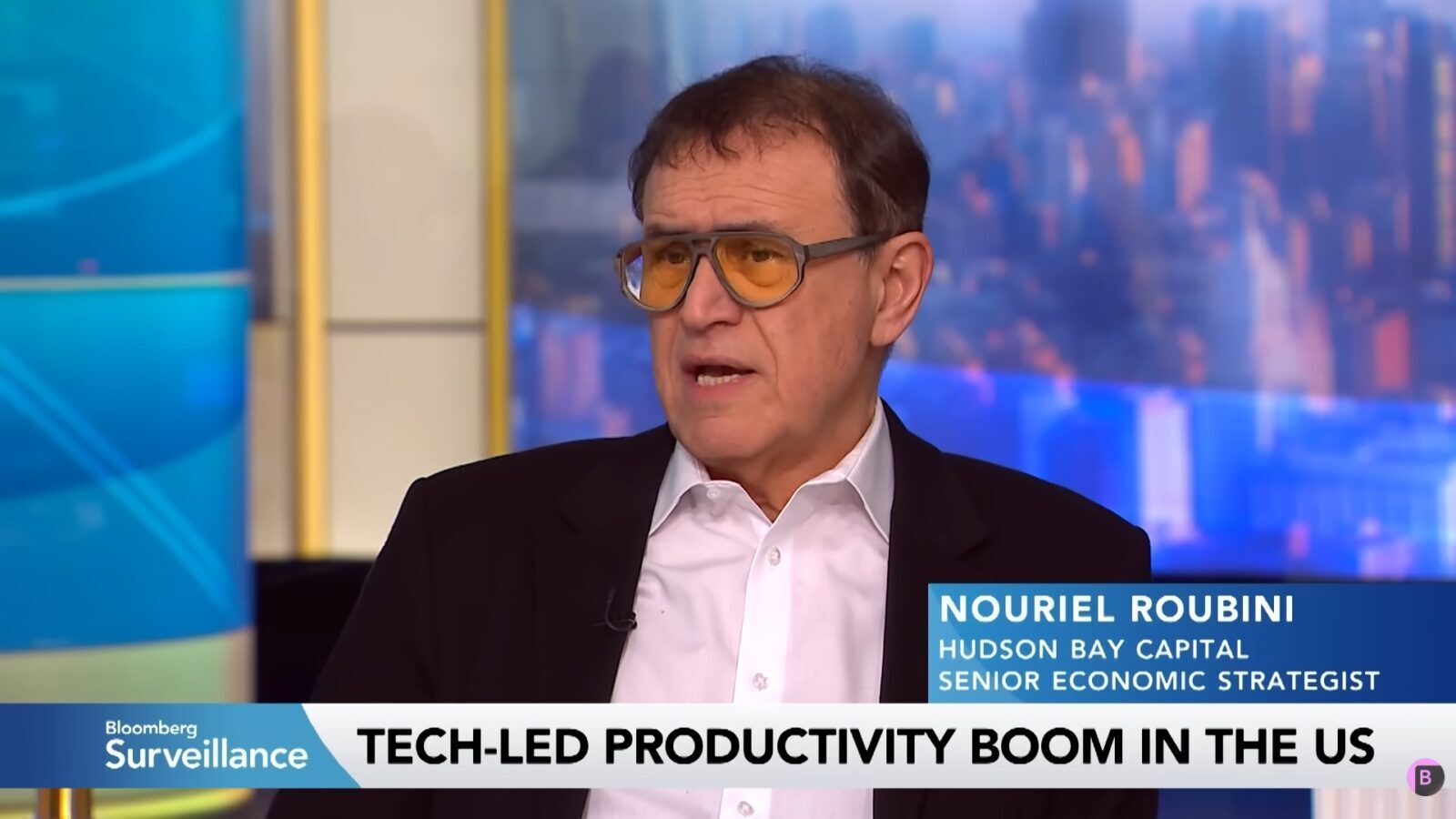
The economist who earned the nickname “Dr. Doom” for flagging the 2008 financial crisis long before it hit is now training his sights on digital assets. Nouriel Roubini is warning that a brutal reckoning for cryptocurrencies is no longer a distant risk but an imminent event that could wipe out vast paper wealth and expose deep structural rot. His argument is not about short term price swings, it is a sweeping indictment of the entire crypto experiment and the regulatory complacency that allowed it to sprawl into the mainstream.
As markets reel from another violent selloff, Roubini is tying the latest plunge to what he sees as fundamental flaws in tokens, exchanges and the speculative culture around them. He is urging policymakers to move quickly, arguing that the window to contain the fallout from a “crypto apocalypse” is closing fast and that the next phase could intersect with broader financial vulnerabilities.
Roubini’s new warning and why it hits harder now
Nouriel Roubini has been a persistent critic of digital assets for years, but his latest salvo is framed as a final alarm rather than another skeptical note. In a fresh analysis, he argues that a full blown collapse of major tokens and platforms is now “imminent,” tying that view to the same macro instincts that helped him flag the housing and credit excesses that preceded 2008. In that earlier crisis he was dismissed as alarmist until events vindicated him, a history that gives his current warnings about a looming crypto apocalypse more weight among regulators and institutional investors.
Roubini is not simply predicting lower prices, he is questioning whether the sector can survive in anything like its current form once easy money, regulatory forbearance and speculative fervor fade. He stresses that the future of money and payments will be shaped by incremental improvements in existing systems, not by what he calls “crypto grift” promising instant revolution. In his view, the realistic path runs through central bank money, bank rails and regulated fintech, a point he develops in a detailed critique of crypto that urges authorities to confront the risks before they metastasize.
From “digital gold” dream to macro disappointment
One of Roubini’s central claims is that crypto has failed its own marketing pitch as a hedge against macro and geopolitical turmoil. He notes that advocates long argued Bitcoin and other tokens would protect holders from ballooning public debts, inflation and geopolitical shocks, only to see those assets slump when those very risks intensified. In a recent thread he points out that, Moreover, crypto was supposed to benefit from such pressures, unlike traditional assets, yet it has instead behaved like a high beta play on speculative liquidity.
That failure is especially stark when set against the performance of classic safe havens. Roubini highlights that gold has surged, with one report noting it rose by more than 60% over the past year, while major tokens have been crushed. In a separate analysis he underscores how Bitcoin has given up its supposed “digital gold” status just as real gold has delivered, reinforcing his argument that crypto is a speculative tech asset, not a store of value.
Scams, failed ICOs and the dark side of innovation
Beyond macro performance, Roubini is focusing on what he sees as pervasive criminality and misrepresentation in the sector. He cites research showing that out of roughly 20,000 initial coin offerings, 80% of them, or 16,000, were outright scams designed to “steal the money and run,” a pattern he describes as standard operating procedure rather than a few bad apples. In his view, those figures, which he summarized in a blunt post beginning with the words Out of 20k ICOs, show that the industry’s innovation narrative has often been a thin cover for old fashioned fraud.
Roubini also attacks the basic premise that tokens like Bitcoin are currencies at all. He argues that calling Bitcoin or any other crypto vehicle a currency has always been bogus, because it is neither a reliable unit of account nor a scalable means of payment. In a widely shared comment he wrote that Calling Bitcoin a currency ignores its extreme volatility, slow throughput and dependence on unregulated intermediaries with no meaningful rule of law. For him, the combination of rampant scams and nonfunctional “money” is not a temporary growing pain but evidence that the core design is flawed.
Market carnage and the policy backdrop
The latest price action has given Roubini fresh ammunition. Cryptogiant Bitcoin has suffered sharp losses since the beginning of 2026, tumbling over 20% and roughly halving in value since October, part of a broader wipeout that has erased about 2 trillion dollars from crypto markets. Those figures, detailed in an analysis of how Cryptogiant Bitcoin has dragged listed investor companies to multiyear lows, underscore how intertwined tokens have become with equity markets and retail portfolios.
The selloff has been global. In South Korea, Bitcoin recently broke below a key psychological level of 100 million won, its lowest in about 15 months, after comments from U.S. Treasury Secretary Scott Bessent added to the pressure. During a congressional hearing, Treasury Secretary Scott signaled a tougher stance on Bitcoin and questioned its role in the financial system, remarks that coincided with the break of that 100 million won support. Roubini seized on the move, describing the crypto market as fundamentally unstable and arguing that tighter oversight is not only justified but overdue.
Why Roubini thinks regulators must act now
Roubini’s critique is not limited to traders and technologists, it is aimed squarely at policymakers who, in his view, have allowed a parallel shadow system to grow without adequate guardrails. He has warned for years that a mix of high public and private debt, supply chain shocks and aggressive stimulus could push the global economy toward stagflation, a scenario he believes would interact dangerously with speculative manias. In one earlier analysis he argued that such macro imbalances, combined with the retail trading boom, have created fertile ground for bubbles, a point he reiterated while discussing how Doom scenarios can spill from markets into the real economy.
In his latest broadside, Roubini argues that crypto has exploited that environment, thriving on cheap money and regulatory gaps while offering little real world utility. He insists that digital assets should not be treated as part of the core financial system, stressing in one interview that these tokens have no intrinsic value and should not be integrated into payments or reserves. That view is echoed in a detailed segment where he Roubini Slams Crypto and calls for strict separation between speculative tokens and critical financial infrastructure.
More From The Daily Overview
*This article was researched with the help of AI, with human editors creating the final content.

Grant Mercer covers market dynamics, business trends, and the economic forces driving growth across industries. His analysis connects macro movements with real-world implications for investors, entrepreneurs, and professionals. Through his work at The Daily Overview, Grant helps readers understand how markets function and where opportunities may emerge.

