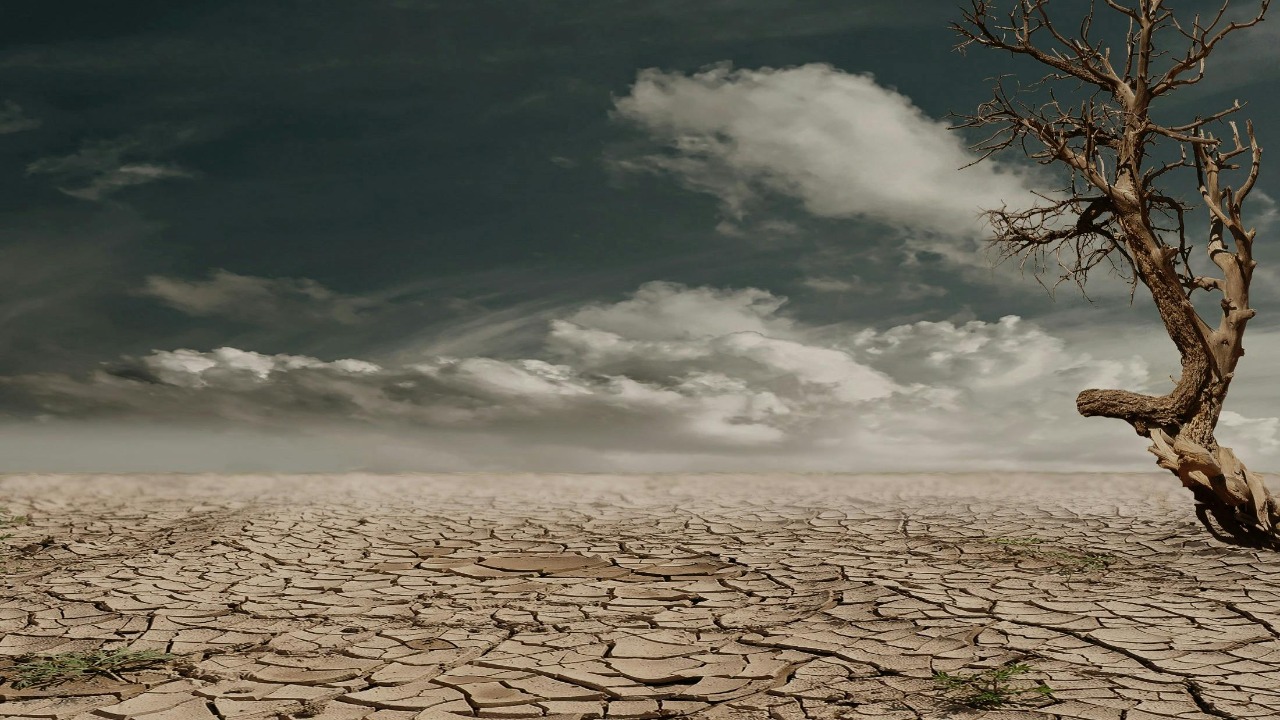
Financial markets are sailing into a hotter, harsher world using maps that still assume a relatively stable climate. The models that guide governments, central banks and investors were built for small, smooth shocks, not for cascading disasters and irreversible damage. As climate impacts intensify, a growing group of researchers warns that this blind spot could turn today’s mispricing of risk into tomorrow’s global crash.
Instead of treating climate disruption as a marginal cost on the edge of an otherwise normal economy, new analysis suggests it could reshape growth, wipe out assets and destabilise entire financial systems. I see a widening gap between what the science says about physical risks and what standard economic tools are willing to admit, and that gap is where systemic crisis can brew.
Why mainstream models keep getting climate risk wrong
At the heart of the problem is a set of Economic models that treat climate damage as a gentle drag on gross domestic product, rising slowly as temperatures inch up. A recent assessment finds that these tools “systematically underestimate climate damages”, in part because they assume smooth relationships between warming and output and ignore tipping points that could trigger abrupt losses across sectors and borders, according to new Economic research. These models were never designed to capture the way drought in one region can spike food prices globally or how a cluster of storms can simultaneously hit supply chains, insurance balance sheets and public finances.
Scientists now argue that the damage functions embedded in many of these tools are too shallow to reflect real-world risk. Work cited for ministries of finance notes that Martin Weitzman proposed an exponential damage function, where losses accelerate non-linearly as temperatures rise, a structure that better reflects the possibility of extreme outcomes, according to analysis of Weitzman. When models cling to linear or gently curved damage paths instead, they effectively price catastrophic scenarios at near zero, even as climate science treats them as central possibilities rather than outliers.
The missing storms: extreme events and irreversible change
One of the starkest critiques is that financial projections ignore the very events that are already driving losses on the ground. New work finds that many Economic models used by governments and investors fail to capture the severity of climate damages because they leave out extreme weather such as heatwaves and droughts, and they do not include the compounding effect of multiple disasters hitting at once, as highlighted in recent Financial projections. Instead of modelling how a series of failed harvests, power outages and flood rebuilds might interact, they smooth everything into a single temperature-linked curve.
That smoothing is especially dangerous in a world where Climate breakdown is, for practical purposes, irreversible on human timescales. Even if emissions stopped immediately, it would take decades for temperatures to stabilise and centuries for ice caps to re-form, according to scientific assessments of Climate dynamics. Economic tools that assume quick recovery after shocks or that discount far-future losses heavily are therefore misaligned with the physical reality of long-lived damage to infrastructure, ecosystems and human health.
Faulty radar and the risk of a systemic crash
Researchers behind a major new report liken current Economic climate models to a faulty radar guiding a ship into a storm. They argue that governments, central banks and investors are relying on tools that miss the most dangerous impacts in a hotter world, and they urge policymakers to fix this “faulty radar” before the storm fully hits, according to a set of Key Quotes. The same analysis notes that while economic modelling has traditionally linked damages to changes in global mean temperature, societies and markets actually experience climate change through local extremes, disrupted rainfall and rising seas, all of which are fundamental to many Economic models but often poorly represented, as highlighted in a companion While briefing.
The stakes are not academic. A synthesis of expert judgement warns that Flawed economic models mean the accelerating impact of the climate crisis could lead to a global financial crash, with cascading failures across asset classes and regions, according to new Flawed analysis. A digest of this work notes that flawed climate economics could trigger a systemic financial crisis by underestimating how physical risks, transition shocks and social disruption interact across regions and sectors, as summarised in Flawed commentary.
GDP’s comforting illusion
Much of the complacency rests on a single metric: GDP. Economic models that focus narrowly on GDP growth can make climate damage look manageable, even when human and ecological losses are severe. A recent review argues that Economic models need to go beyond GDP to account for climate change, and that Regulators should push for frameworks that capture distributional impacts, health outcomes and ecosystem services, according to analysis Written by Moriah Costa. The same work stresses that GDP alone is a poor guide for central banks and supervisors trying to understand climate risk.
New research backs that up, finding that Another key problem is that GDP can mask the full cost of climate damage by failing to account for deaths and ill health, social disruption and ecosystem loss, and by counting reconstruction spending as a positive contribution to output, according to Another assessment. A separate briefing warns that as climate risks rise, continuing to rely on GDP-based assessments can give policymakers and financial institutions a false sense of security, especially when GDP can even rise after a climate-related disaster, masking welfare losses entirely, according to an assessment of GDP-based risk tools.
What the new science actually says
The latest warnings are not based on a single model tweak but on a broad survey of expert judgement. One major report drew on expert judgments from 68 climate scientists from research institutions and government agencies in the UK, US, China and nine other countries, building a structured picture of how risks could unfold under different warming pathways, according to new 68-expert analysis. A summary of this work notes that recent research, including a report from the University of Exeter and Carbon Tracker, warns that prevailing economic models severely understate potential climate damages and that real-world losses could extend far beyond what standard models forecast, according to a University of Exeter briefing.
Other work emphasises that Economic modelling has traditionally linked damages to changes in global mean temperatures, ignoring the impact of climate-fuelled extreme events such as heatwaves and droughts that actually drive losses, according to new Economic analysis. Scientists have warned that current models are significantly underrepresenting the toll climate change is taking on the global economy and that financial projections ignore extreme weather and the risk of multiple disasters striking at once, according to a group of Scientists who contributed to the same research.
More From The Daily Overview
*This article was researched with the help of AI, with human editors creating the final content.

Grant Mercer covers market dynamics, business trends, and the economic forces driving growth across industries. His analysis connects macro movements with real-world implications for investors, entrepreneurs, and professionals. Through his work at The Daily Overview, Grant helps readers understand how markets function and where opportunities may emerge.

