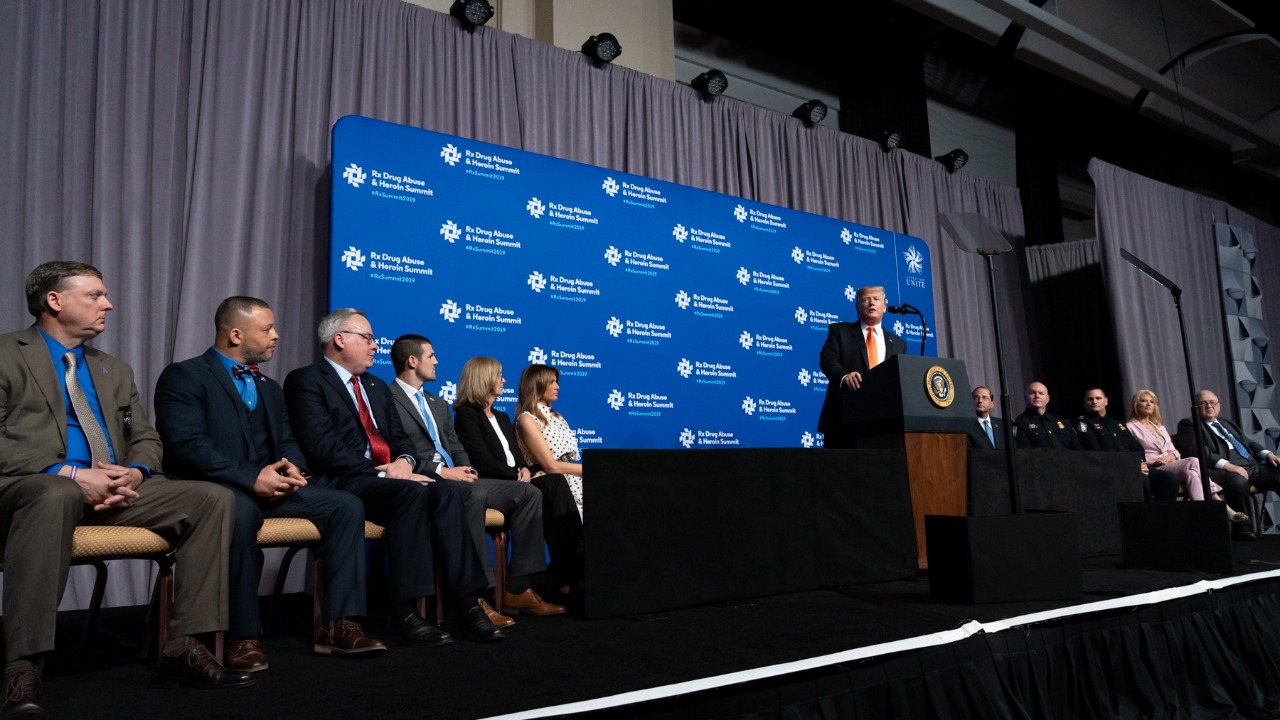
President Donald Trump is selling his latest health agenda as a simple promise: cheaper drugs now and leaner federal spending tomorrow. Economists across the spectrum are warning that the real price tag may be paid later, in fewer medical breakthroughs, weaker safety nets, and deeper state budget crises. Their concern is not about one program in isolation, but about how Trump’s drug plan, Medicaid cuts, and shutdown brinkmanship interact to reshape the entire system.
From the TrumpRx discount initiative to sweeping proposals to shrink Medicaid and food assistance, the throughline is a shift of risk from Washington to patients, states, and future generations. I see a pattern in the reporting that suggests short term political wins could come at the cost of long term stability in U.S. health care.
TrumpRx’s cheap drugs promise and the innovation trade off
Trump has put TrumpRx at the center of his health pitch, presenting it as proof that he can force drug prices down without sacrificing quality. The program grew out of a pricing agreement with Pfizer that ties U.S. prices to the lowest level offered in other high income countries, and major players like Cigna and CVS have joined to offer discounted infertility medications under the TrumpRx banner, according to reporting on the Pfizer deal. On its face, that is a tangible benefit for patients who have been priced out of treatments that can cost tens of thousands of dollars per cycle.
Economists, however, are already flagging the hidden costs of this approach. Analyses of TrumpRx note that while patients may see lower prices at the pharmacy counter today, the squeeze on revenue could reduce the incentive for companies to invest in the next generation of therapies, a concern captured in warnings that Economists caution that lower prices today may come at the expense of future cures. Even coverage that is broadly sympathetic to Trump’s goal of cheaper drugs acknowledges that the long term costs may be hidden in slower innovation or higher prices in other parts of the market.
Even Trump allies warn of a broader health care upheaval
The unease is not limited to traditional critics of Republican health policy. A group of experts who have generally aligned with Trump on taxes and deregulation are now publicly warning that his health agenda could upend the system in ways that are hard to reverse. Their concern is that Trump’s flashy TrumpRx pitch promises something simple from a consumer perspective, but the underlying changes to pricing power, insurance design, and federal guarantees are far more complex, as detailed in reporting that notes Trump’s flashy TrumpRX pitch promises simplicity that does not exist in practice. When even Trump aligned economists warn President Is About to Upend U.S. Health Care, it signals that the debate has moved beyond partisan talking points into a more fundamental argument about system design.
These economists are not just worried about drug prices in isolation. They are looking at TrumpRx alongside proposals to cut federal Medicaid funding and reshape subsidies that help people afford coverage under Obamacare, and they see a cumulative effect that could destabilize insurance markets. One video segment that has circulated widely features economic professors using the phrase “live free and die” to slam Trump’s health approach, arguing that pulling back federal support while promising deregulated markets will leave sicker and poorer Americans exposed, a critique captured in the clip titled Obamacare where they warn about the consequences of letting subsidies expire. I read those interventions less as partisan attacks and more as a sign that the technocratic consensus on how to keep a mixed public private system functioning is starting to fracture.
Medicaid cuts shift costs to states and strip coverage
At the heart of the economists’ alarm is Trump’s push to shrink Medicaid, the joint federal state program that covers low income adults, children, people with disabilities, and many nursing home residents. Budget proposals tied to his broader fiscal agenda would sharply reduce Washington’s share of Medicaid spending and push states to absorb more of the cost, a strategy described in reporting on how Trump and Republicans want to make states pay as they chase tax cuts, including the warning that “With the magnitude of the reduction in federal financing for Medicaid, it seems like it would be very challenging for states to maintain current coverage levels.” That is not a theoretical concern; governors and state budget directors know that Medicaid is already one of their largest line items, and sudden federal pullbacks leave them with few options beyond cutting eligibility, reducing provider payments, or raising taxes.
Independent analyses of the House passed proposed spending bill that tracks with Trump’s priorities estimate that Funding cuts could mean a decrease in Medicaid spending by more than $720 billion over the next 10 years, a figure behavioral health professionals have seized on as they warn that such a reduction would devastate mental health and in school supports, as detailed in coverage that highlights the projected $720 billion reduction. Separate modeling of the same package finds that the proposals would strip Medicaid coverage from more than 10 million people over 10 years, with some of those individuals also losing food assistance because of the Medicaid provisions, according to an analysis that spells out how the plan would hit Medicaid and food stamps. When I put those numbers next to Trump’s rhetoric about protecting vulnerable Americans, the gap between promise and projected impact becomes hard to ignore.
Behavioral health and community care on the chopping block
The fallout from those Medicaid cuts would not be evenly distributed. Behavioral health providers, school districts, and rural hospitals are particularly exposed because they rely heavily on Medicaid reimbursements to keep services running in communities that have little private insurance revenue to fall back on. Reporting from the behavioral health sector underscores that if Medicaid funding is changed along the lines of the House passed bill, clinics that have spent the past 35 years building up services and in school supports could be forced to close programs or turn away patients, a scenario laid out in detail in coverage of how Funding cuts would ripple through local systems. Economists who study health outcomes warn that pulling back on mental health and addiction treatment in particular tends to raise costs elsewhere, from emergency rooms to jails.
Those same experts are also watching how Trump’s Medicaid proposals intersect with his drug pricing agenda. If TrumpRx succeeds in lowering list prices for some medications while Medicaid budgets are simultaneously slashed, safety net providers could find themselves in the paradoxical position of having cheaper drugs available that they cannot afford to dispense because their overall funding has been gutted. Analyses of the broader package of Medicaid and food stamp cuts emphasize that the proposals would strip Medicaid coverage from more than 10 million people over 10 years, and that some of those individuals would also lose food assistance, a double hit that would worsen health outcomes and strain local charities, as detailed in the breakdown of how the plan targets cuts to Medicaid and food stamps. From an economic perspective, that is less a cost saving strategy than a cost shifting one, moving expenses from federal ledgers to families, states, and emergency systems.
Shutdown brinkmanship and the risk to everyday care
Layered on top of these structural changes is a more immediate threat: the recurring risk of a federal government shutdown as Trump and congressional Republicans push for deeper spending cuts. When the government shut down earlier this fall, federal agencies warned of mass layoffs and service disruptions, and Vice President JD Vance bluntly told reporters at the White House that “Let’s be honest, if this thing drags on” the uncertainty will spread far beyond Washington, a warning captured in coverage of how a lapse in funds brought fresh uncertainty to the country and quoted Vice President JD Vance at the White House. Health programs that depend on annual appropriations, from community health centers to some public health initiatives, are particularly vulnerable when Congress uses shutdowns as leverage rather than more traditional compromises.
Advocates have tried to translate that abstract budget brinkmanship into concrete stakes for families. One widely shared video titled Trump’s Shutdown: Our Healthcare Is On The Line features working parents describing how a prolonged funding lapse could delay surgeries, interrupt cancer treatments, or close local clinics that rely on federal grants, a message encapsulated in the clip labeled Trump, Shutdown, Our Healthcare Is On The Line. When I connect that testimony to the economists’ warnings about TrumpRx and Medicaid, a consistent picture emerges: the combination of aggressive cost cutting, disruptive tactics, and headline grabbing promises is creating a more fragile health care landscape, one where the people with the least financial cushion are asked to absorb the most risk.
The long game: what economists say is really at stake
Stepping back from the daily skirmishes, the economists sounding the alarm are focused on the long game. They see Trump’s health agenda as a pivot away from the post Obamacare model, in which federal subsidies and Medicaid expansion were used to broaden coverage, toward a leaner federal role that leans heavily on private markets and state discretion. Some of those experts are ideologically sympathetic to smaller government, yet they argue that the speed and scale of the proposed changes risk triggering exactly the kind of market chaos that conservatives once blamed on Obamacare, a concern echoed in the “live free and die” critique that warns of what happens when subsidies and protections are allowed to lapse, as seen in the video where economic professors slam Trump’s health approach under the banner of “Live free and die”. Their message is that stability, not just ideology, should guide reforms.
Even coverage that highlights the immediate appeal of cheaper drugs under TrumpRx notes that economists say long term costs may be hidden, both in reduced innovation and in higher prices in other parts of the market, a tension laid out in reporting on how Trump promises cheaper drugs under TrumpRx while economists say long term costs may be hidden. And when even Trump aligned economists warn President Is About to Upend U.S. Health Care, as detailed in analysis that describes how a group of experts close to the administration are raising red flags about the broader package of reforms, it underscores that the stakes are not just partisan. Their core argument is simple: health care systems are like aircraft carriers, not speedboats, and trying to turn them too sharply, with too little attention to who falls overboard, is a gamble that could leave millions without a life raft, a warning spelled out in reporting that notes how Even Trump Aligned Economists Warn President Is About to Upend Health Care.
More From TheDailyOverview

Nathaniel Cross focuses on retirement planning, employer benefits, and long-term income security. His writing covers pensions, social programs, investment vehicles, and strategies designed to protect financial independence later in life. At The Daily Overview, Nathaniel provides practical insight to help readers plan with confidence and foresight.

