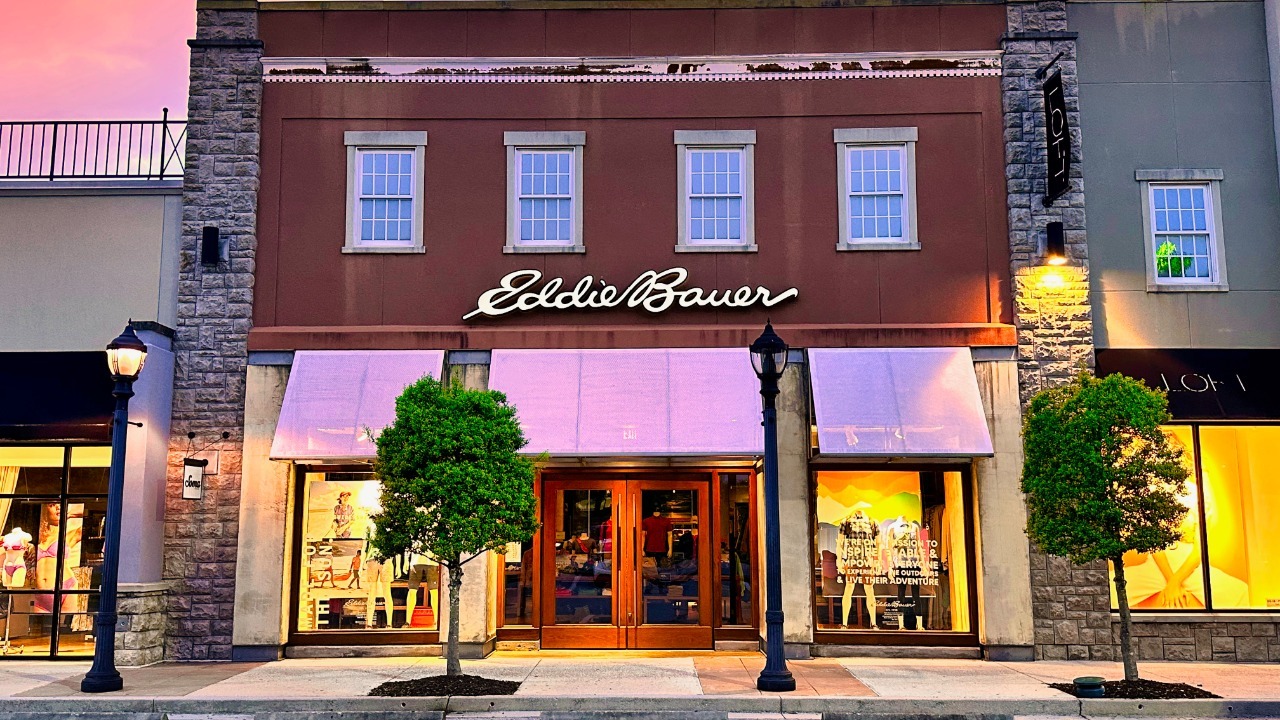
Eddie Bauer is back in bankruptcy court and this time its store network is on the auction block. The operator of roughly 180 locations across the United States and Canada is moving quickly to liquidate inventory and solicit buyers, turning a once dominant outdoor name into the latest test of whether legacy retail brands can survive in a market reshaped by e‑commerce and changing tastes.
The filing caps years of financial strain for Eddie Bauer LLC, which has already been through multiple restructurings and ownership changes. What is unfolding now is not just another balance sheet cleanup but a race to decide which parts of the business, if any, will keep operating once the store closures and asset sales are done.
The Chapter 11 crash and a scramble to sell
The immediate trigger for the crisis is a voluntary Chapter 11 filing by Eddie Bauer LLC in New Jersey, a move that allows the company to keep operating while it unwinds leases and markets its assets. Court papers describe a retail operator that runs approximately 180 Eddie Bauer stores across the U.S. and Canada, with a plan to use the process to shed unprofitable locations and restructure its debts. In parallel, the company has begun liquidation sales at 180 locations, signaling that a large portion of the fleet is unlikely to survive in its current form. The operator has told the court it wants to sell store assets quickly, a familiar pattern in modern retail bankruptcies where speed can preserve value for lenders.
Behind the legal jargon is a simple reality: the Eddie Bauer retail company is carrying $1.7 billion in debt, a load that has become unsustainable as mall traffic erodes and competition intensifies. The company that runs Eddie Bauer stores in the U.S. and Canada has said it sought Chapter 11 protection and immediately began liquidation sales, a combination that underscores how little room is left for a slow, surgical turnaround. In court communications described as coming from the Retail Company, management has framed the filing as a way to stabilize operations while it looks for buyers.
A 100-year-old brand on its third trip to court
What makes this collapse striking is how often Eddie Bauer has already been through versions of it. The operator of Eddie Bauer stores in the U.S. and Canada is now in its third bankruptcy for the more than 100-year-old company, following a Chapter 11 filing in 2003 and another restructuring six years later. The latest case comes after what one report described as more than 106 years of history for the Beloved outdoor brand Eddie Bauer, and it underscores how the company has struggled to translate that legacy into durable financial performance. The current Chapter 11 is framed as a way to address challenges that have built up over several years, not a sudden shock.
To understand the stakes, it helps to remember what Eddie Bauer LLC once represented. The company is described as an American outdoor recreation brand and chain store headquartered in Seattle, Washington, one that helped popularize down jackets and outfitted generations of hikers and commuters. That heritage is part of why the latest filing has drawn attention from analysts and consumers alike, and why some observers, including a video essayist dissecting “The Real Reason Eddie Bauer Went Bankrupt,” have argued that the brand, referred to there as Eddie Bower, lost cultural relevance as newer competitors emerged. Unverified based on available sources are some of the more speculative claims about missteps, but the pattern of repeated restructurings is well documented.
Inside the store closures, layoffs, and what happens to Canada
For employees and shoppers, the most visible impact is the wave of store closures and job cuts that will follow the liquidation sales. The retail operator for about 180 Eddie Bauer stores across the United States and Canada has already told customers that it filed for bankruptcy on a Monday in Feb, and that sales would continue while inventory is cleared out. In Seattle, Eddie Bauer is laying off 60 employees and closing its headquarters, a symbolic blow in the city where the brand was founded. Those cuts come on top of uncertainty for store workers who may find their locations shuttered or sold to new operators.
The Canadian side of the business is also in flux. One video report notes that the operator of Eddie Bower‘s Canadian Stores has filed for bankruptcy protection in the U.S. and will soon make a similar move in Canada, suggesting that cross-border operations are being restructured in tandem. At the same time, other reports stress that Eddie Bauer’s stores outside of the U.S. and Canada are run by separate licensees and are not included in the Chapter 11 filings, which means some international locations may continue operating largely as before. For Canadian shoppers, another report framed the chain as a long-time clothing retailer whose local future now depends on how the U.S. process plays out for Eddie Bower and its Canadian Stores.
Catalyst Brands’ strategy and what survives
Hovering over the bankruptcy is Catalyst Brands, the parent company that operates Eddie Bauer stores alongside other chains. In a restructuring outline, Catalyst has said that the overhaul of Eddie Bauer, one of the many retail chains it runs, is designed to ensure Catalyst itself remains profitable and viable even as it cuts debt and reorganizes the outdoor label, a point highlighted in a restructuring summary. Executives have argued that while they were able to make improvements in product development and marketing, those changes could not fully offset structural headwinds, a sentiment echoed in commentary that credits Catalyst with some operational gains but concludes the brand had become a bit irrelevant.
From my vantage point, the strategy now is to separate the Eddie Bauer name and intellectual property from the drag of its physical stores. Court filings and related statements emphasize that the Chapter 11 process is meant to protect the Eddie Bauer brand and IP worldwide, even as the retail company that runs the stores is restructured or sold, a distinction highlighted in coverage of the Eddie Bauer retail operator. Additional information provided to creditors and customers points them to resources about the Additional chapter 11 proceedings, underscoring how complex the separation between brand and stores has become. For shoppers, that likely means the Eddie Bauer name will live on in some form, even if the mall stores that defined it for decades do not.
What Eddie Bauer’s fall says about outdoor retail
Stepping back, Eddie Bauer’s crash into bankruptcy is part of a broader reshaping of outdoor and apparel retail. Eddie Bauer LLC, described as an outdoor recreation brand headquartered in Seattle, Washington, is competing in a landscape where direct-to-consumer specialists, fast-fashion players, and digital marketplaces have trained customers to expect constant novelty and aggressive pricing, a shift that has punished midmarket chains that rely on legacy store fleets, as outlined in profiles of Eddie Bauer LLC. Analysts who have examined why “eddie Bower has just declared bankruptcy” argue that not a lot of people are searching for the brand anymore, a shorthand for the way consumer attention has drifted, a point raised in the video labeled Bower. Unverified based on available sources are some of the more sweeping claims about mismanagement, but the structural pressures are clear.
More From The Daily Overview
*This article was researched with the help of AI, with human editors creating the final content.

Grant Mercer covers market dynamics, business trends, and the economic forces driving growth across industries. His analysis connects macro movements with real-world implications for investors, entrepreneurs, and professionals. Through his work at The Daily Overview, Grant helps readers understand how markets function and where opportunities may emerge.

