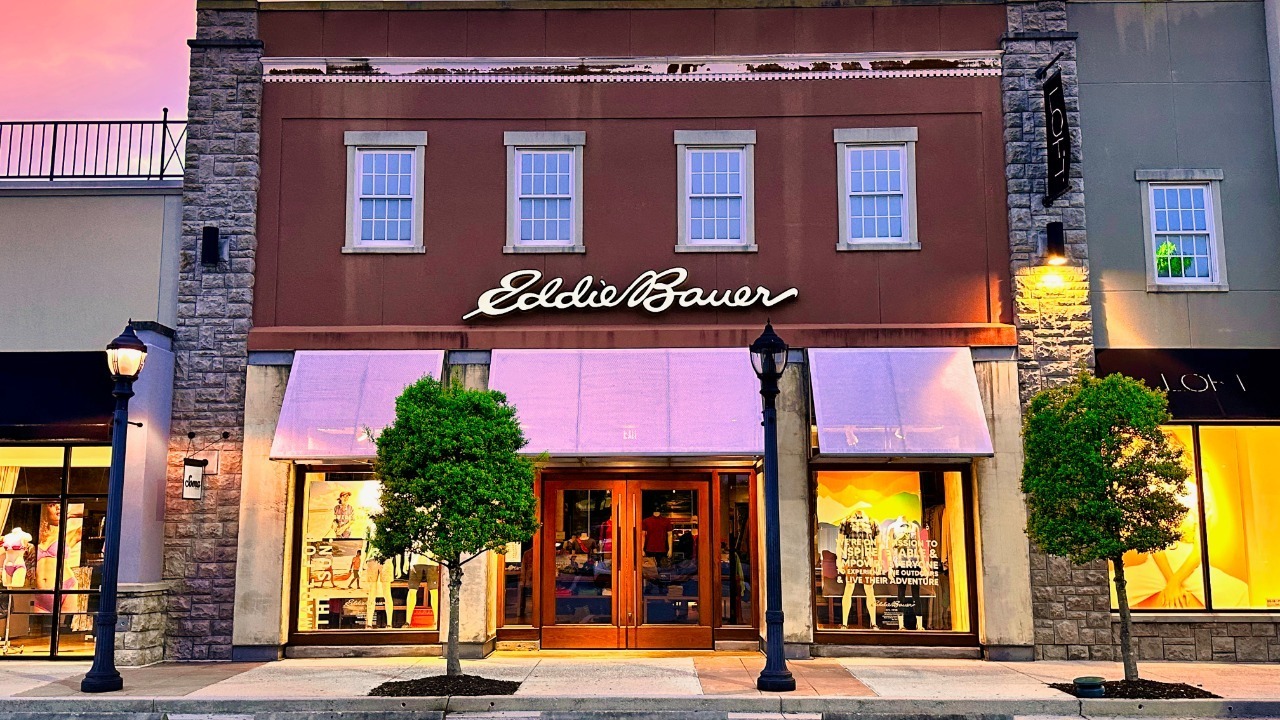
The company that runs Eddie Bauer’s mall and outlet stores in the United States and Canada has entered Chapter 11 for the third time, putting roughly 180 to nearly 200 locations in limbo and testing the durability of a 106‑year‑old outdoor label. The filing by Catalyst Brands is framed as a restructuring meant to keep the lights on, but the pattern of repeat collapses suggests a deeper strategic failure rather than a one‑off stumble. At stake are not only jobs and leases, but whether a heritage name in performance gear can still matter in a market that increasingly rewards digital fluency and credible sustainability over square footage.
The core story is simple enough: a store operator overloaded with debt and underwhelming sales has run out of trail. The more interesting question is why a brand with Eddie Bauer’s history, and with some recent product and marketing improvements, keeps ending up back in court while rivals build loyal communities online and in the backcountry. The answer lies in a mix of financial engineering, slow adaptation to e‑commerce and supply‑chain expectations, and a stubborn attachment to a store fleet that looks more like the 1990s than the 2030s.
The third trip to court and what it really signals
Catalyst Brands, which controls the brick‑and‑mortar network for Eddie Bauer in North America, has now sought Chapter 11 protection three times, a frequency that would alarm any lender or landlord. In the latest filing, the operator acknowledged that its store footprint across the United States and Canada had become unsustainable relative to sales, even as the Eddie Bauer label itself continues to exist as a separate intellectual‑property asset. According to one account, the operator is responsible for about 180 locations across the United States and Canada, a scale that magnifies every misstep in merchandising or rent negotiation.
In court papers and statements, executives have cast the move as a difficult but necessary reset, echoing language that this “is not an easy decision” and emphasizing a desire to protect employees, vendors, customers, and other stakeholders. Reporting on the case notes that this is the third bankruptcy for the operator, a pattern that suggests the underlying business model has not been fundamentally repaired between trips to the courthouse. When a retailer keeps using Chapter 11 as a pressure valve, it usually means the company is treating symptoms, not the disease.
Stores on the edge and a hunt for a “white knight”
The immediate fear for shoppers and staff is that the store grid will be thinned aggressively or wiped out entirely. One analysis warned that Eddie Bauer’s nearly 200 stores in the United States and Canada may soon be “on the chopping block,” a phrase that captures how little cushion remains if sales slip further or landlords balk at concessions. Another report put the current footprint at about 180 locations, a discrepancy that likely reflects recent closures and underscores how fluid the situation has already become.
Inside the restructuring, the operator is explicitly seeking a buyer that can keep at least a core set of stores open, a potential savior described in filings as a “white knight” willing to inject capital and perhaps integrate Eddie Bauer into a broader portfolio. Coverage of the Chapter 11 process notes that the Eddie Bauer Store Operator Files Chapter is designed to Seeks White Knight and Keep Stores Open, but there is no guarantee such a buyer will emerge on terms that satisfy creditors. If that search fails, the most likely outcome is a liquidation of leases and fixtures, with the brand itself living on through online channels and licensing deals while the mall presence fades.
What survives, what does not: employees, regions, and the brand
For workers, the bankruptcy is less an abstract financial event than a looming question about paychecks and health insurance. Store associates, managers, and distribution‑center staff are the ones who will feel the impact of any rapid store closures, yet the public filings so far have been light on specifics about severance or retraining support. One detail that does offer a sliver of clarity is that the bankruptcy is limited to the operator that runs Eddie Bauer locations in the U.S. and Canada, while stores in other markets are not directly affected, a distinction highlighted in coverage that notes the filing does not touch Eddie Bauer outlets outside the United States and Canada.
The brand itself, which has been around for more than a century and helped pioneer down jackets and other outdoor staples, sits in a somewhat safer position than the store operator that just collapsed. Intellectual‑property owners can license the Eddie Bauer name to other retailers or e‑commerce platforms even if Catalyst Brands ultimately winds down, and that is likely why the bankruptcy is framed as a problem of “Operator of Eddie Bauer” stores rather than of the label as a whole. One report, for instance, describes how the Operator of Eddie stores in the U.S. and Canada is the entity in court, not the global brand owner. That separation means customers may still find Eddie Bauer products online or in partner chains even if their local shop goes dark.
Old‑school retail habits in a new‑school market
Repeated bankruptcies are rarely just about macroeconomic headwinds; they usually expose structural weaknesses that competitors have already addressed. In Eddie Bauer’s case, the operator has been slow to pivot from a store‑centric model to one where digital discovery, direct‑to‑consumer shipping, and flexible fulfillment are the default. While the company has made some strides in product development and marketing, one analysis noted that even as Catalyst leadership improved assortments and messaging, those gains were not enough to offset the drag of legacy leases and a cost base built for a different era.
The dynamic is reminiscent of another retail casualty, Service Merchandise, whose catalog‑showroom model once felt innovative but eventually became a liability. A retrospective on that chain’s demise points out that, in addition to issues with the catalog concept, the company simply did not have a strong financial foundation to weather shifts in consumer behavior, a pattern that echoes in Eddie Bauer’s current predicament. The Service Merchandise comparison is not perfect, but it underscores how clinging to a familiar store format without a robust balance sheet or digital hedge can turn a once‑beloved retailer into a case study.
Debt, digital gaps, and the sustainability blind spot
One of the more under‑examined angles in the Eddie Bauer saga is how much of Catalyst Brands’ trouble stems from its capital structure versus its operating choices. Public reporting has focused on the fact of the Chapter 11 filing rather than the precise debt stack, but the pattern of three restructurings suggests a company that has repeatedly loaded up on obligations it could not comfortably service. A report on the bankruptcy notes that the operator’s problems have persisted despite efforts to streamline operations and renegotiate with landlords, with By Auzinea Bacon and others highlighting how the store network has remained a financial strain even after earlier cuts.
At the same time, the operator appears to have underinvested in the areas that now define leadership in outdoor retail: seamless e‑commerce, community‑driven marketing, and verifiable sustainability. While rivals like REI and Patagonia have spent years building traceable supply chains and repair programs that resonate with younger consumers, there is little evidence in the current reporting that Catalyst Brands has made comparable, high‑profile commitments. Coverage of the filing in one regional outlet notes that the Retail operator of Eddie Bauer has been trying to modernize but still finds itself back in court, a sign that incremental tweaks are not enough when the market is rewarding brands that treat sustainability as a core strategy rather than a marketing line.
More From The Daily Overview
*This article was researched with the help of AI, with human editors creating the final content.

Grant Mercer covers market dynamics, business trends, and the economic forces driving growth across industries. His analysis connects macro movements with real-world implications for investors, entrepreneurs, and professionals. Through his work at The Daily Overview, Grant helps readers understand how markets function and where opportunities may emerge.

