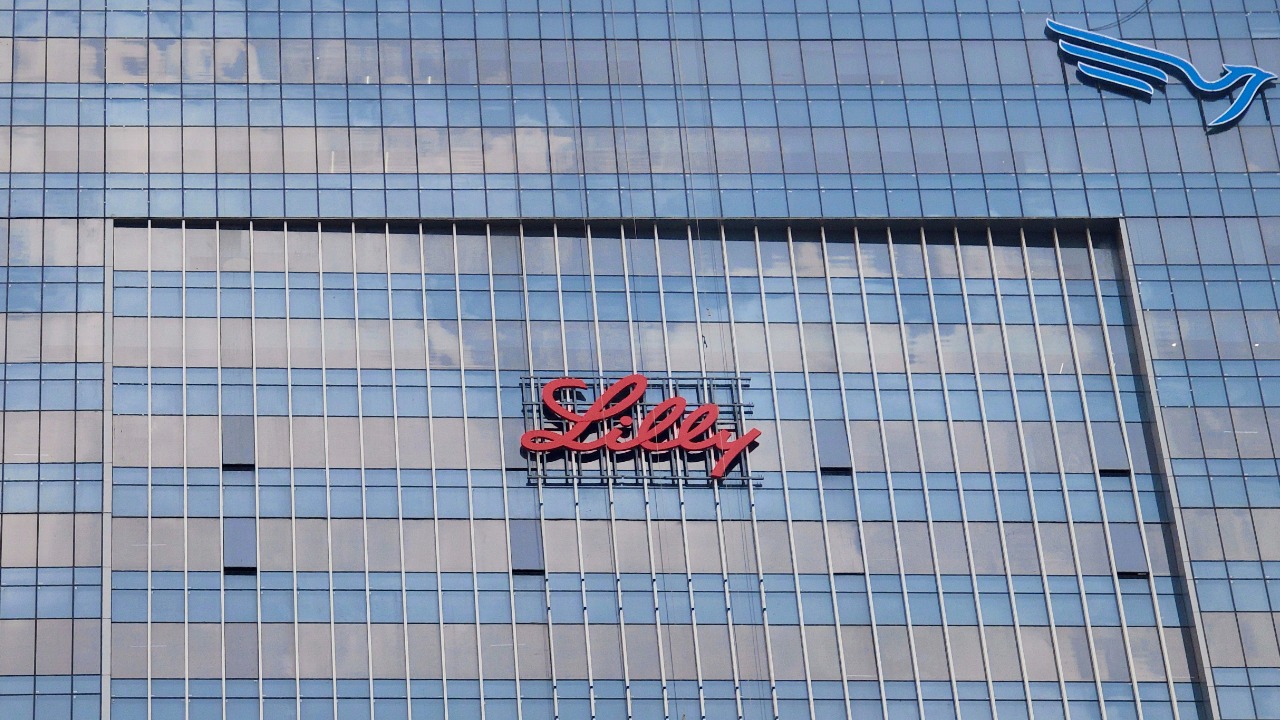
Eli Lilly and Nvidia are putting up to $1 billion on the table to see whether generative AI can compress the decade-long slog of drug development into something closer to a software cycle. The two companies are building a dedicated drug discovery lab that treats biology as a data problem, betting that the same compute power that trained frontier chatbots can also design molecules and manufacturing lines. If they are right, this will not just be a new research center, it will be a template for how Big Pharma operates in the age of industrial AI.
The $1 billion co-innovation lab and its AI engine
The core of the wager is a co-innovation Drug AI Lab that Eli Lilly and Nvidia say will receive up to $1 billion in combined investment over five years, a scale that instantly puts it in the top tier of corporate AI projects. The partners describe this as a commitment to both infrastructure and research, pairing capital-intensive hardware with teams of scientists and engineers who can turn raw compute into new medicines. In practical terms, that means building on Nvidia’s existing BioNe platform and its new Vera Rubin chips, with the lab designed from the ground up to run large biological models rather than repurposed office servers, a detail highlighted in early coverage of the Drug AI Lab.
Both sides are explicit that this is not a one-off pilot but a multi-year industrial buildout. Company statements describe how the two Companies will Jointly Invest a Billion Over Five Years in Infrastructure and Research, with the goal of using AI to scale medicine discovery and production rather than just tweak existing workflows. Earlier work between the same partners on a dedicated supercomputer showed how tightly coupled hardware and algorithms can accelerate model training, and the new lab is explicitly framed as a next step that builds on that prior supercomputer project.
From supercomputers to San Francisco wet labs
The physical footprint of the project matters as much as the chips. Nvidia and Eli Lilly plan to base the co-innovation effort in a San Francisco lab, embedding AI specialists directly alongside experimental biologists rather than keeping them in separate corporate silos. Reports on the deal note that NVIDIA and Eli will jointly invest up to $1 billion over the next five years in this San Francisco site, which is designed to generate AI models that can then guide subsequent experiments at the bench. That tight loop between simulation and wet lab is what could let the partners test far more hypotheses than traditional R&D groups can handle.
Location also signals ambition. The partners describe the facility as a Bay Area and AI co-innovation hub, with reporting noting that they plan to commit $1 billion and expect the lab to start work in the coming months in the Bay Area and broader ecosystem. By putting the lab in the middle of San Francisco’s AI talent pool, Lilly is effectively competing with consumer tech for the same machine learning experts, while Nvidia deepens its presence in life sciences rather than treating healthcare as a side market. That geographic choice underlines how both companies see drug discovery as a core AI workload, not a niche experiment.
What this means for Big Pharma’s AI race
For Eli Lilly, the new lab is the logical extension of a strategy that already treats compute as a strategic asset. Earlier work showed how Oct Lilly partners with NVIDIA to build the industry’s most powerful AI supercomputer, explicitly framed as a way to supercharge medicine discovery and delivery for patients. The new Drug AI Lab takes that philosophy out of the data center and into a hybrid environment where models are expected to propose targets, design molecules and even optimize manufacturing routes, all within a single integrated stack. In that sense, Lilly is not just buying hardware, it is trying to rewire its entire R&D pipeline around AI-first decision making.
Nvidia, for its part, is turning healthcare into a flagship use case for its latest platforms. Company materials describe how Eli Lilly (LLY) and Nvidia (NVDA) will invest up to $1B over five years in an AI drug discovery lab, with AI expected to reduce the time and cost of bringing new medicines to market, a point underscored in the Quick Read summary of the deal. By tying its Vera Rubin chips and DGX technology directly to blockbuster drug programs, Nvidia is effectively telling investors that the next wave of growth will come not only from training chatbots but from powering the full stack of pharmaceutical innovation.
The scale of the bet is already reshaping expectations across the sector. One report notes that Jan, Nvidia, Lilly Team Up For a Drug AI Lab that will rely on Vera Rubin hardware and Nvidia’s BioNe software stack, a combination that other pharma companies will struggle to match without similar long term partnerships. I see this as the start of an arms race in which Big Pharma players will either secure their own deep alliances with AI infrastructure providers or risk being left to rent capacity on less customized terms. The $1 billion figure is eye catching, but the more important signal is strategic: Eli Lilly and Nvidia are treating AI not as a bolt-on tool, but as the organizing principle for how new drugs are discovered, tested and manufactured.
More From TheDailyOverview

Grant Mercer covers market dynamics, business trends, and the economic forces driving growth across industries. His analysis connects macro movements with real-world implications for investors, entrepreneurs, and professionals. Through his work at The Daily Overview, Grant helps readers understand how markets function and where opportunities may emerge.

