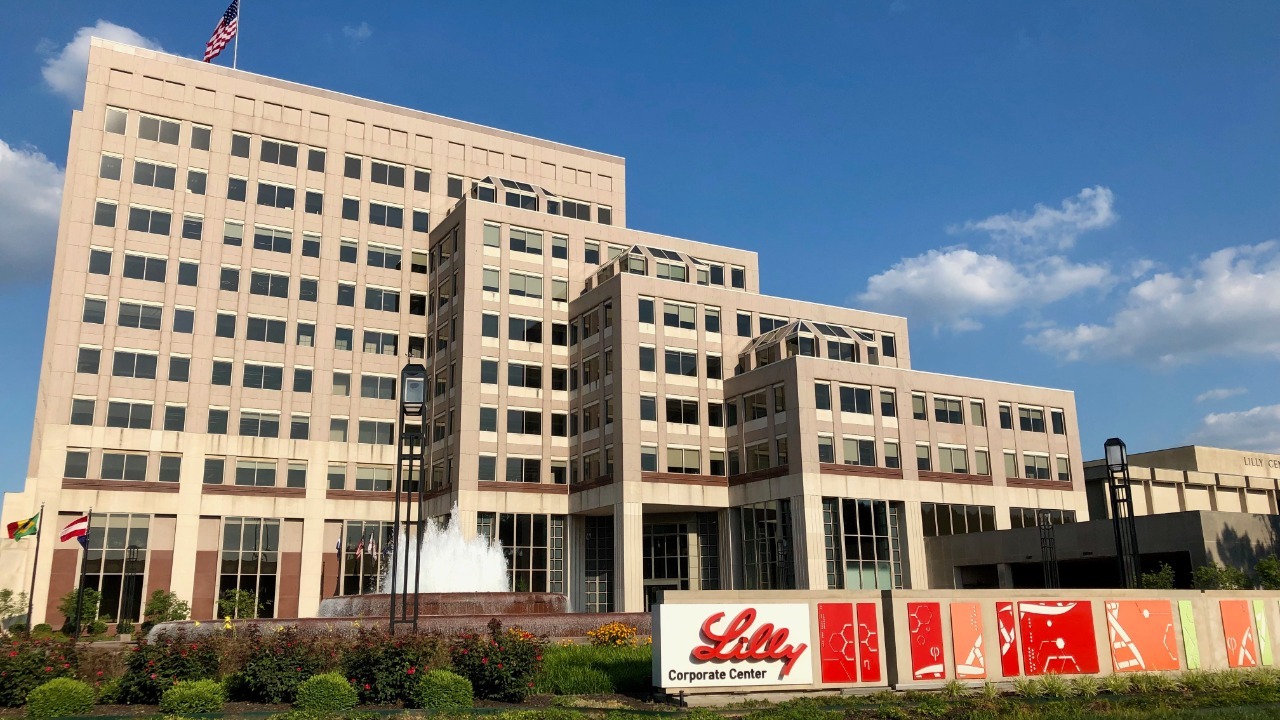
Eli Lilly’s entry into the $1 trillion club has turned a century-old drugmaker into the market’s newest momentum story, powered less by traditional pharma pipelines than by a cultural obsession with weight loss. The surge in appetite for GLP-1 drugs has pushed the company into the same valuation stratosphere as the biggest technology names, forcing investors to weigh whether obesity medicine is becoming as central to the next decade as artificial intelligence.
I see Lilly’s milestone as a signal that markets now treat metabolic disease and chronic conditions as platform opportunities, not niche therapeutic bets, with GLP-1s emerging as a foundational technology in their own right. The question is no longer whether these drugs are big, but whether their growth curve can justify tech-like expectations without repeating the boom-and-bust cycles that have defined past healthcare manias.
The first healthcare member of the $1 trillion club
The most striking part of Lilly’s ascent is not just the number on the ticker, but the company’s new peer group. By crossing the thirteen-digit threshold, Eli Lilly became the first healthcare company to sit alongside the likes of Nvidia and Apple in the market’s most exclusive valuation tier, a club that had previously been dominated by consumer platforms, chipmakers, and software giants. Reporting on how Eli Lilly Becomes First Pharma To Join the Trillion Club Alongside Nvidia, Apple, Others underscores how unusual it is for a drugmaker, rather than a cloud or smartphone business, to command that kind of market value.
That shift reflects a broader reordering of what investors consider “core infrastructure” for the global economy. For the past decade, the assumption was that digital platforms and AI would capture most of the incremental value creation, while healthcare remained a defensive sector. Lilly’s move into the $1 trillion tier suggests that treating obesity and diabetes at scale is now seen as just as central to productivity, labor participation, and consumer spending as the chips that power data centers. Coverage noting that Eli Lilly briefly joined the thirteen-digit club early on Friday, with Eli Lilly’s Market Cap Breaks $1 Trillion after climbing $400 Billion in 3 Months, captures how quickly markets have repriced that strategic importance.
GLP-1 demand turns a legacy pharma into a growth rocket
Lilly’s valuation story is inseparable from the explosive demand for GLP-1 drugs, which have shifted from diabetes treatments to cultural phenomena. The company’s obesity and diabetes portfolio, led by Zepbound and Mounjaro, has delivered the kind of growth that investors typically associate with breakout software products rather than injectables. Reporting that Eli Lilly Joins Tech Players In The Market Capitalization Club highlights how the company’s GLP drugs, Zepbound and Mounjaro, have become the engine of that surge, with revenue growth that looks more like a hypergrowth app than a mature pharmaceutical franchise.
That momentum has translated directly into market cap. Over just a few months, investors have watched Lilly’s valuation swell by $400 Billion, a move that would be eye-popping even for a cloud giant, let alone a drugmaker. The description of how Eli Lilly ended Friday with a market value that had climbed $400 Billion in 3 Months, as detailed in coverage of Eli Lilly Stock Closes Above Trillion After Climbing Billion Months, underlines how concentrated the market’s enthusiasm has become around GLP-1 demand. In effect, the market is treating obesity medicine as a recurring-revenue platform, with each new indication or geography adding another layer of growth.
Stock performance that rivals the hottest AI trades
For investors, Lilly’s run has started to resemble the parabolic charts more commonly associated with AI chipmakers and cloud providers. Over the past year, Eli Lilly’s stock has skyrocketed nearly 50%, a move that would be notable for any large-cap company and is extraordinary for a firm that was once viewed as a steady, defensive holding. Analysis of What Is Happening With Eli Lilly Stock on Nov 21, 2025, points to that 50% surge as a key driver of the company’s 1T Market Cap Reached, with Eli Lilly, trading under the ticker LLY, benefiting from both earnings momentum and a powerful narrative around obesity drugs.
That performance has also reshaped how market participants talk about the stock. What once might have been a quiet blue-chip name is now a staple of momentum screens and options chatter, with traders treating LLY as a proxy for the broader GLP-1 trade in the same way they use leading chip stocks as shorthand for AI. Commentary on Eli Lilly and Company Stock captures Opinions on $1 Trillion Market Cap Milestone, describing the move as a Historic Milestone for LLY and noting how the stock’s price action, including a reference price of $1080.0 on 11/07/2025, has become a focal point for both institutional and retail investors trying to gauge how much GLP-1 optimism is already priced in.
Why GLP-1 hype now rivals AI in investor imagination
The comparison with AI is not just about chart patterns, it is about how investors frame the future. Artificial intelligence has been sold as a general-purpose technology that will touch every industry, from manufacturing to media. GLP-1 drugs are now being discussed in similar terms for human health, with the potential to reshape obesity, diabetes, cardiovascular risk, and even workplace productivity. Coverage noting that Eli Lilly becomes first healthcare company to hit $1 trillion, with Zepbound and Mounjaro posting triple-digit revenue growth, places Lilly’s rise in the same conversation as Silicon Valley’s giants that crowd the hot world of artificial intelligence, underscoring how both themes now compete for capital and attention.
From my perspective, the parallel goes deeper than headlines. AI promises to augment cognition and automate tasks, while GLP-1s promise to alter the metabolic baseline of hundreds of millions of people. Both are platform bets on changing the default settings of modern life, and both carry significant execution and regulatory risk. The fact that Eli Lilly, as reported on Nov 20, 2025, could reach a trillion-dollar valuation on the back of Zepbound and Mounjaro while AI leaders race to monetize large language models shows how markets are willing to assign similar strategic weight to software that thinks and drugs that reshape the body.
Can the GLP-1 trade sustain a trillion-dollar valuation?
The obvious question is whether Lilly can hold on to its new status or whether this is a brief stay in the 13-digit club. Even in the reporting that celebrates the milestone, there is an undercurrent of caution about how quickly sentiment can swing. Accounts describing how, on Nov 20, 2025, Eli Lilly briefly joined the thirteen-digit club early on Friday before volatility nudged its valuation to below $1 trillion, as noted in coverage of Market Capitalization Club, highlight how sensitive the stock is to any hint of changing expectations around GLP-1 demand, pricing, or competition.
At the same time, the breadth of the investor base now following the name may provide some support. The fact that Nov coverage of Eli Lilly in the context of the Trillion Club Alongside Nvidia, Apple, Others, and Nov 21, 2025 analysis of Eli Lilly in What Is Happening With Eli Lilly Stock both treat the company as a bellwether suggests that LLY has moved into the same category as mega-cap tech: a stock that is too important to ignore, even for diversified portfolios. Whether that status proves durable will depend on how well Lilly can convert GLP-1 hype into long-term earnings power without triggering the kind of backlash that often follows when a single theme dominates the market narrative.
More From TheDailyOverview
- Dave Ramsey warns to stop 401(k) contributions
- 11 night jobs you can do from home (not exciting but steady)
- Small U.S. cities ready to boom next
- 19 things boomers should never sell no matter what

Grant Mercer covers market dynamics, business trends, and the economic forces driving growth across industries. His analysis connects macro movements with real-world implications for investors, entrepreneurs, and professionals. Through his work at The Daily Overview, Grant helps readers understand how markets function and where opportunities may emerge.