Elon Musk is reassessing one of his most high-profile political experiments, conceding that the Department of Government Efficiency, or DOGE, delivered only modest gains and is not a model he wants to repeat. His shift in tone marks a rare public admission that his aggressive push to streamline Washington under President Donald Trump has not lived up to its own hype.
At the same time, Musk is still leaning into the Dogecoin brand in his business life, keeping the meme-inspired cryptocurrency in Tesla’s orbit even as he distances himself from the similarly named government project. The split underscores how differently he now views risk in the public sector compared with the controlled environment of his companies.
Musk’s verdict on DOGE: “a little bit successful” and not worth repeating
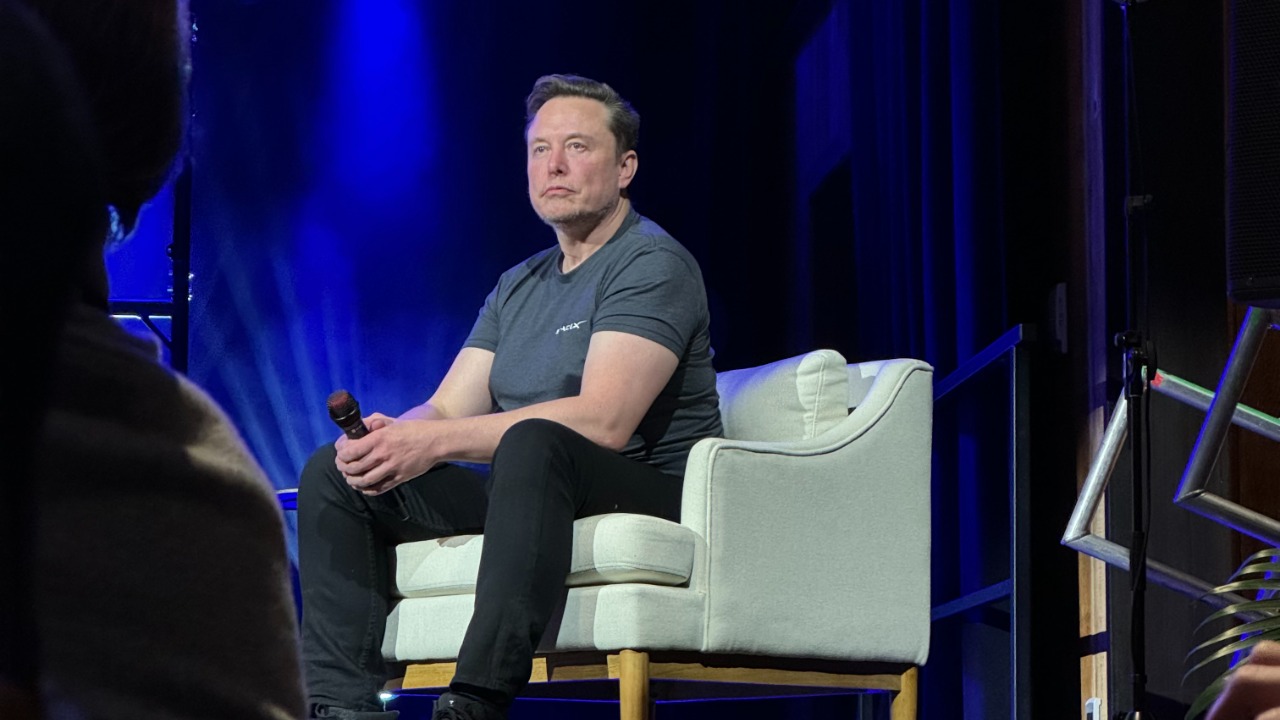
When Elon Musk sat for an interview on Tuesday, he did something he rarely does in public: he downgraded one of his own big ideas. Reflecting on the Department of Government Efficiency, the Trump administration initiative widely known by its acronym DOGE, he described the project as only “a little bit successful” and said he would not launch it again in the same way. That admission matters because DOGE was pitched as a sweeping fix for federal bloat, yet Musk now openly questions whether the payoff justified the political capital and public attention it consumed.
Musk’s comments cut against the early narrative that DOGE would be a template for future reform, a kind of permanent operating system for a leaner federal bureaucracy. Instead, his new assessment suggests that the department’s wins were incremental at best, and that the experiment exposed the limits of trying to graft Silicon Valley style disruption onto the machinery of government. In his telling, the Department of Government Efficiency did trim some waste and modernize some processes, but not at the scale he once promised, a reality he acknowledged when he said he does not think he would “do it again” in the same form, according to reporting on his remarks about the Department of Government Efficiency.
Inside the Department of Government Efficiency and Musk’s doubts
The Department of Government Efficiency was conceived as a kind of chainsaw for bureaucracy, a unit inside the Trump administration that would hunt down redundant programs, outdated rules, and overlapping offices. Musk cast DOGE as a crusade to clean up government waste, promising that a focused team armed with data and engineering talent could do what decades of blue-ribbon commissions and budget task forces had failed to achieve. The branding, echoing his affinity for Dogecoin, was deliberate, a way to make a dry topic like procurement reform sound like a bold, almost playful mission.
In practice, Musk now suggests, the department’s impact was far more limited than its rhetoric. He has signaled that the effort to “chainsaw” government spending and regulation cut into only a fraction of what he once believed was possible, and that the entrenched complexity of the federal system blunted DOGE’s sharpest tools. His recent comments frame the Department of Government as a useful but ultimately constrained experiment, one that exposed how difficult it is to translate private sector efficiency obsessions into public policy at scale, a reality he acknowledged when he said he doubts the push to clean up waste through the Department of Government was truly successful.
Why Musk’s rethink matters for Trump-era reform
Musk’s cooler view of DOGE is more than a personal mea culpa, it is a verdict on a broader theory of Trump-era governance. The Department of Government Efficiency was one of the clearest expressions of the idea that a small, empowered team of technocrats could slice through decades of accumulated rules and programs with the same speed that engineers ship a new software update. By admitting that the project was only “a little bit successful,” Musk is effectively acknowledging that the federal bureaucracy is not a codebase that can be refactored overnight.
For President Donald Trump, who embraced DOGE as a symbol of his promise to shrink Washington, Musk’s reassessment complicates the legacy of that push. It suggests that even with a high-profile ally and a dedicated department, the administration’s most aggressive efficiency drive ran into structural limits that no single initiative could overcome. I read Musk’s comments as a warning to future reformers: if someone with his clout, direct access to the White House, and appetite for risk concludes that he would not repeat the experiment, then any next-generation version of DOGE will need a different playbook, one that accounts for the slow, negotiated nature of public-sector change rather than assuming it can be hacked.
The Dogecoin contrast: enthusiasm in business, caution in government
The irony is that while Musk is backing away from DOGE as a government project, he is still leaning into Dogecoin in his commercial life. On Tesla’s side, he has repeatedly described Dogecoin as “the people’s crypto” and argued that “DOGE has potential” as a medium of exchange, a stance that has helped turn a joke token into a serious asset for retail traders. That enthusiasm has translated into product decisions, with Tesla quietly building code into its website to support Dogecoin payments and keeping the meme coin in the spotlight with a single tweet or product tweak.
Tesla currently accepts DOGE only for certain items in its online shop, a limited but symbolically important use case that shows Musk is still willing to experiment with the cryptocurrency inside his own companies. The contrast is striking: in the private sector, he is comfortable iterating on Dogecoin payments, adding and adjusting features as he goes, while in the public sector he now questions whether the similarly branded Department of Government Efficiency was worth the effort. The split underscores how Musk separates his appetite for risk in a controlled corporate environment, where Tesla can toggle Dogecoin support on its website, from his more cautious view of sweeping structural change in Washington, a distinction reflected in reporting on how Tesla and Dogecoin Elon Musk continue to intersect.
What Musk’s DOGE retreat signals for future tech-government experiments
Musk’s willingness to say he would not repeat DOGE is a rare public data point on how a high-profile tech figure recalibrates after a mixed result in Washington. It suggests that even for someone who thrives on moonshots, there is a threshold where the friction of government outweighs the satisfaction of incremental wins. I see his comments as a signal that future collaborations between Silicon Valley leaders and the federal government will need clearer guardrails, more realistic timelines, and a sharper sense of what success looks like beyond headline-grabbing acronyms.
At the same time, his continued embrace of Dogecoin inside Tesla shows that Musk has not lost his taste for experiments, he has simply become more selective about where he runs them. The lesson of DOGE, as he now tells it, is that branding a department after a meme and arming it with a mandate to cut waste is not enough to overcome the inertia of a sprawling federal system. For policymakers and executives alike, the takeaway is straightforward: if Elon Musk, after calling DOGE only “a little bit successful,” is not eager to try that model again, then the next wave of tech-government partnerships will have to be built on deeper structural reforms rather than the promise of a single, efficiency-obsessed department.
More From TheDailyOverview

Grant Mercer covers market dynamics, business trends, and the economic forces driving growth across industries. His analysis connects macro movements with real-world implications for investors, entrepreneurs, and professionals. Through his work at The Daily Overview, Grant helps readers understand how markets function and where opportunities may emerge.