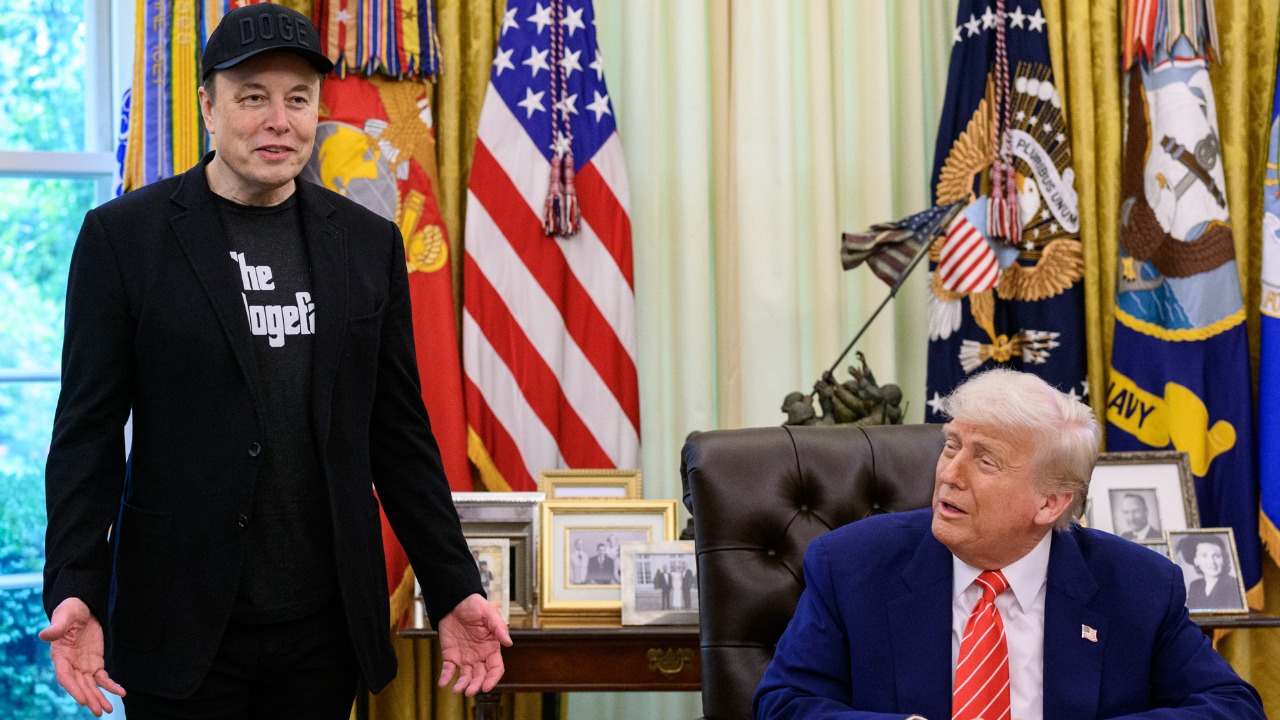
Elon Musk is now openly second-guessing his decision to run the Department of Government Efficiency, the Trump administration experiment better known as DOGE. After months of defending the project as a bold attack on waste, he is describing its results as only modest and saying he would not take the job again if offered a do-over.
His reassessment matters far beyond Washington gossip. It exposes the limits of trying to graft Silicon Valley’s move-fast ethos onto the federal bureaucracy and raises fresh questions about how much damage the short-lived department did on its way to trimming what Musk calls “zombie” spending.
The rise of DOGE and Musk’s “little bit successful” verdict
The Department of Government Efficiency was created by President Trump as a signature early initiative of his second term, a new cabinet-level body charged with rooting out waste across the federal government. The formal name, The Department of Government Efficiency, quickly gave way to its meme-ready acronym, DOGE, a label that echoed the Doge cryptocurrency and was baked into the branding from the start, according to the department’s own founding description.
Musk has said the idea began as a pitch for a “government efficiency commission” that he floated to Trump during a summer conversation at Mar-a-Lago, a concept that eventually evolved into the full-fledged DOGE acronym and department structure described in the project’s background and origin. In public interviews this week, he has tried to balance pride in that origin story with a blunt admission that the experiment did not live up to its hype, repeatedly characterizing DOGE as only “a little bit successful” and something he “wouldn’t take up again,” as he put it when reflecting on the department’s overall performance.
Billions in “zombie payments,” but at what cost?
Even as he distances himself from the role, Musk is still eager to tout DOGE’s headline numbers. He has claimed that the department stopped “$100 [billion], maybe $200 billion of zombie payments per year,” arguing that the office uncovered recurring outlays that no longer had a clear legal or policy justification and shut them down. That sweeping figure, which appears on DOGE’s own website and in Musk’s recent comments about the program’s impact on federal spending, is central to his defense that the project delivered real savings even if he now regrets leading it, a point he underscored while discussing those $100, $200 billion in blocked payments.
Yet the way DOGE achieved those cuts has drawn intense criticism. Reporting on the department’s operations describes how the office took a hacksaw to the federal workforce and to elements of United States foreign aid, shrinking agencies and programs in the name of efficiency with little patience for the slower, consultative processes that usually govern budget changes. That aggressive posture, which critics say treated civil servants and diplomatic tools as expendable line items, is captured in accounts of how DOGE, in less than a full year, slashed staff and programs as Musk worked with the administration to drive rapid reductions in spending, a pattern detailed in analyses of DOGE’s impact on the federal workforce.
Why Musk now says he should have stayed in the private sector
Pressed on whether he would accept the DOGE job again, Musk has been uncharacteristically unequivocal. In multiple interviews he has said he “wouldn’t do it again” and that the department was only “somewhat successful,” language that marks a clear shift from his earlier boasts about transforming Washington. In one televised conversation, he described how leading the Department of Governmental Efficiency this year pulled him away from his core businesses even as he tried to keep the cost-cutting office on track, a tension that framed his verdict that the project was merely “somewhat successful”.
He has gone further in more reflective settings, acknowledging that his time in government hurt Tesla and SpaceX by diverting his attention from engineering and product work. In one exchange, Musk said he should have “worked on my companies, essentially,” a line that has been cited as evidence that his stint in Washington damaged his business ambitions and contributed to operational strain at his firms, a theme explored in coverage of how his DOGE role affected Tesla and SpaceX. That regret has become a central part of his narrative this week, as he contrasts the limited gains of government efficiency work with the opportunity cost of not focusing on electric vehicles, rockets, and his other ventures.
Regret, politics, and the Trump White House
Musk’s change of heart is not only about time management. He has hinted that his experience inside the Trump White House exposed him to levels of “political corruption” and chaos that he had not fully anticipated, suggesting that the environment around DOGE made it harder to deliver on its technocratic promise. Accounts of his tenure describe a rare moment of public contrition from a figure who usually projects unshakable confidence, with Musk admitting he would not lead DOGE again and linking that decision to the dysfunction he says he encountered in the Trump White House.
Outside observers have seized on that admission as a striking reversal from a man who once embraced the role of government disruptor. One columnist noted that now that Musk has left government to spend more time posting what critics describe as White supremacist content on X, even he concedes that DOGE was a distraction and that he should have focused on his companies instead, a point highlighted in commentary that argues even Musk now sees DOGE as a mistake. That framing underscores how his regret has become part of a broader debate over whether tech titans can, or should, try to clean up Washington from the inside.
“Somewhat successful,” “a disappointment,” and what DOGE leaves behind
The language Musk uses to describe DOGE keeps shifting, but the direction is consistently downward. In one interview he called the department “somewhat successful” while again stressing that he would not repeat the experience, and he mused that if he had stayed focused on his companies he might already be the world’s first trillionaire, a hypothetical he raised while reflecting that he should have focused on his companies. In another setting he went further, labeling DOGE “a disappointment” when asked directly if he considered the project a success, a candid assessment he delivered during an appearance on The Katie Miller Podcast while discussing how DOGE was a disappointment.
Those phrases sit awkwardly beside his insistence that DOGE blocked up to $200 billion in waste and his earlier claim that the office was “somewhat successful,” a formulation he also used when speaking about the department’s efforts to cut the national debt and rein in spending, as summarized in coverage of how Musk called DOGE “somewhat successful”. The tension between those boasts and his regretful tone captures the unresolved legacy of DOGE: a department that may have delivered eye-popping savings on paper, but left behind political scars, bureaucratic disruption, and a tech billionaire who now says the whole experiment was, at best, only a little successful.
More From TheDailyOverview

Elias Broderick specializes in residential and commercial real estate, with a focus on market cycles, property fundamentals, and investment strategy. His writing translates complex housing and development trends into clear insights for both new and experienced investors. At The Daily Overview, Elias explores how real estate fits into long-term wealth planning.

