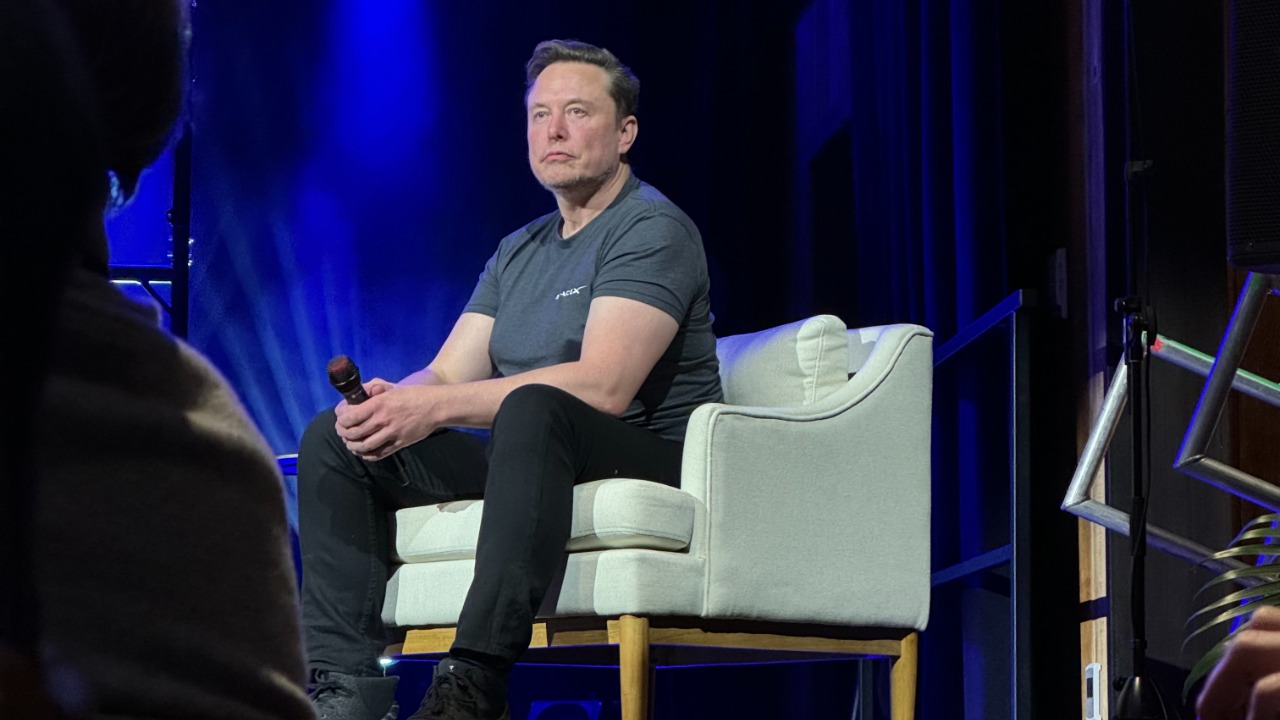
Elon Musk insists that giving away vast sums of money is harder than making it, arguing that real philanthropy demands proof of impact rather than applause. His claim that it is “very difficult to give money away well” cuts against the popular image of billionaire charity as a simple matter of signing checks, and it raises uncomfortable questions about how extreme wealth should be used.
As Musk’s fortune and public influence have grown, so has scrutiny of the Musk Foundation and his broader approach to doing good. I want to examine how his comments on philanthropy fit with his business record, his political alliances, and his own foundation’s strategy, and what his version of “hard” giving reveals about the power dynamics around modern mega-donors.
How Elon Musk frames the problem of giving money away
Musk’s central argument is that serious philanthropy is not a vanity project but a technical challenge, one that he says can be more complex than building companies. He has described the core difficulty as figuring out how to deploy billions in ways that actually improve lives rather than simply generating headlines or easing a billionaire’s conscience, and he has repeatedly stressed that the bar should be measurable change, not good intentions.
In recent remarks, Elon Musk put it bluntly, saying it is “very difficult to give money away well” and that the real test is whether donations produce tangible benefits in the real world rather than just a flattering narrative about generosity. He has argued that it is easier to imagine doing good than “to achieve the reality of it,” a distinction he draws to justify a cautious, impact-focused approach to philanthropy that he contrasts with more traditional, reputation-driven giving, as reflected in his comments on philanthropy being very hard.
The Musk Foundation and the scale of his fortune
Any claim that donating is difficult lands differently when it comes from one of the richest people on the planet, and Musk’s own foundation underscores that tension. The Musk Foundation has grown into a vehicle with assets valued at more than 20 trillion won, a figure that highlights just how much capital he has earmarked for charitable purposes and how much responsibility comes with managing it.
Elon Musk has said that the biggest challenge in running this foundation is “donating in a way that genuinely benefits people,” arguing that writing large checks is easy but identifying interventions that create lasting improvements is not. He has gone so far as to say that donating for true good is “extremely difficult,” a phrase that captures both the scale of the Musk Foundation’s resources and his insistence that the real bottleneck is not money but the ability to turn that money into verifiable outcomes, a point he made while discussing how the foundation, which has grown to a value exceeding 20 trillion won, operates as a distinct kind of billionaire philanthropy vehicle.
Impact over image: Musk’s philosophy of “true good”
Musk’s rhetoric draws a sharp line between what he sees as cosmetic charity and what he calls “true good,” and he repeatedly returns to the idea that perception can be a trap. In his view, philanthropy that is designed primarily to win praise, secure naming rights, or soften a controversial public image fails the basic test of seriousness, because it prioritizes optics over outcomes.
He has argued that giving away money is “very difficult” if you care about “the reality of doing good and not the perception of doing good,” a formulation that reveals his suspicion of high-profile, low-impact donations. Elon Musk has framed effective giving as a data-driven exercise that should prioritize measurable impact and solving real-world problems over public recognition, emphasizing the importance of focusing on tangible results rather than symbolic gestures, a stance he laid out in detail when he described how true philanthropy prioritizes measurable impact.
Why Musk says philanthropy can be harder than building companies
For Musk, the comparison between making money and giving it away is not a throwaway line but a core part of his worldview. He has suggested that building companies like Tesla or SpaceX is, in some respects, more straightforward than philanthropy, because the market provides clear feedback on whether a product works, while the social sector often lacks that kind of immediate, objective scoreboard.
In his public comments, Elon Musk has explained that creating products and services that people want to buy offers a direct signal of success, whereas philanthropy must grapple with complex systems, delayed outcomes, and the risk of unintended consequences. He has described the task of creating real, measurable impact through donations as a challenging effort that requires rigorous thinking about how to give money away effectively and make a lasting difference, a point he underscored when he spoke about the true challenge of philanthropy.
From Saturday Night Live to political kingmaker
Musk’s comments on philanthropy cannot be separated from his broader public persona, which has shifted dramatically in recent years. Back in 2021, when Elon Musk made a tongue-in-cheek confession on Saturday Night Live about his quirks and ambitions, he was still widely treated as an eccentric innovator whose controversies were often brushed off as part of the package, with many viewers giving him the benefit of the doubt.
Since then, his role has expanded from tech mogul to political power broker, particularly through his vocal support for President Donald Trump and his use of platforms like X to shape public debate. Reporting has traced how Elon Musk evolved into one of Trump’s most prominent backers, detailing how his online interventions, his stewardship of Twitter (now X), and his willingness to amplify polarizing narratives have turned him into a central figure in the intersection of technology, politics, and culture, a trajectory that began when he was still joking on Saturday Night Live and has since hardened into a more overtly ideological stance.
How his political stance shapes perceptions of his giving
Once a billionaire becomes a visible political actor, every philanthropic move is interpreted through that lens, and Musk is no exception. His support for President Donald Trump and his willingness to weigh in on contentious issues have led critics to question whether his donations are purely altruistic or whether they also serve to reinforce his preferred policy outcomes and cultural narratives.
That scrutiny complicates his insistence that he cares more about the reality of doing good than the perception of it, because in practice, any grant he makes can be read as an extension of his political project. When a donor with Musk’s profile funds climate initiatives, education programs, or technology research, observers now ask whether those choices align with his business interests, his ideological commitments, or both, and whether his foundation’s priorities mirror the same worldview that has made him a central ally of Donald Trump in the broader fight over regulation, speech, and the future of the tech sector.
The DOGE “side quest” and what it reveals about priorities
Musk’s description of Dogecoin as an “interesting side quest” offers a revealing contrast with the way he talks about philanthropy. On one hand, he treats speculative ventures in cryptocurrency as playful experiments, a kind of optional adventure that sits alongside his main missions in electric vehicles, rockets, and artificial intelligence.
On the other hand, he frames giving away money as a far more serious and demanding undertaking, one that cannot be approached with the same casual enthusiasm he brings to meme coins or online jokes. In the same conversation where he called DOGE an “interesting side quest,” Elon Musk reiterated that it is very difficult to give money away well, stressing that the challenge of philanthropy lies in designing interventions that actually work rather than chasing feel-good narratives, a juxtaposition that highlights how he ranks speculative finance, entertainment, and serious philanthropy in his own hierarchy of priorities.
What “measurable impact” looks like in Musk’s world
When Musk talks about measurable impact, he is importing a familiar engineering mindset into the realm of philanthropy. He wants to see clear metrics, feedback loops, and evidence that a given intervention is moving the needle, whether that means more students mastering a subject, more carbon removed from the atmosphere, or more resilient infrastructure in vulnerable communities.
Elon Musk has emphasized that true philanthropy should prioritize solving real-world problems over public recognition, arguing that donors should focus on tangible results that can be tracked and evaluated over time. In his view, that means designing projects where outcomes can be quantified and where the link between a grant and a social benefit is as direct as possible, a philosophy he has articulated in discussions about how measurable, tangible results should guide the allocation of his foundation’s resources.
The unresolved tension at the heart of Musk’s philanthropy
For all his talk about the difficulty of giving, Musk still faces a basic tension that shadows every mega-donor: the gap between private decision-making and public consequences. When one person controls a foundation worth more than 20 trillion won, the choice of which problems to tackle and which to ignore is itself a form of power, even if it is exercised in the name of doing good.
Elon Musk’s insistence that donating for true good is extremely difficult is, in part, a recognition of that responsibility, but it also functions as a shield against criticism that he is not giving enough or not giving in the right ways. His own words about how hard it is to give money away effectively, how philanthropy demands measurable impact, and how it must avoid the trap of mere perception, all point to a demanding standard that he says he wants to meet, yet they also invite a simple, enduring question: with so much wealth and influence at his disposal, how close is he to matching the scale of his fortune with the scale of his philanthropy, a question that will continue to follow him as he refines his views on the true challenge of giving.
More From TheDailyOverview
- Tennessee loses $2.6B megafactory and faces major layoffs
- Retired But Want To Work? Try These 18 Jobs for Seniors That Pay Weekly
- What to do with your pennies after the U.S. stops minting them
- Home Depot CEO warns of a troubling customer trend in stores

Cole Whitaker focuses on the fundamentals of money management, helping readers make smarter decisions around income, spending, saving, and long-term financial stability. His writing emphasizes clarity, discipline, and practical systems that work in real life. At The Daily Overview, Cole breaks down personal finance topics into straightforward guidance readers can apply immediately.
