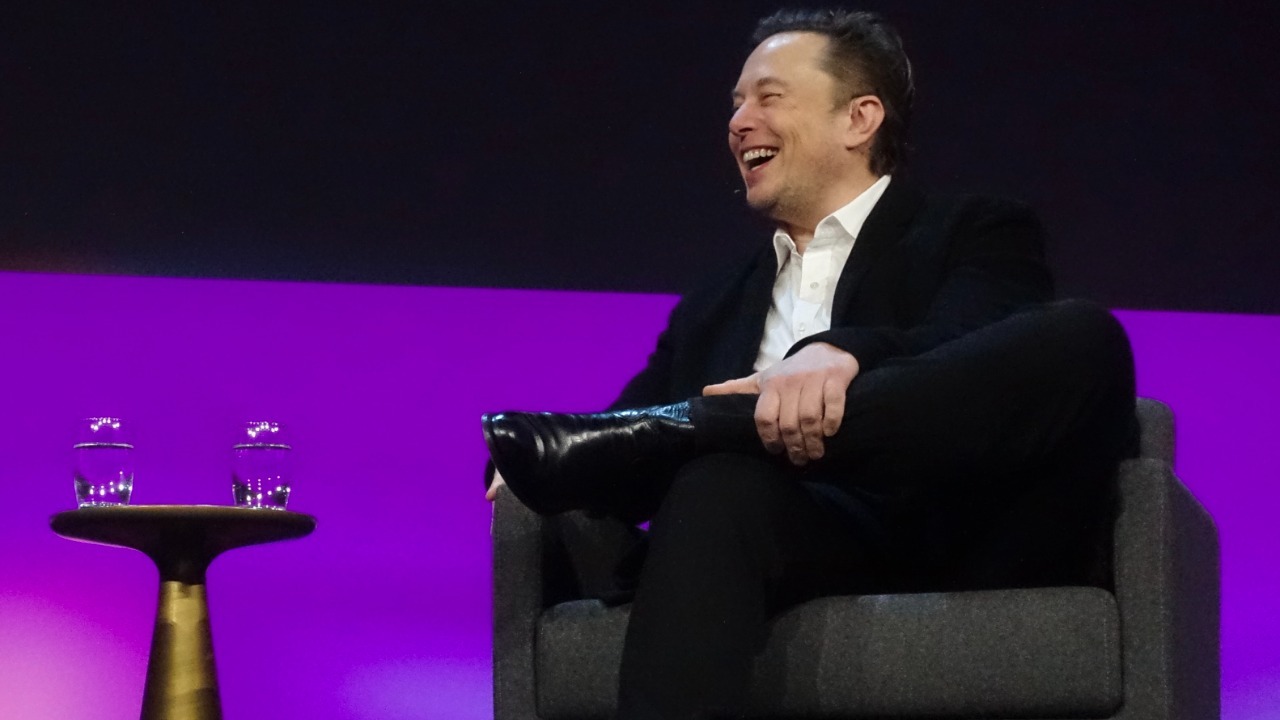
The United States is carrying a national debt that has surged past $34 trillion, and Elon Musk has turned that abstract figure into a stark warning about the country’s economic future. He has described a looming “day of reckoning” in which interest costs overwhelm the federal budget and push America toward something that looks uncomfortably like bankruptcy. At the same time, he insists that the same technologies he is betting on in his own companies, especially artificial intelligence and robotics, could be the only realistic way out.
Musk’s ‘day of reckoning’ and the $34 trillion problem
Elon Musk has been unusually blunt about the scale of the fiscal hole, arguing that the United States is on a path where the math simply stops working. In recent comments he framed the trajectory of a roughly $34 trillion federal debt as a countdown to a “day of reckoning,” warning that there is “no way” to fix the issue if policymakers keep treating borrowing as painless. In that conversation he linked the risk of a future crisis directly to the possibility that America effectively goes bankrupt, a scenario he says would hit ordinary savers hardest and make it vital for households to “shockproof” their nest eggs through diversification and hard assets, rather than assuming government guarantees will always hold.
His alarm is not just about the headline number, but about the speed at which obligations are compounding. Musk has stressed that once interest payments consume a large share of federal revenue, the government loses room to invest in growth or respond to emergencies, and the political system tends to reach for more borrowing instead of hard choices. On a recent appearance he described the current path as one where the country “goes bankrupt” in slow motion, with each additional trillion of debt narrowing the options available to future leaders, a point he underscored while discussing the risk that the United States will face a fiscal reckoning if it keeps adding to the tab in this way, as reported in recent remarks.
‘No way’ to solve the crisis without radical change
Over the past year Musk has sharpened his language, saying flatly that there is “no way” the United States solves its debt crisis if it continues to treat deficits as business as usual. In one widely discussed exchange he was asked whether America is on the verge of bankruptcy and responded that there is effectively no path to stabilizing the situation under current policies. He pointed to the official “Debt to the Penny” database to highlight how quickly the obligations are rising and argued that the political incentives in Washington favor new spending and tax breaks over restraint, which in his view makes a conventional fix impossible.
That skepticism about traditional tools is why he has started to talk about the need for a fundamental reset in how the economy works. Musk has framed the current trajectory as a wake-up call, not just for lawmakers but for voters who reward short term promises over long term sustainability. In his view, the only credible way to avoid a future where the United States edges toward effective insolvency is to pair fiscal discipline with a step change in productivity, a point he emphasized when he said there is “no way” the country solves the debt crisis without rethinking its entire growth model, as reflected in his comments on whether America is on.
Interest payments, rising rates and the squeeze on taxpayers
Behind Musk’s rhetoric is a concrete budgetary problem: interest costs are climbing faster than the economy. As rates have risen from the ultra-low levels of the past decade, the federal government has had to refinance portions of its $34 trillion debt at much higher yields, which Musk argues is pushing the United States toward a structural crisis. He has highlighted how interest payments are soaring amid rising rates and warned that this dynamic exposes the true scale of the fiscal challenge, because it forces the Treasury to devote more revenue just to servicing past borrowing rather than funding current priorities.
In his social media posts and interviews he has extrapolated this trend to a stark endpoint where “all tax revenue will go to paying” interest if nothing changes. That phrase, which he used in another warning about America’s trajectory, captures his view that taxpayers could eventually see their contributions swallowed almost entirely by debt service, leaving little for defense, infrastructure or social programs. Musk has tied this scenario to a broader critique of government waste and the complexity of the tax system, even questioning whether the Internal Revenue Service should exist in its current form, a line of argument he advanced while warning that all tax revenue. His broader concern about interest payments soaring amid rising rates was echoed when Elon Musk, the of Tesla and SpaceX, warned about the scale of the fiscal challenge as borrowing costs climb.
AI and robotics as Musk’s escape hatch
Where many fiscal hawks stop at calls for spending cuts and tax hikes, Musk goes further, arguing that technology is the only realistic way out of the debt trap. In a wide ranging conversation he said that “The Only Way to Get Us Out of the Debt Crisis” and “Prevent America from Going Bankrupt” is to harness artificial intelligence and robotics to drive productivity far beyond what current forecasts assume. His thesis is that if each worker is augmented by advanced AI systems and physical robots, the economy can grow fast enough to make today’s debt load manageable, even as the population ages.
He has sketched a future in which “Applied Intelligence” becomes the next big platform, enabling a “New Economy” with “No Poverty, No Hunger And Work Is Optional” because machines handle most routine tasks. In that scenario, Musk argues, the tax base would expand dramatically as AI and robots generate enormous value, giving the government more revenue without raising rates and allowing it to stabilize or even reduce the debt. He has linked this vision explicitly to his role at Tesla, describing how the company’s work on autonomous vehicles and humanoid robots could feed into a broader transformation of labor and output, an idea he elaborated while predicting a new economy with. He framed the same technological leap as the only way to prevent America from going bankrupt in his comments about how to get the United.
From ‘substantial ignorance’ to viral memes about past promises
Musk’s campaign on debt is not limited to policy prescriptions, it is also about public awareness. He has complained that there is “substantial ignorance” about the national balance sheet, noting that a significant percentage of people do not even know there is such a thing as a national debt. In one post he pointed out that The US national debt is more than $36 trillion, using that precise figure to argue that the country has already crossed a psychological threshold that should alarm voters. He has paired those warnings with calls to root out government waste and to make the budget more transparent so citizens can see where their tax dollars go, a theme he pressed while highlighting that US national debt.
At the same time he has used humor and social media virality to make his point. In one instance Musk reposted a meme that mocked Bill Clinton’s claim in 2000 that the United States could be “debt-free” within 10 years, contrasting that optimistic forecast with today’s towering obligations. By resurfacing that promise, he suggested that bipartisan leaders have long underestimated the political difficulty of sustained fiscal discipline and that voters should be skeptical of rosy projections. The meme, which referenced former President Bill Clinton directly, was Musk’s way of arguing that the system has repeatedly chosen short term comfort over long term solvency, a critique he amplified when Elon Musk reposted.
Bankruptcy warnings, Trump’s interest and the politics of austerity
Musk’s warnings have increasingly intersected with national politics. He has said that America is going bankrupt “extremely quickly,” arguing that the current fiscal path is unsustainable even if markets remain calm for now. Those comments caught the attention of President Donald Trump, who has floated the idea of appointing Musk as a kind of “cost cutter” to help rein in federal spending. Musk has not outlined a detailed plan for such a role, but his public statements suggest he would push for aggressive reductions in what he sees as unnecessary programs, along with a reorientation of federal investment toward technologies that boost productivity, a connection that surfaced when Elon Musk warned and Trump signaled interest in his cost cutting instincts.
His more recent statements have doubled down on the bankruptcy theme. In one interview he said that America is going bankrupt “extremely quickly,” and in another he warned that if interest costs keep rising, “all tax revenue will go to paying” the debt. These lines have resonated with fiscal conservatives who see him as a high profile ally in the push for austerity, but they have also drawn criticism from economists who argue that a country issuing debt in its own currency does not go bankrupt in the same way a household or company does. Musk, for his part, tends to use the term as a shorthand for a future in which the government is forced into painful choices by markets or inflation, rather than a formal default, a framing that has become central to his political influence as he pushes leaders in America to confront the numbers head on.
Retirement, saving and a future where money ‘may become irrelevant’
Alongside his dire warnings, Musk has floated a radically different vision of personal finance in an AI dominated economy. In a recent discussion highlighted by Mamboleo media and Maisha Magic East Shows, Billionaire Elon Musk suggested that people should not stress too much about saving for retirement if AI and robotics advance as quickly as he expects. He argued that in a world where machines generate most of the value and basic needs are cheaply met, traditional retirement planning might matter less than access to the technologies and platforms that distribute that abundance, a point that sparked debate when Mamboleo and Maisha amplified his comments.
More From TheDailyOverview

Silas Redman writes about the structure of modern banking, financial regulations, and the rules that govern money movement. His work examines how institutions, policies, and compliance frameworks affect individuals and businesses alike. At The Daily Overview, Silas aims to help readers better understand the systems operating behind everyday financial decisions.

