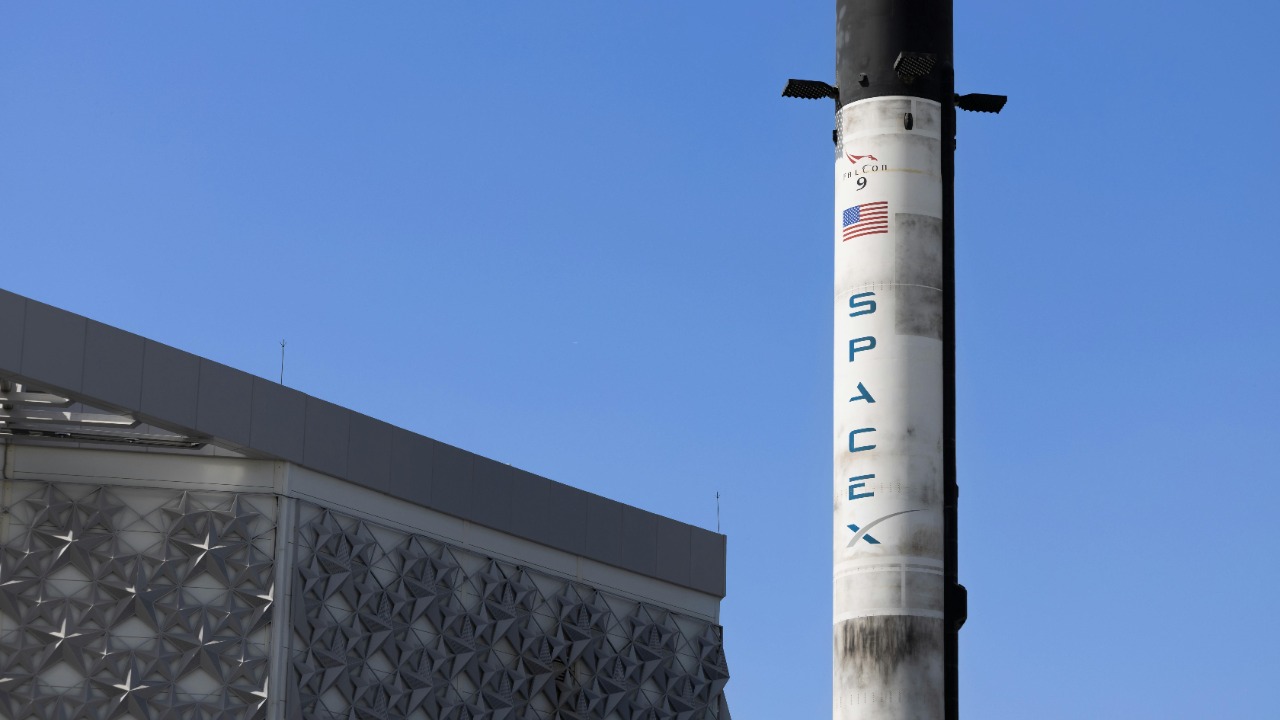
Elon Musk is trying to drag the cloud business into orbit, and the price tag is staggering. Analysts now estimate that his vision of vast SpaceX data centers circling Earth could require as much as $5 trillion in annual spending, a figure that would dwarf today’s entire global cloud and semiconductor markets. The plan hinges on launching an unprecedented swarm of satellites and turning low Earth orbit into a giant AI computer, a bet that blends technical audacity with financial risk on a historic scale.
The idea is simple to describe and brutally hard to execute: move the most power-hungry AI workloads off the ground and into space, where solar energy is abundant and cooling is easier. To get there, Musk is tying together rockets, Starlink connectivity and his AI startup xAI into a single machine for orbital compute, and he is asking regulators, investors and rivals to imagine a world where the biggest data centers never touch dirt.
The million-satellite dream
The backbone of Musk’s concept is a new constellation of satellites that would not just beam internet, but also host AI chips and storage in orbit. SpaceX has formally filed plans for a million-satellite orbital data center constellation, a scale that would make today’s Starlink network look modest. In that filing, the company described leveraging its existing launch system and next-generation spacecraft to loft hardware that can both communicate and compute, effectively turning each satellite into a tiny server node.
Separate technical descriptions of the project say the new satellites will be heavier and more capable than current Starlink units, and that the plan depends on the lift capacity of Starship to make the economics even remotely plausible. Based on details SpaceX has shared about the weight of the next-generation Starlink satellites and Starship’s launch capacity, analysts have been able to reverse engineer how many launches and how much hardware would be required, and the numbers quickly climb into the trillions of dollars.
From Starlink to orbital AI
Musk is not starting from scratch. The existing Starlink business already operates thousands of satellites that deliver broadband to homes, ships and aircraft, but investors have questioned whether that connectivity alone can justify valuations as high as $1.5 trillion. To answer that, Musk is pitching orbital compute as the next act, arguing that the same infrastructure that beams internet can be upgraded to run AI models for customers who care about latency, global reach and energy costs.
Regulatory filings describe how the new satellites would orbit Earth and harness solar power to feed racks of AI accelerators, then use high-speed laser links to move data between satellites and down to ground stations. In Washington, WASHINGTON regulators are now reviewing SpaceX’s request to launch a constellation of 1 million satellites that would orbit Earth and harness solar energy for artificial intelligence, a sign that the company is trying to lock in spectrum and orbital slots before rivals can respond.
The $5 trillion sticker shock
The most eye-catching number attached to Musk’s orbital data center scheme is the projected annual cost. Analysts at Morningstar have warned that Elon Musk’s plans for SpaceX data centers in orbit could cost $5 trillion a year if the company pursues its plan at full scale. That figure folds in the capital expenditure for hardware, the cost of launches, and the ongoing replacement of satellites that age out or fail in orbit.
Another breakdown of the economics focuses on the AI chips themselves. Telecom analyst Del Deo suggests that building 100 gigawatts of orbital compute might entail capital expenditure in the range of $4 trillion to $5 trillion for Nvidia equipment alone, before counting rockets or solar arrays. When I compare that to the roughly $30.6 trillion global economic output that Del Deo cites, it becomes clear that Musk is effectively proposing to devote a meaningful slice of world GDP to a single infrastructure project.
xAI, mega-mergers and the hunt for cash
To make any of this remotely feasible, Musk is trying to consolidate his empire. Earlier this year, Elon Musk merged xAI and SpaceX into what one analysis described as a $1.25 trillion powerhouse, pitching the combination as a way to pioneer space-based compute and reshape the future of AI infrastructure. The logic is straightforward: xAI needs access to rockets and satellites, while SpaceX needs a high-margin AI business to justify its valuation and fund its most ambitious projects.
Independent commentary notes that xAI is reportedly burning cash at a rapid clip and that SpaceX is better positioned to absorb the platform’s ongoing costs, a point underscored by analysis that framed the deal as a way to put rockets, Starlink and AI under one roof Away from the hype about orbital data centers. Another report on the acquisition described how SpaceX officially acquires xAI, merging rockets with AI expertise and amplifying Musk’s claim, highlighted in a blog post on Spac, that the future of compute will be in space Published.
Regulators, rivals and a crowded sky
Even if the money materializes, Musk still has to win over regulators and address fears about orbital congestion. In filings with U.S. authorities, Elon Musk’s SpaceX has asked for permission to launch one million satellites to power an orbital AI data center, a request that has been detailed in coverage of how SpaceX plans to use solar power and advanced networking to support artificial intelligence. Another account of the same plan notes that SpaceX has filed plans with U.S. regulators to launch one million satellites to power an orbital AI data center, underscoring how Elon Musk is trying to lock in a regulatory green light for a project that would reshape the night sky Elon Musk.
Critics are already sounding alarms. One analysis of the project quotes observers who say Musk’s plan contemplates running about 100 times as many satellites as there are in orbit today, a scale that some astronomers and space traffic experts describe as “doomsday” for low Earth orbit. Another report on Musk’s AI data centers in space repeats that Musk’s plan contemplates running about 100 times as many satellites as there are in orbit today, which would require nine launches for every one that currently flies, a ratio that would transform how crowded the sky becomes Musk.
More From The Daily Overview
*This article was researched with the help of AI, with human editors creating the final content.

Grant Mercer covers market dynamics, business trends, and the economic forces driving growth across industries. His analysis connects macro movements with real-world implications for investors, entrepreneurs, and professionals. Through his work at The Daily Overview, Grant helps readers understand how markets function and where opportunities may emerge.