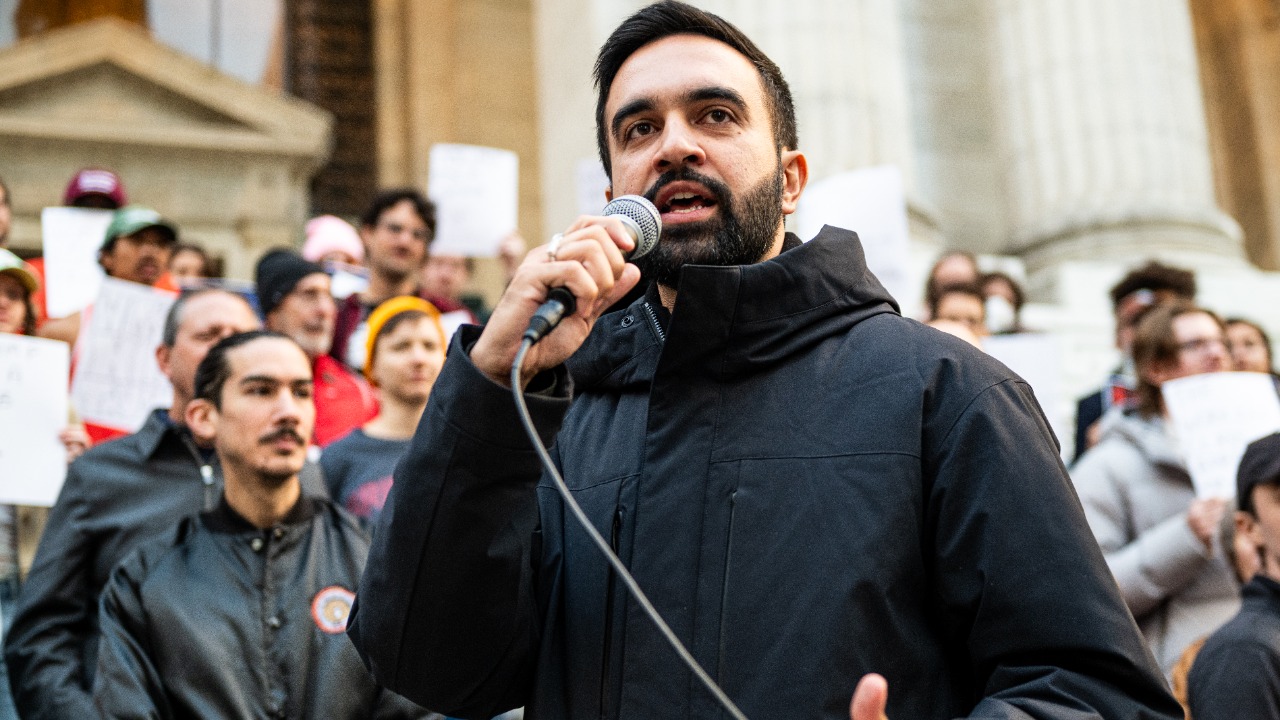
In New York City politics, few debates cut closer to the bone than the fight over who gets to own a home. Eric Adams and Zohran Mamdani are now arguing not just about zoning or subsidies, but about whether buying property is a path to liberation or a pillar of inequality. At stake is a simple but explosive question: is homeownership really the immigrant wealth hack, or has that story stopped matching the math on the ground?
I see their clash as a proxy for a deeper divide over how to build security for immigrants, Black families and renters in a city where both rent and sale prices have raced ahead of wages. The answer is not whether homeownership matters, but whether it can still function as a realistic and fair ladder for those who need it most.
Adams’s wealth gospel: buy a home, beat the odds
Eric Adams has staked out a clear, almost moral argument: owning a home is how immigrants, Black New Yorkers and working class families turn struggle into stability. In a widely shared intervention, NYC’s Eric Adams framed home purchases as the engine that built lasting wealth for immigrant families who arrived with little. He has repeated that “Homeownership is how immigrants, Black, and working class people built wealth,” turning a personal narrative into a governing philosophy that treats the deed as a shield against displacement.
That belief is not just rhetoric. As mayor, Adams committed an $82 million investment to expand the HomeFirst down payment assistance program, explicitly pitched as a way to put ownership “within reach” for more New Yorkers. His message has been consistent: if the city can help renters cross the threshold into ownership, they can start building equity instead of watching landlords capture all the gains. For Adams, the immigrant wealth hack is not a metaphor, it is a policy blueprint.
Mamdani’s tenant-first lens and the Cea Weaver flashpoint
Zohran Mamdani comes at the same terrain from the opposite direction, rooted in organizing around rent control and public housing rather than mortgages. His stated positions on Housing emphasize stronger tenant protections, rent control and a Social Housing Development Agency that would expand non-market homes at scale. In that worldview, the central problem is not that renters have not yet bought, but that the private market treats shelter as an asset class first and a human need second.
The clash with Adams sharpened when Mamdani appointed Cea Weaver to a key tenant protection role and critics resurfaced her past comments describing home ownership as a tool of white supremacy. Mamdani publicly defended his pick, with Mamdani arguing that the controversy should not overshadow her mandate to protect tenants. Another account of the uproar notes that Cea Weaver was tapped as executive director for the mayor’s office to protect tenants, even as opponents seized on her language about private property and white supremacy.
When homeownership becomes a culture war
Adams seized on Weaver’s comments as proof that Mamdani’s camp is out of touch with the aspirations of immigrant and Black families. In a pointed social media broadside, he shared a screenshot of the resurfaced tweet and argued that dismissing homeownership as white supremacy shows “extreme privilege and total detachment from reality,” a line captured in coverage of his Adams included response. Another account of the same exchange notes that Moneywis and others amplified his argument that homeownership has historically helped marginalized groups build security rather than entrenching racism.
Even after leaving office, the former mayor has kept pressing that line. On one platform, Former New York explicitly rejected the idea that buying a home is inherently white supremacy, saying it has historically helped families of color. Another report on the same saga, framed as Adams Delivers Scathing, quotes him blasting the idea that homeownership is just about the speculative value of land. In that telling, the culture war is not abstract, it is a fight over whether calling out structural racism in housing policy ends up insulting the very communities that still see a house key as a symbol of arrival.
What the numbers say about immigrant renters and owners
Strip away the rhetoric and the data shows why this argument is so charged. New York City’s own fiscal watchdog has documented that, according to a Source based on the U.S. Census Bureau’s 2022 American Community Survey, rental affordability has worsened considerably in New York City even as the cost of buying has climbed. That survey-driven Census Bureau snapshot underlines a basic tension: renters are squeezed, but the entry ticket to ownership is also moving further out of reach.
Immigrant families are bearing a disproportionate share of that squeeze. New analysis of city data shows that Non citizen households with children shoulder a higher rent burden than both naturalized and native-born citizen households. A second reference to the same findings stresses that non-citizen households are more likely to be rent-burdened, which means they have less room to save for down payments or weather income shocks. In that context, telling immigrant renters that the solution is simply to buy can sound less like empowerment and more like a taunt.
Is homeownership still a wealth engine for communities of color?
There is a reason Adams’s message resonates, though, and it is not just nostalgia. Research on Homeownership and wealth finds that owning a home is one of the most powerful strategies to close racial and ethnic wealth gaps. For Latinos in particular, For Latinos housing equity plays an outsized role in net worth, often dwarfing retirement accounts or other assets. That evidence backs Adams’s insistence that dismissing ownership as a racist construct ignores how families of color have used it as a shield against volatility and a way to pass something tangible to their children.
Black leaders in New York have made a similar point about stability, even as they warn that the affordability crisis is eroding those gains. One recent reflection argued that for their communities, the affordability crisis has always been one of the most immediate and unforgiving threats, and that Jan Black families who have anchored themselves in neighborhoods still struggle to translate that into long term stability or advancement. A second citation to the same piece underscores that Black households can own and still face precarious finances if taxes, repairs and neighborhood disinvestment eat away at the promise of equity. The wealth engine works, but only when the broader system is not rigged against the owner.
More From TheDailyOverview
*This article was researched with the help of AI, with human editors creating the final content.

Cole Whitaker focuses on the fundamentals of money management, helping readers make smarter decisions around income, spending, saving, and long-term financial stability. His writing emphasizes clarity, discipline, and practical systems that work in real life. At The Daily Overview, Cole breaks down personal finance topics into straightforward guidance readers can apply immediately.