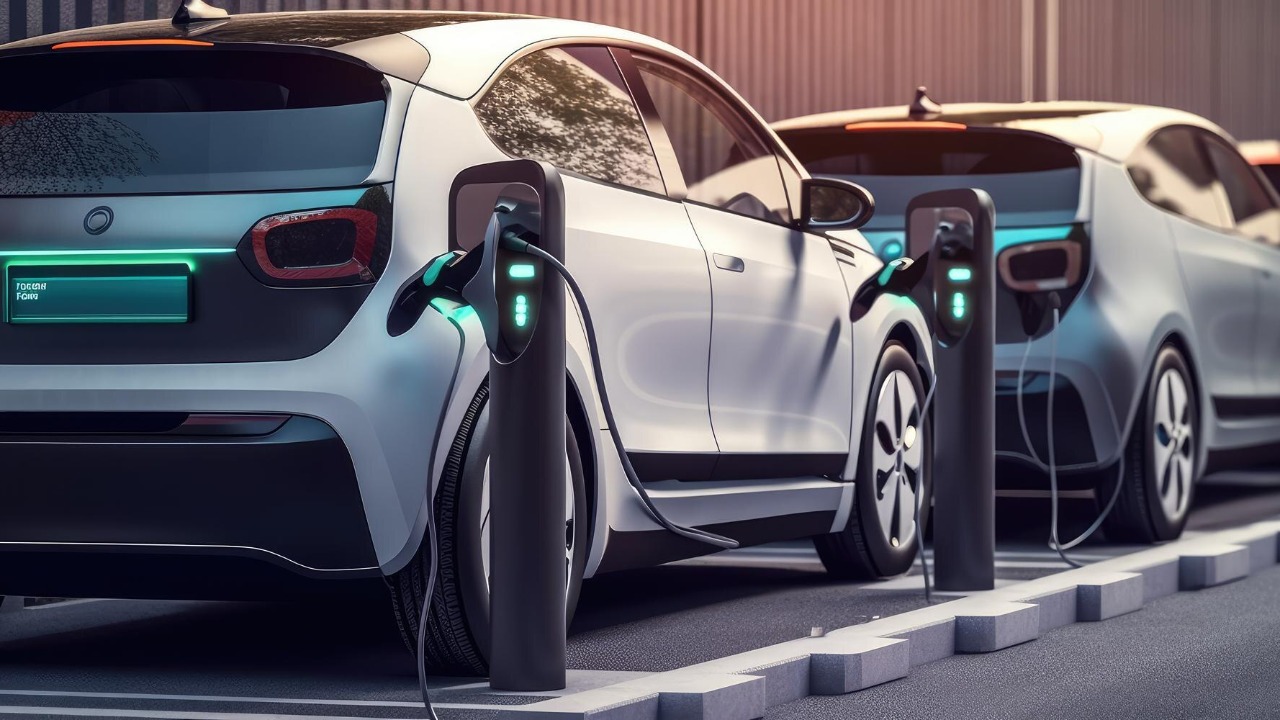
Electric vehicle buyers are slamming on the brakes after the federal incentive that helped justify higher sticker prices disappeared. The slowdown is sharp enough that what had looked like a smooth transition to battery power now resembles a stress test for automakers, dealers, and policymakers who bet heavily on subsidies to build momentum.
Instead of a gentle cooling, the market is adjusting in real time to the loss of thousands of dollars per vehicle, exposing how dependent recent growth was on tax credits and cheap financing rather than on pricing and infrastructure that could stand on their own.
The tax credit cliff that set off the slowdown
The turning point came when the federal incentive for new electric models effectively stopped working earlier this fall, removing a key discount that had been baked into many shoppers’ budgets. Guidance published on Oct 7, 2025, noted that the federal benefit for electrified vehicles expired in September, explaining that the program that once shaved thousands off the cost of a new plug-in no longer applies on the new-vehicle front, a shift detailed in How Does the Electric Car Tax Credit Work. For buyers who had been counting on that help, the change instantly widened the gap between gasoline and battery-powered models.
Automakers had been warned that demand would soften once the federal support vanished, but the scale of the adjustment is still jarring. A Quick Summary dated Sep 30, 2025, reported that after the expiration of a $7,500 tax credit, manufacturers were left with about 134,000 unsold new electric vehicles, underscoring how much inventory was built on the assumption that subsidies would keep flowing, as described in After the. When a $7,500 discount disappears overnight, the effective price of a Chevrolet Equinox EV or Ford Mustang Mach-E jumps by the kind of amount that would normally take years of gradual increases to introduce.
Sales data confirm a sudden, steep pullback
The first full month without the federal incentive shows just how quickly shoppers stepped back from showrooms. An EV Market Monitor released on Nov 16, 2025, estimated October new EV sales at 74,835 units, a figure that represented a 48.9% plunge from the prior month’s record, according to the Estimated October report. That kind of month-to-month collapse is rare in the auto business and signals a structural shock rather than a routine seasonal dip.
Battery-electric models also lost ground as a share of the broader market once the subsidy vanished. A Nov 9, 2025, update on BEV performance said BEV sales represented just 5.9% of new-vehicle sales in October 2025, down from an all-time high of 11.3% in September 2025, a reversal captured in the BEV market beat. That drop in share matters as much as the raw volume, because it shows electric models losing momentum relative to gasoline and hybrid competitors rather than simply tracking a broader slowdown.
From boom to “reset era” in a single month
The whiplash is even more striking when set against the surge that came just before the credit expired. Analysts have described October as a reset after a record-breaking September, with one Nov 2, 2025, assessment noting that October was always expected to be challenging as the market shifted into what was called a “reset era,” shaped by inventory and financing dynamics that added pressure and reshaped buyer behavior, as outlined in an Inventory and analysis. When a market goes from record highs to a near-halving of sales in a matter of weeks, it is clear that policy timing, not consumer fatigue alone, is driving the swing.
Global context makes the U.S. reversal stand out even more. A Nov 11, 2025, report on worldwide trends said Global EV sales climbed 23% in October, led by gains in Europe and China, even as North American demand slumped after the federal benefit disappeared, a divergence highlighted in a piece on Sales Surge Worldwide, But. When the rest of the world is still accelerating and one region suddenly hits the brakes, the difference usually comes down to policy design and local economics rather than any global shift in attitudes toward electrification.
Shoppers rethink value without a $7,500 cushion
For individual buyers, the disappearance of the federal incentive is not an abstract policy change, it is a line item that can make or break a monthly payment. A Nov 16, 2025, consumer-focused explainer put it bluntly, noting that now that the federal tax benefit has expired, shoppers are hitting the brakes on EV purchases as the market finds its natural, unsubsidized level, a dynamic described in a piece on how When shoppers respond. Without that cushion, a Tesla Model Y or Hyundai Ioniq 5 suddenly competes not just with gasoline SUVs but also with plug-in hybrids that still offer some electric driving without the same upfront premium.
Survey work suggests that many households were always more price sensitive than the headline adoption numbers implied. Findings from The Road Ahead, published on Oct 7, 2025, reported that The Road Ahead: EV Demand After the Federal Tax Credit Ends shows how expectations for future EV purchases shift once respondents are told the federal support is gone, a pattern laid out in The Road Ahead. When I look at those findings alongside the sales data, the throughline is clear: enthusiasm for cleaner technology remains, but it is tightly bound to whether the total cost of ownership feels competitive with a well-equipped gasoline crossover.
Tax credits were always central to EV demand
The current pullback is not happening in a vacuum, it is exposing how much of the recent boom was built on federal support. An E-Vision Intelligence Report dated Nov 26, 2024, listed Key Findings that Federal Tax Credits Have Played a Critical Role in Consumer Decisions to Purchase an EV, especially among premium buyers who were more likely to say the incentive tipped them into a purchase, according to the Federal Tax Credits Have Played research. When a policy is described as having a Critical Role in Consumer Decisions to Purchase, it should not be surprising that removing it produces a sharp reaction.
Fresh data from early November show that the underlying interest in electric models has not vanished, even as actual purchases slump. An Executive Summary dated Nov 6, 2025, on the first month after repeal said Consumer response to the repeal of the $7,500 EV tax credit has been swift and dramatic, yet also noted that Consumers currently planning to purchase an EV in the next 12 months remained at its highest level since January, a nuance captured in the Executive Summary. I read that as a sign that many shoppers are pausing, not abandoning, their EV plans, waiting either for prices to adjust or for new incentives to emerge.
Automakers, dealers, and the broader auto market adjust
Manufacturers and retailers are now scrambling to adapt to a market that suddenly looks overbuilt for current demand. A Nov 2, 2025, industry blog on U.S. EV performance noted that U.S. EV Sales Plunge After Tax Credits Expire and pointed out that Ford CEO Jim Farley had warned about a post-subsidy slump before the numbers confirmed it, a prediction revisited in the Sales Plunge After Tax Credits Expire recap. When a chief executive like Ford CEO Jim Farley publicly flags a risk and then watches it materialize, it tends to accelerate internal debates over how aggressively to keep investing in new battery plants and dedicated EV platforms.
The broader auto sector, meanwhile, is still showing resilience outside the electric segment. A Nov 16, 2025, review of Official Data said Strong Signals Through August from the BEA showed light vehicle sales holding up even as the government shutdown complicated reporting, with Automotive News data pointing to continued strength in traditional models, as summarized in the Official Data discussion. That contrast, steady overall sales alongside a sharp EV pullback, reinforces the idea that the current slump is not a macroeconomic collapse but a targeted reaction to the loss of a specific policy tool.
More From TheDailyOverview
- Dave Ramsey warns to stop 401(k) contributions
- 11 night jobs you can do from home (not exciting but steady)
- Small U.S. cities ready to boom next
- 19 things boomers should never sell no matter what

Julian Harrow specializes in taxation, IRS rules, and compliance strategy. His work helps readers navigate complex tax codes, deadlines, and reporting requirements while identifying opportunities for efficiency and risk reduction. At The Daily Overview, Julian breaks down tax-related topics with precision and clarity, making a traditionally dense subject easier to understand.