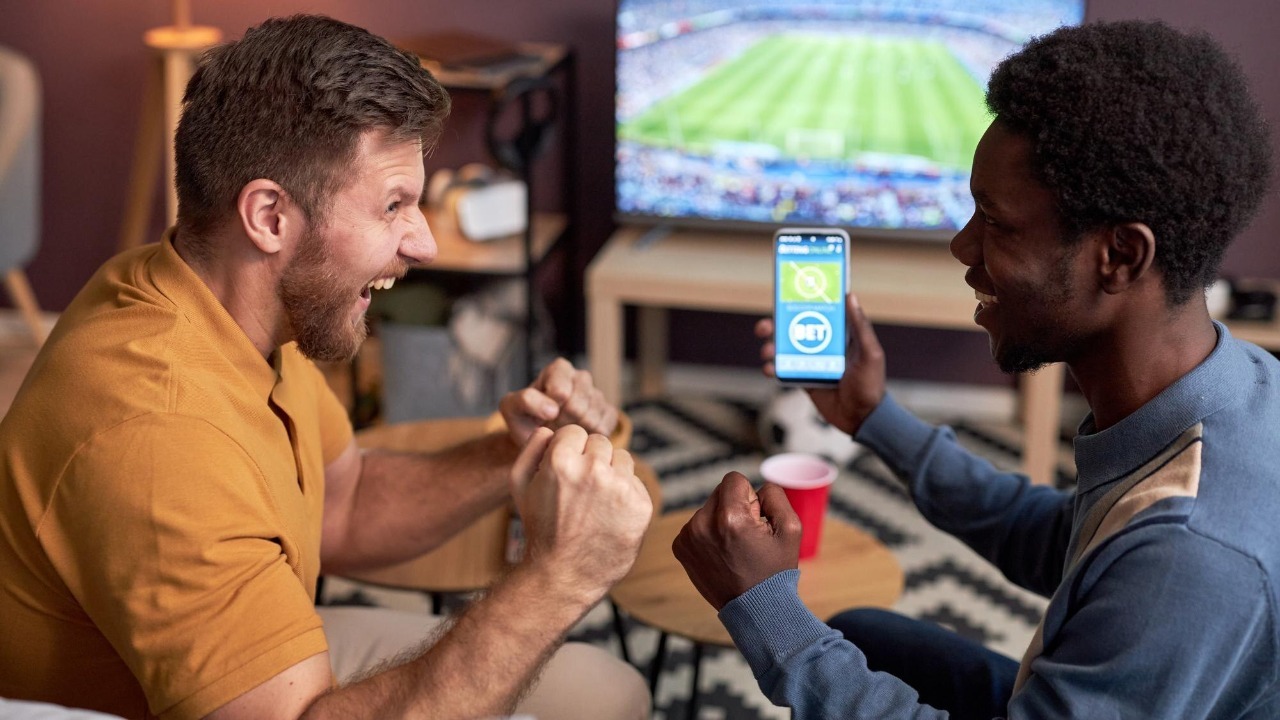
Legal gambling in the United States has exploded from a niche vice into a default backdrop of daily life, stitched into sports broadcasts, brokerage apps, and even social media chatter. What used to mean a weekend in a casino now means a constant stream of prompts to wager on games, elections, markets, and real world disasters. It is not just that everything can be bet on, it is that the culture increasingly treats risk itself as entertainment.
I see a country where the logic of the sportsbook has seeped into how people watch the NFL, check their retirement accounts, and even talk about politics. The result is a booming industry and a mounting public health problem, with record revenues on one side and record concern about addiction, corruption, and social fallout on the other.
The legal floodgates and the sports-betting boom
The modern wave of sports betting began when the Supreme Court cleared the way for states to legalize it, a decision that effectively opened the floodgates for wagering across the country. In the U.S., that ruling dismantled a federal sports betting ban and helped create a landscape where most states now allow some form of legal wagering, a shift that experts at In the describe as a structural break with the past. Earlier restrictions that kept gambling largely confined to Nevada and a few lottery products gave way to a patchwork of state markets, each racing to capture tax revenue and licensing fees.
The scale of the boom is now visible in single events. Americans are expected to place a record-breaking $1.7 billion in legal bets on just the Super Bowl, with Thirty nine states and Washingto, D.C., offering regulated markets that did not exist before the federal ban fell. That surge is not a one-off; it reflects a broader normalization of gambling as a routine part of fandom and leisure, a shift that has turned what used to be a side hustle for bookies into a mainstream consumer product.
From pastime to default habit
What was once a niche hobby has become a default habit for a large share of the population. Surveys now find that Forty percent of Americans say they bet on sports, a figure that would have been unthinkable when legal options were limited to a few casinos and offshore sites, according to reporting by Sabri Ben Achour and Alex Schroeder. Technology has turned what used to require a trip to a sportsbook into a few taps on a phone, with push notifications and bonuses nudging users to keep playing.
On an NFL Sunday, the transformation is obvious. Addiction therapists describe how clients sit through an entire NFL Sunday with multiple apps open, scrolling through hundreds of live options that extend far beyond football, a pattern captured in a segment where Levant walks through the dizzying menu of wagers. The line between watching a game and managing a live portfolio of micro-bets has blurred, and for many fans, the action on their phones now matters as much as the score on the field.
How tech turned risk into a lifestyle
Digital design is not a side story here, it is the engine of the boom. Betting in the United States has undergone a rapid transformation, expanding far beyond casinos and sportsbooks into everyday digital platforms that blur the line between investing and speculation, a shift described in detail in an analysis of how Betting has migrated into apps and social feeds. The same behavioral tricks that keep people scrolling social media now keep them chasing parlays and live odds, with constant feedback loops and streak counters that reward persistence.
Video explainers have started to spell out how one Supreme Court decision in 2018 opened the floodgates for sports betting and why betting apps exploded afterward, with creators walking viewers through the mechanics of how a single ruling and smartphone ubiquity combined to supercharge the market, as one breakdown of the Supreme Court decision puts it. Another widely shared piece frames the moment bluntly, arguing that it feels like everything is a gamble these days because, in many ways, it literally is, from Sports betting to Wall Street style speculation, a point driven home in a video titled Everything in America. The message is consistent: the tools that turned attention into a commodity are now doing the same for risk.
When gambling, investing and prediction markets collide
The convergence of gambling and finance is no longer theoretical, it is built into the products people use. In March, a leading prediction market, Kalshi, announced a partnership with Robinhood that allows investors to place wagers via the same interface they use to manage stocks and retirement savings, a move described in detail in an opinion piece that highlights how In March the partnership collapses the distinction between hedging and gambling. Last October Kalshi, a prediction market regulated by the Commodity Futures Trading Commission, also won a lawsuit that expanded what it could list, a ruling that analysts at Last October Kalshi describe as another step toward treating political and economic events as tradable assets.
Prediction markets are not a fringe experiment anymore. One of the big players in the prediction market space, Kalshi, announced that it now sees over $1 billion traded on its platform each week, a 1,000 percent increase from 2024, a surge that One of the recent analyses flags as a potential turning point. The company’s own marketing leans into the idea that users can trade on everything from inflation to elections, with its homepage at Kalshi presenting markets that look and feel like any other trading platform. When the same apps invite users to buy stocks, speculate on interest rates, and bet on whether a candidate will win, the cultural message is clear: everything is a position to take.
Sports, scandals and the erosion of trust
Nowhere is the tension between entertainment and integrity more visible than in sports. Legalized sports betting has unleashed a wave of addiction, harassment against players, and what one long form investigation calls moral rot, arguing that the new economy around wagers has changed how fans relate to the games, a theme explored in depth by Danny Funt. Every day, millions of Sports fans now watch with money on the line, and the emotional stakes of a missed free throw or dropped pass have shifted from disappointment to financial loss.
The scandals have followed. The NBA banned Porter for life after its investigation revealed he had disclosed confidential information to bettors and limited his own participation in games while playing in the G League, a case that The NBA treated as a direct threat to competitive integrity. Federal investigators have also stepped in, with NEW YORK prosecutors detailing a stunning indictment that led to the arrest of more than 30 people, including Miami Heat guard Terry Rozier and others, in a case that highlighted the reach of professional sports gambling across the U.S., according to a report on NEW YORK. Each scandal chips away at the idea that the outcome on the field is unscripted, and each reinforces the sense that the house is not the only one with an angle.
The human cost: addiction and everyday ruin
Behind the headlines and market stats is a quieter crisis of addiction. Experts warn that the risk of gambling addiction has reached an all time high, with therapists reporting younger and more digitally native clients who see wagering as a normal part of their social life, a trend highlighted in coverage that tracks how risk gambling is spiking. The American Gaming Association says all three forms of gambling, in-person casinos, online casinos and sports betting apps, combined for a gross revenue of $71.9 billion, a figure that underscores how much money is flowing through systems that depend on customers losing more than they win, according to data cited by American Gaming Association.
The stories behind those numbers are often bleak. One detailed profile follows Holt, a fan who by December 2023 was deep in the spiral of online sports betting addiction, placing wagers constantly and hiding losses from loved ones, even though he had initially resisted gambling, a descent chronicled in a feature that centers on Holt. Public health researchers have linked the sports betting boom to rising anxiety and suicide risk among young people, noting that in May 2018 the Court found for New Jersey and concluded that PASPA was unconstitutional, which removed federal barriers and left Congress with little direct leverage over state offerings, a chain of events traced in an analysis of In May and its aftermath.
When tragedy itself becomes a market
The logic of betting has not stopped at games or macroeconomic data, it has crept into how people respond to disasters. During the search for the missing Titanic tourist submarine, online traders placed wagers on whether the passengers would be found alive, prompting one user to call it “Actually insane” and another to write, “Imagine making money off of if someone is gonna die or not,” comments that were liked over 1,000 times and captured in a report that followed two such traders, whom the writer called Rich and Brian, in a piece that quoted Actually and Imagine directly. The episode crystallized a discomfort that had been building as prediction markets expanded into ever more sensitive territory.
Critics argue that when people can profit from catastrophe, it corrodes basic norms about what should and should not be commodified. A viral video titled The Gambling Epidemic DESTROYING America leans into that argument, with the host stressing at the outset that he is not a financial adviser and that nothing in the video should be considered financial advice, before walking through how ubiquitous gambling has become, a framing that appears in the opening of a clip labeled Jan. Another creator, in a separate breakdown of how exploiting addiction can backfire, traces how the Supreme Court decision and the rise of apps created a feedback loop where platforms have strong incentives to push users toward ever more extreme bets, a cycle dissected in a video on the Gambling Boom. When tragedy becomes just another line on a betting slip, the cultural costs are harder to ignore.
More From The Daily Overview
*This article was researched with the help of AI, with human editors creating the final content.

Grant Mercer covers market dynamics, business trends, and the economic forces driving growth across industries. His analysis connects macro movements with real-world implications for investors, entrepreneurs, and professionals. Through his work at The Daily Overview, Grant helps readers understand how markets function and where opportunities may emerge.

