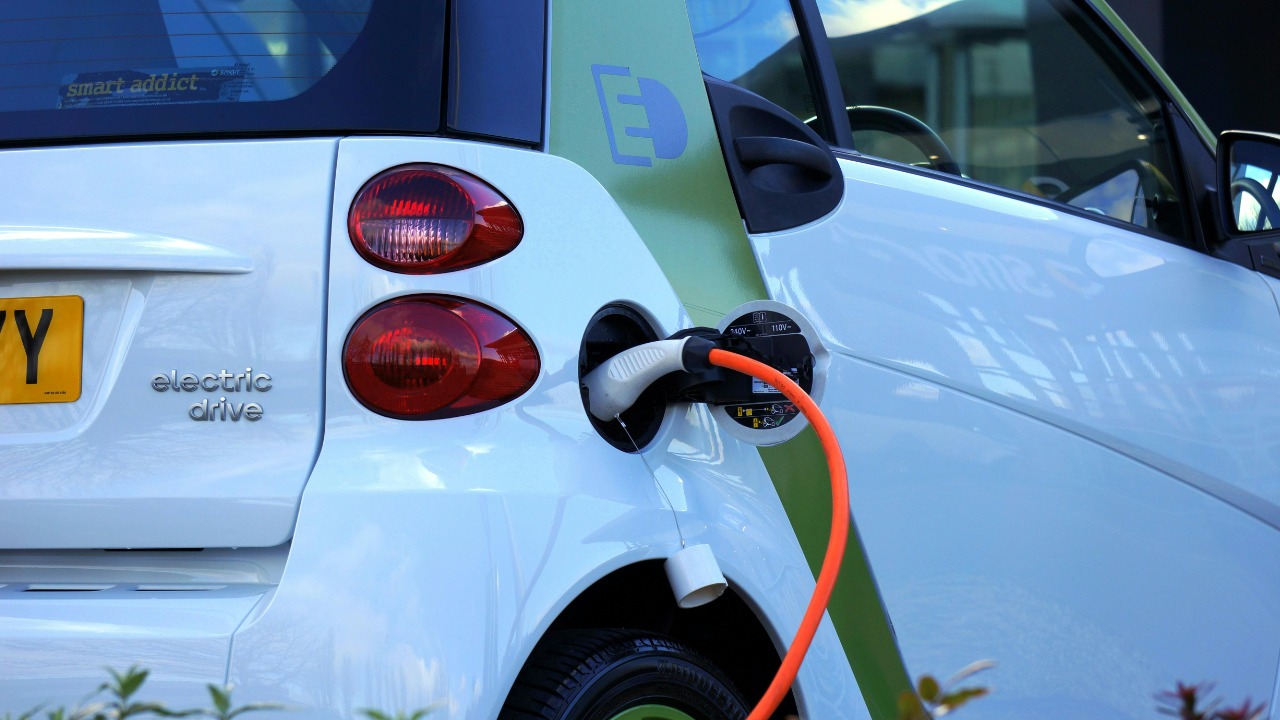
Electric vehicles are starting to reshape the economics of American roads, not just the technology under the hood. As drivers buy less gasoline, the fuel taxes that have quietly funded highways for generations are eroding, leaving state budgets scrambling to keep pavement from crumbling. The race is now on to replace that money without slowing the shift away from fossil fuels.
Instead of a single fix, states are experimenting with a patchwork of new fees, pilot programs, and funding tools, each with its own political and practical tradeoffs. I see a clear tension emerging: policymakers want to treat road funding as a user fee, but the old gas tax no longer tracks how people actually drive, and the new alternatives are far from settled.
The gas tax model is breaking under the weight of EVs
For a century, the gas tax has been the backbone of road finance, functioning as a simple proxy for how much a driver uses public infrastructure. That logic starts to fall apart when a growing share of vehicles, from compact hatchbacks to luxury SUVs, can travel hundreds of miles without burning a drop of fuel. As electric models proliferate, the link between gallons purchased and miles driven weakens, and the revenue that once scaled automatically with traffic volumes begins to sag.
Transportation analysts have warned that the problems have been building for years, as stagnant gas tax rates collided with more efficient engines and the first big wave of plug-in cars. Even before electric vehicles took off, many State officials were already struggling to keep transportation networks safe and functional as construction costs rose faster than fuel-tax receipts. Now, with EV adoption accelerating, the mismatch between how roads are used and how they are paid for is becoming impossible for lawmakers to ignore.
Electrification could cut fuel-tax revenue nearly in half
The fiscal stakes are not abstract. If electric vehicles keep growing in line with mainstream forecasts, the money states collect from gasoline and diesel could fall to a fraction of what it once was. That is not just a budget annoyance, it is a structural threat to the long-term maintenance of highways, bridges, and transit systems that depend on predictable funding streams.
One detailed modeling effort on How Vehicle Electrification Affects the Gas Tax found that if EVs increase in line with forecasts, gas tax revenues could fall to 54% of current levels. That kind of drop would blow a hole in transportation budgets that have already been stretched by inflation and deferred maintenance. It also underscores why so many statehouses are moving quickly to design replacement revenue streams before the shortfall becomes a full-blown crisis.
States lean on EV registration fees as a quick fix
In the near term, many legislatures have reached for the simplest tool available, higher registration fees for electric models. The logic is straightforward: if EV drivers are not paying at the pump, they should contribute directly when they renew their plates. These charges are easy to administer through existing motor vehicle systems, and they produce a predictable amount of money each year.
Across the country, at least 24 states now impose a higher annual vehicle registration fee for EVs and some hybrid vehicles, a trend that one analysis summarized with the blunt phrase Contrary to a tax incentive. Instead of subsidizing cleaner cars, these states are effectively charging extra for them, often at levels that exceed what a typical gasoline driver would have paid in fuel taxes. That approach may stabilize revenue in the short run, but it also risks sending a mixed message to consumers who have been told for years that switching to electric is a public good.
Flat EV fees vary widely, from modest to punitive
Even within the registration-fee camp, there is little consensus on what is fair. Some states have opted for relatively modest charges that roughly approximate an average driver’s gas-tax contribution, while others have set far higher amounts that advocates say could discourage adoption. The result is a patchwork in which the same electric crossover might face very different annual bills depending on which side of a state line it is registered.
One recent survey of state policies shows that for Electric Vehicles, a fee of $50 is charged in Colorado, Colorado, Hawaii, and South Dakota, with Hawaii also imposing a state mileage-based road usage charge on certain gasoline, electric, and hybrid vehicles. That list alone captures the policy spread: some jurisdictions are layering per-mile experiments on top of flat fees, while others are sticking to a single annual charge. For drivers, it can feel arbitrary. For budget writers, it is a reminder that there is no shared national standard for what an EV should pay to use public roads.
More EVs, less gas tax: the budget squeeze gets real
As electric models move from early adopters to the mainstream, the revenue squeeze is starting to show up in real-world budget decisions. States that rely heavily on fuel taxes to fund highway maintenance, bridge repairs, and transit subsidies are finding that the numbers no longer add up, especially when combined with more efficient gasoline vehicles that also buy fewer gallons per mile.
One analysis framed the dynamic bluntly, noting that More electric vehicles means less gas tax revenue and detailing how this impacts state budgets and what can be done to remedy the situation. The core problem is that many transportation programs were built on the assumption that fuel consumption would track vehicle miles traveled, an assumption that no longer holds. As that gap widens, lawmakers face a choice between cutting projects, raising general taxes, or redesigning the way drivers pay for the roads beneath their tires.
Lawmakers explore per-mile road charges and other user fees
Faced with a shrinking fuel-tax base, transportation experts are increasingly pushing for funding systems that charge drivers based on how much they actually use the network. Per-mile road usage charges, sometimes called mileage-based user fees, are at the center of that conversation. In theory, they can apply equally to gasoline, hybrid, and electric vehicles, preserving the user-pays principle without depending on fossil fuel consumption.
Jan and other Transportation specialists have highlighted that Transportation experts point to other user-based funding substitutes for the gas tax, such as charging drivers based on miles traveled, tolling, or congestion pricing. These ideas are no longer theoretical. States like Hawaii are already piloting mileage-based road usage charges alongside flat EV fees, and others are studying how to track distance in a way that protects privacy while still generating reliable revenue. The politics are delicate, but the underlying logic is gaining traction as fuel taxes lose their grip.
States juggle multiple strategies to plug the gap
In practice, no single tool is filling the hole left by declining gas-tax receipts. Instead, states are layering a mix of higher registration fees, targeted tolls, and experimental per-mile programs, often while dipping into general funds or federal grants to keep major projects on track. The result is a complex and sometimes confusing landscape for drivers, who may encounter new charges at the DMV, on their utility bills, or at highway gantries.
Recent reporting on how states are responding notes that How are states attempting to recoup these funds? has become a central budget question, with legislatures adopting a range of measures to offset the decline in gas tax revenue while trying not to overburden drivers of gas-powered vehicles. Some are indexing fuel taxes to inflation to slow the erosion, even as they acknowledge that long-term solutions will have to look beyond the pump. Others are exploring congestion charges in urban cores, arguing that drivers who add to traffic at peak times should pay more for the privilege.
Governors test innovative funding and financing tools
At the executive level, Governors are not waiting for Congress to redesign the national system. They are experimenting with new ways to both raise money and stretch each dollar further, from public-private partnerships on major bridges to value-capture schemes that tap into rising property values along new transit lines. The goal is to diversify transportation funding so it is less vulnerable to any single revenue source, including the gas tax.
A detailed review of state strategies notes that Governors are pursuing varied options to address these challenges, pioneering new means of planning and project delivery to increase revenue for transportation projects. That can include leveraging federal infrastructure programs, experimenting with bond financing tied to specific corridors, or encouraging regional ballot measures that let local voters approve dedicated sales taxes for transit and roads. Each approach comes with its own risks, but together they reflect a recognition that the old gas-tax-only model is no longer sufficient.
The political tradeoffs of taxing cleaner cars
Behind the spreadsheets, there is a political and ethical debate about who should pay for the transition to cleaner transportation. On one side, there is a strong argument that EV drivers should contribute fairly to the infrastructure they use, especially as their numbers grow. On the other, there is concern that aggressive fees on electric models could slow adoption, undermining climate goals and locking in more years of gasoline dependence.
Jan and other State decision-makers are caught in the middle, aware that the problems have been percolating for some time but also under pressure to keep transportation networks safe and functional without alienating voters. As more households consider switching from a gasoline sedan to an electric crossover, the visibility of EV-specific fees will only increase. The policy challenge is to design a system that treats all drivers equitably, keeps roads funded, and still encourages the shift away from fossil fuels that many leaders, including Governors and federal officials, say is essential for the country’s long-term economic and environmental health.
More From TheDailyOverview

Julian Harrow specializes in taxation, IRS rules, and compliance strategy. His work helps readers navigate complex tax codes, deadlines, and reporting requirements while identifying opportunities for efficiency and risk reduction. At The Daily Overview, Julian breaks down tax-related topics with precision and clarity, making a traditionally dense subject easier to understand.
