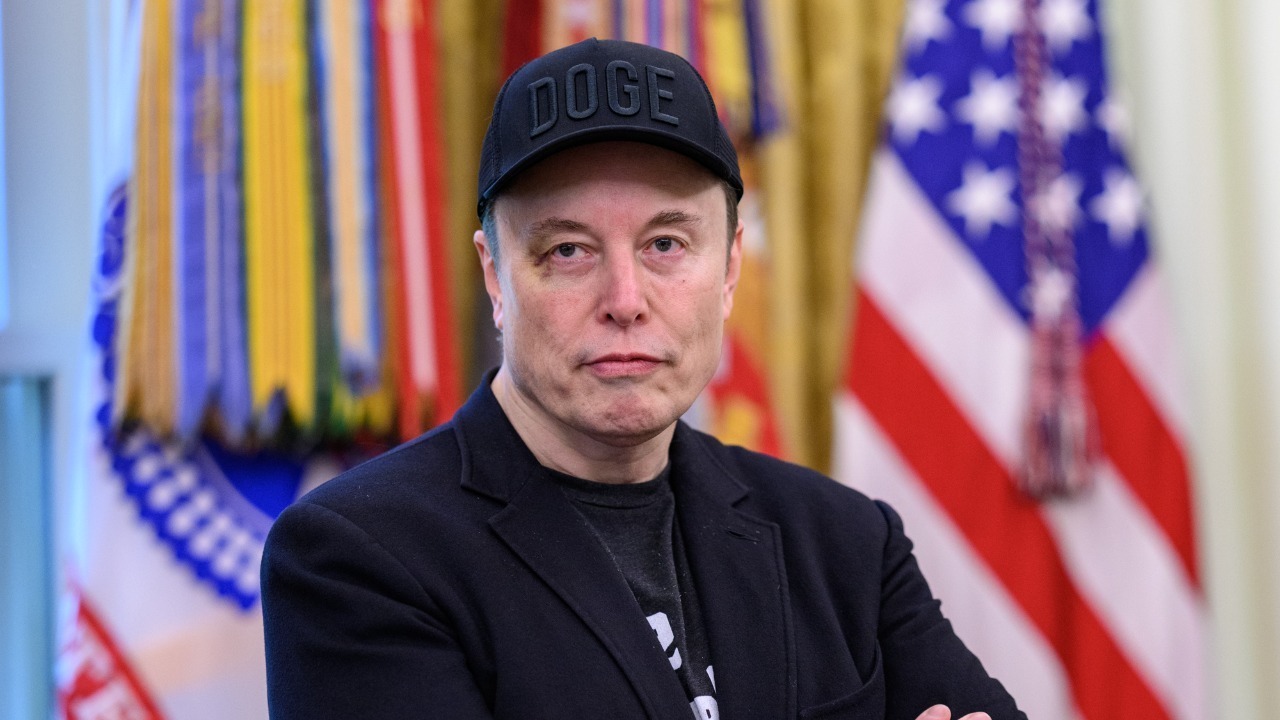
Elon Musk promised that DOGE would be the Silicon Valley style fix for Washington bloat, a skunkworks inside the federal government that could slash costs with the same ferocity he brought to his companies. Instead, the project has become a case study in how not to run a reform campaign, with a former Republican strategist now arguing that Musk’s approach was fundamentally misaligned with the mission. As the Trump administration quietly winds the experiment down, the verdict from across the political spectrum is converging on a single word: failure.
What was sold as a bold, tech driven reset of federal spending has ended in layoffs that did not deliver savings, internal turmoil over access to sensitive data, and a shutdown that arrived with barely a whisper. For critics on the Right and Left, the collapse of DOGE is less about partisan score settling than about the limits of personality driven disruption in a system built on law, oversight, and painstaking budget work.
The big promise behind DOGE
From the outset, DOGE was pitched as a cost cutting agency that would attack waste in the federal bureaucracy with the speed and aggression of a startup. Musk’s allies framed it as a way to bring private sector discipline into government, with the president giving him unusual latitude as a special government employee on a tightly defined 130-day contract. The idea was that a short, intense burst of reform could shake loose savings that traditional budget processes had failed to capture.
On paper, the mission sounded straightforward: identify overlapping programs, redundant contracts, and outdated systems, then recommend targeted cuts that would shrink the deficit without gutting core services. Supporters argued that Musk’s track record of forcing efficiency at his companies made him uniquely suited to drive that kind of change inside Washington. By the time he formally joined DOGE, however, the structure of the project and the expectations around it were already pulling him toward a very different strategy.
How Musk “got DOGE wrong”
According to one of the most pointed critiques, Musk misread what DOGE was actually supposed to do. Commerce Secretary Howa Lutnick said on Sep 11, 2025 that Elon Musk got DOGE wrong by focusing on firing people instead of on slashing government waste. In Lutnick’s telling, the mission was “aimed at costs, not headcount,” yet Musk zeroed in on layoffs as the primary lever, a choice that quickly generated political backlash without delivering the promised savings.
The same critique surfaced in a separate account of that appearance, which noted that on Sep 11, 2025, the segment ran for 0 seconds of 1 minute, 44 seconds of Live video as Lutnick argued that the job cuts did not save much money and missed the structural drivers of federal spending. That description of the 44 second exchange underscored a broader point: trimming staff in scattered pockets of the bureaucracy is politically explosive but fiscally marginal compared with tackling procurement rules, legacy IT, and statutory mandates that lock in high costs.
Ex-GOP analyst’s verdict: a strategic flop
For a former Republican lawmaker turned analyst, the problem was not just tactical, it was philosophical. In a segment posted on Apr 13, 2025, the ex-GOP voice described DOGE as a “toxic mix of ignorance and dishonesty,” arguing that Musk and his allies oversold what the project could do while ignoring how federal budgeting actually works. The critic pointed out that on that day, federal agencies were facing a deadline to present plans for another round of layoffs mandated by Doge, a process that deepened internal chaos without a clear roadmap for long term reform, as captured in the Apr footage.
That assessment dovetails with a detailed Why DOGE analysis published on Sep 8, 2025, by Opinion writer By Matt Rexroad Special to The Sacramento, who argued that the project failed in its efforts to downsize the federal government because it never grappled with the diffusion of authority in modern governance. In that view, Musk tried to run DOGE like a CEO issuing top down directives, but in Washington, authority is split among Congress, the courts, independent agencies, and career civil servants who can slow walk or block changes that lack legal grounding or political buy in.
Data access, oversight gaps, and political blowback
Even as DOGE pushed agencies toward layoffs, questions mounted about how the project itself was operating. A Feb 21, 2025 investigation reported that DOGE’s access to the nation’s most sensitive data had expanded rapidly even though DOGE, which operates without Congressional oversight, had not been tethered to the usual guardrails that govern intelligence and budget work. Democratic lawmakers pressed the White House on why a cost cutting shop needed that level of access and what protections existed to prevent misuse, concerns laid out in detail in the Feb reporting.
Those oversight worries fed into a broader narrative that DOGE was both overreaching and underperforming. A social media post on Nov 23, 2025, captured the mood on the Left with a jab that “Now you know why Tacotrump didn’t sue Elon Musk for defamation,” citing a report by the Senate Permanent Subcommittee on Inves that found DOGE’s work had actually resulted in additional costs for taxpayers. That critique, shared by Now on Facebook, suggested that the project’s aggressive posture had triggered legal challenges, transition expenses, and contractor fees that outweighed any savings from staff reductions.
The quiet shutdown and DOGE’s crypto side story
By late 2025, the political and practical costs of DOGE had become hard to ignore. On Nov 23, 2025, coverage noted that the Trump administration was telling reporters that the cost cutting agency “doesn’t exist,” a formulation that signaled DOGE had effectively been erased from the organizational chart. That same account highlighted Key points from the Left, including the line “That doesn’t exist”: Elon Musk’s DOGE quietly dumped by Trump administration, a framing that underscored how far the project had fallen from its original billing as a centerpiece of conservative reform, as reflected in the Nov summary.
Financial markets, however, barely flinched. On Nov 23, 2025, traders were told that Dogecoin Holds Steady As Elon Musk’s Ambitious D.O.G.E. Project Quietly Ceases Operations, a reminder that the meme coin’s price action had long since decoupled from the fortunes of Musk’s government experiment. The report noted that Dogecoin Holds Steady As Elon Musk, Ambitious, Project Quietly Ceases Operations in News coverage tied to Black Fr, suggesting that for crypto speculators, DOGE the agency was background noise rather than a driver of value, as captured in the Dogecoin Holds Steady As Elon Musk dispatch.
Musk’s exit and the limits of disruption politics
By the time Musk’s formal role ended, the administration was already moving on. Reporting on Nov 23, 2025, noted that Musk’s exit had long been expected and that as a special government employee he had a 130-day contract that expired on Friday, May 30, with little appetite inside the White House to extend it. By the time he departed, the project had produced a wave of layoffs and internal reorganizations but relatively modest documented savings as a result of the cuts, a gap that fed the narrative that the experiment had been more spectacle than substance, as detailed in the Musk account.
In a separate video posted on Sep 11, 2025, titled Elon Musk got DOGE’s mission “backward,” Lutnick says, the host noted that the content was not available but described how On the premiere of The show, Lutnick talks Trump ec and revisited the argument that Musk had inverted the agency’s priorities. That On the segment, paired with the earlier Sep discussion, cemented a bipartisan consensus that DOGE had become a cautionary tale: a high profile outsider given a narrow window to deliver sweeping change, who chose the most visible but least effective tools and left behind a trail of political resentment.
For the ex-GOP analyst who branded Musk’s DOGE strategy a flop, the lesson is not that government is unreformable, but that durable change requires something more than a famous name and a mandate to “cut.” It demands a granular understanding of where the money actually goes, a respect for oversight structures like Congressional review, and a willingness to build coalitions rather than simply ordering agencies to shrink. On those measures, the record laid out across Sep, Apr, Feb, and Nov suggests that DOGE never had a chance.
More From TheDailyOverview
- Dave Ramsey warns to stop 401(k) contributions
- 11 night jobs you can do from home (not exciting but steady)
- Small U.S. cities ready to boom next
- 19 things boomers should never sell no matter what

Grant Mercer covers market dynamics, business trends, and the economic forces driving growth across industries. His analysis connects macro movements with real-world implications for investors, entrepreneurs, and professionals. Through his work at The Daily Overview, Grant helps readers understand how markets function and where opportunities may emerge.