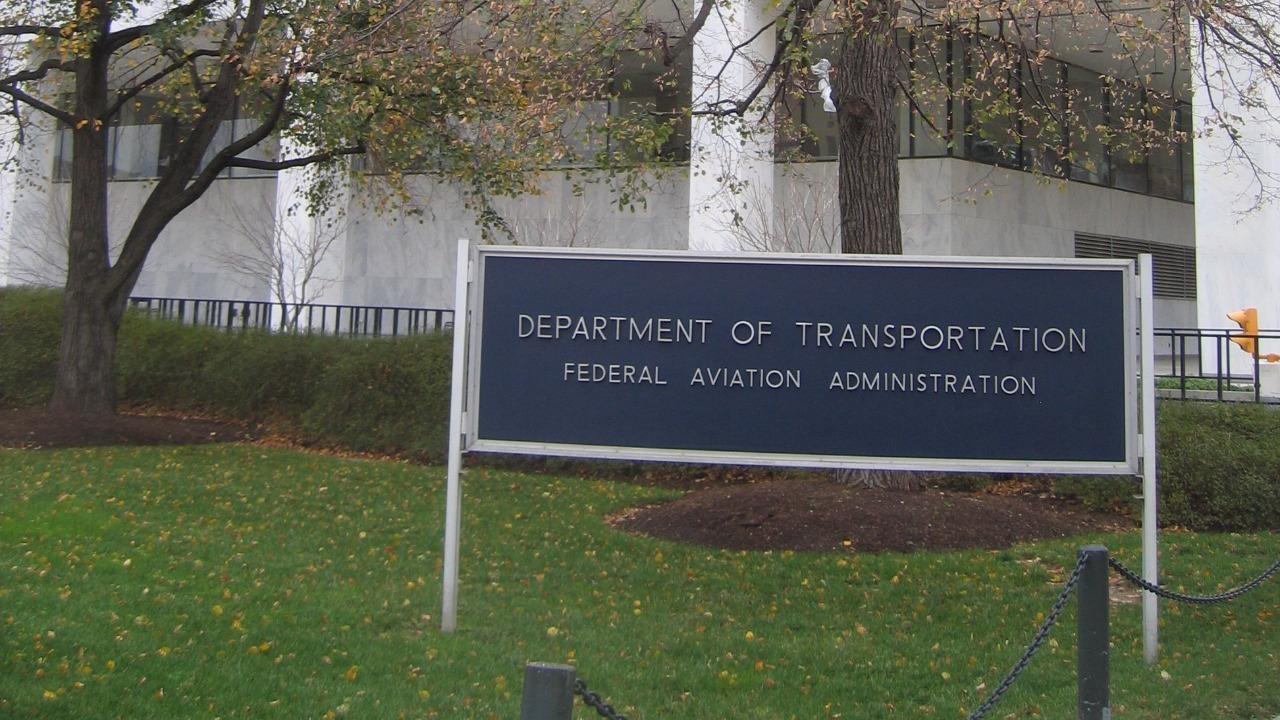
The Federal Aviation Administration is dangling a five-figure carrot in front of its workforce, promising $10,000 bonuses to employees who keep working through a government shutdown without missing a day. The offer, framed as a “perfect attendance” award, turns a grinding budget standoff into a high-stakes test of how far Washington will go to keep air travel functioning when the money runs out.
I see the move as more than a quirky incentive program. It is a revealing snapshot of how fragile the aviation system has become, how dependent it is on a thin layer of specialized workers, and how shutdown politics now bleed directly into the paychecks and mental health of the people who keep planes separated and passengers safe.
How the FAA’s perfect-attendance bonus works
The core of the FAA’s plan is straightforward: employees who are required to work during a lapse in federal funding and who log every scheduled shift without an unscheduled absence become eligible for a $10,000 payout once Congress restores appropriations. The bonus is structured as a one-time award, not a permanent raise, and it is tied explicitly to the shutdown period so that the agency can argue it is compensating extraordinary service during an emergency rather than inflating baseline payroll costs. According to the reporting, the offer applies to key operational staff, including air traffic controllers and technical specialists, whose presence is essential to keep the National Airspace System running safely during a funding lapse, and it is contingent on employees remaining in good standing throughout the shutdown window, with disciplinary issues or extended leave disqualifying them from the payout FAA bonus memo.
In practice, that design turns attendance into a binary, high-pressure bet. A controller who works every overnight shift in a prolonged shutdown could walk away with $10,000, while a colleague who calls out sick once, or needs to care for a child when schools close, could lose the entire award. The memo outlining the program makes clear that only “unscheduled” absences count against eligibility, which means pre-approved leave such as military duty or certain medical procedures may be exempt, but routine sick days or last-minute emergencies are not. The agency is also tying the bonus to continued employment at the time of payout, which means anyone who resigns or retires before the shutdown ends will not see the money, even if they worked every day during the funding lapse attendance rules.
Why the agency is willing to pay so much to keep people on the job
From the FAA’s perspective, the math behind a $10,000 attendance bonus is less about generosity and more about risk management. Air traffic control is a system that depends on precise staffing levels, and even small gaps can ripple into delays, ground stops, or, in the worst case, safety incidents. During past shutdowns, the agency was forced to rely on “excepted” employees who worked without pay, and the resulting stress and attrition exposed how thin the staffing margins had become. Internal analyses cited in the reporting show that training pipelines for new controllers are already strained, with the FAA struggling to replace retirees fast enough to meet demand, so losing even a modest number of experienced staff during a shutdown would be far more expensive than paying to keep them in place staffing analysis.
The bonus also reflects lessons from the last prolonged funding lapse, when unpaid controllers and Transportation Security Administration officers began calling out in larger numbers, leading to longer lines and sporadic disruptions at major airports. Lawmakers and industry groups warned at the time that the system was operating on borrowed time, and some union leaders openly discussed the possibility of mass sickouts if the standoff continued. By putting a large, clearly defined incentive on the table before a shutdown begins, the FAA is trying to flip that dynamic, giving employees a tangible reason to keep showing up even as their paychecks are delayed. The reporting notes that senior officials framed the bonus as a way to “stabilize operations” and “protect the traveling public” during a politically manufactured crisis, a signal that the agency sees continuity of service as worth a significant one-time cost shutdown lessons.
The pressure this puts on controllers and other frontline staff
For the people in the radar rooms and control towers, the offer is both a lifeline and a source of new strain. A $10,000 bonus is a meaningful sum for federal employees whose base salaries have not kept pace with inflation, particularly in high-cost metro areas where many major facilities are located. Yet tying that money to flawless attendance during a shutdown, when pay is delayed and family budgets are already stretched, effectively asks workers to absorb more personal risk in exchange for a delayed reward. Union representatives quoted in the reporting describe members who feel torn between the need to stay healthy and the fear of losing a life-changing payout if they take a sick day, especially in roles where fatigue and illness can directly affect safety union reaction.
The policy also interacts awkwardly with the realities of shift work and burnout in aviation. Controllers already face strict scheduling rules and mandatory rest periods to prevent fatigue, and the FAA has been under scrutiny for how it manages overtime and night shifts. During a shutdown, when hiring and training are frozen and some support staff may be furloughed, the remaining workforce often has to absorb extra duties. The bonus does nothing to reduce that workload; it simply raises the stakes for enduring it without a break. Mental health advocates within the agency warn that this kind of all-or-nothing incentive can discourage people from speaking up when they are too tired or stressed to perform at their best, a concern that is echoed in internal safety briefings cited in the coverage fatigue briefing.
Budget politics, legal questions, and the optics of a shutdown bonus
Politically, the FAA’s move lands in the middle of a broader fight over how agencies should operate during funding lapses. Some lawmakers have already questioned whether it is appropriate to promise large bonuses in the context of a shutdown that is itself the product of budget disputes. The reporting notes that appropriators are scrutinizing whether the agency has clear statutory authority to commit to these payments before Congress passes a new spending bill, and whether the bonuses could be construed as an attempt to circumvent broader pay constraints that apply to the federal workforce during a lapse. Legal experts cited in the coverage point to the Anti-Deficiency Act, which restricts obligations of funds in the absence of appropriations, and suggest that the FAA will need to show that the bonuses are contingent and only payable once new funding is enacted legal analysis.
The optics are equally fraught. On one hand, the public has little appetite for flight delays or safety scares tied to Washington’s inability to pass a budget, and there is a strong argument that paying to keep the system stable is cheaper than absorbing the economic cost of widespread disruptions. On the other hand, a five-figure “perfect attendance” award can sound tone-deaf to taxpayers who are themselves dealing with economic uncertainty, especially if the shutdown drags on. Critics quoted in the reporting argue that the bonus risks normalizing shutdowns as a recurring feature of governance, with agencies building elaborate incentive schemes instead of pressing Congress to avoid lapses altogether. Supporters counter that frontline workers should not be collateral damage in political standoffs and that targeted bonuses are a pragmatic tool to protect both employees and travelers when the system fails shutdown optics.
What this signals about the future of shutdowns and aviation safety
Stepping back, I see the FAA’s attendance bonus as a sign that shutdowns are no longer treated as rare, freak events but as recurring shocks that agencies must plan around. The fact that the aviation regulator is willing to promise $10,000 per eligible worker suggests it expects funding lapses to be both disruptive and prolonged enough to justify that investment. It also underscores how little slack exists in the system: if the agency believed it could weather a shutdown with a modest level of absenteeism, it would not need to put such a large sum on the table. The reporting on internal contingency planning shows that the FAA has modeled scenarios in which even a small uptick in sick calls among controllers could trigger cascading delays across major hubs, a vulnerability that makes continuity of staffing a top priority in any shutdown playbook contingency plans.
For aviation safety, the implications are mixed. On the positive side, a strong incentive to keep experienced controllers and technicians on the job during a funding lapse reduces the risk that critical positions will go unfilled. It also sends a message that the agency values the sacrifices employees make when they work without immediate pay. Yet the structure of the bonus, with its all-or-nothing threshold and focus on attendance rather than well-being, could unintentionally encourage people to work when they are not fit for duty. Safety culture in aviation is built on the idea that individuals should feel empowered to remove themselves from the line when they are impaired, whether by illness, fatigue, or stress. Any policy that makes that choice financially punitive needs careful monitoring and adjustment. The sources note that the FAA has committed to reviewing the impact of the bonus program after the shutdown ends, including data on sick leave usage, incident reports, and employee feedback, to determine whether the incentive should be modified or repeated in future funding crises program review.
More From TheDailyOverview
- Dave Ramsey says these two simple questions show whether you’re rich or poor
- Retired But Want To Work? Try These 18 Jobs for Seniors That Pay Weekly
- IRS raises capital gains thresholds for 2026 and what’s new
- 12 ways to make $5,000 fast that actually work

Grant Mercer covers market dynamics, business trends, and the economic forces driving growth across industries. His analysis connects macro movements with real-world implications for investors, entrepreneurs, and professionals. Through his work at The Daily Overview, Grant helps readers understand how markets function and where opportunities may emerge.

