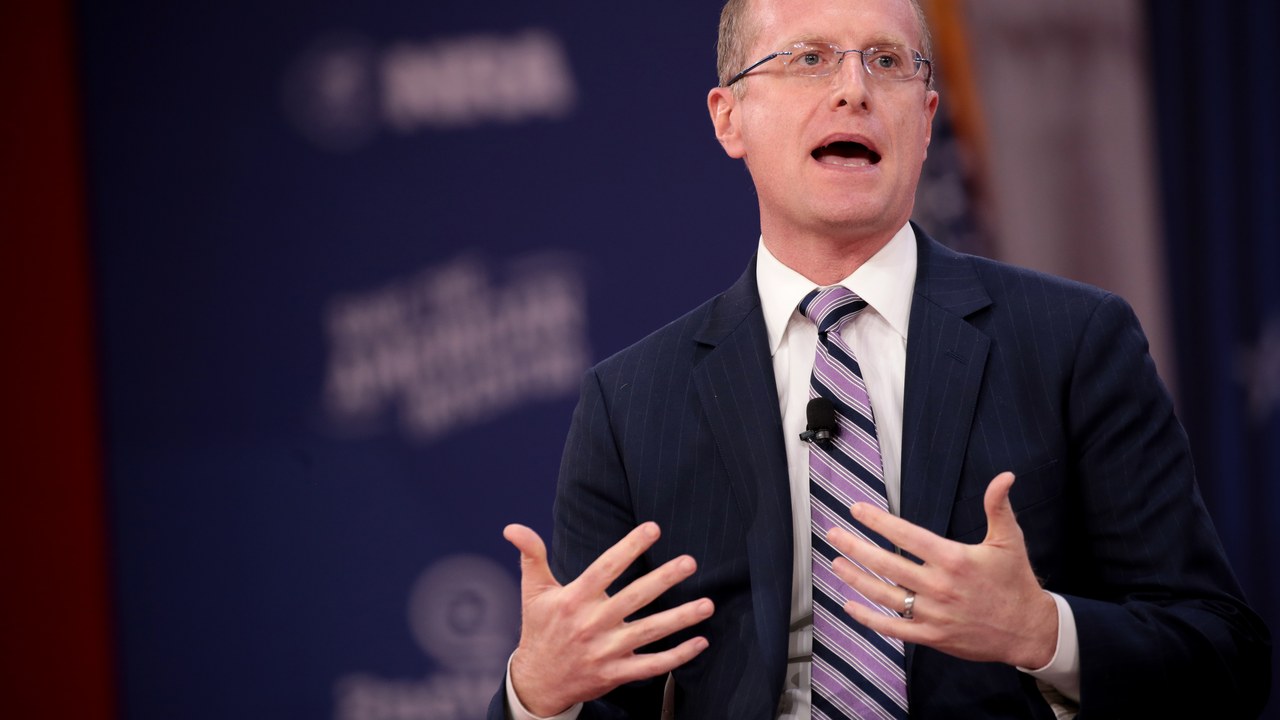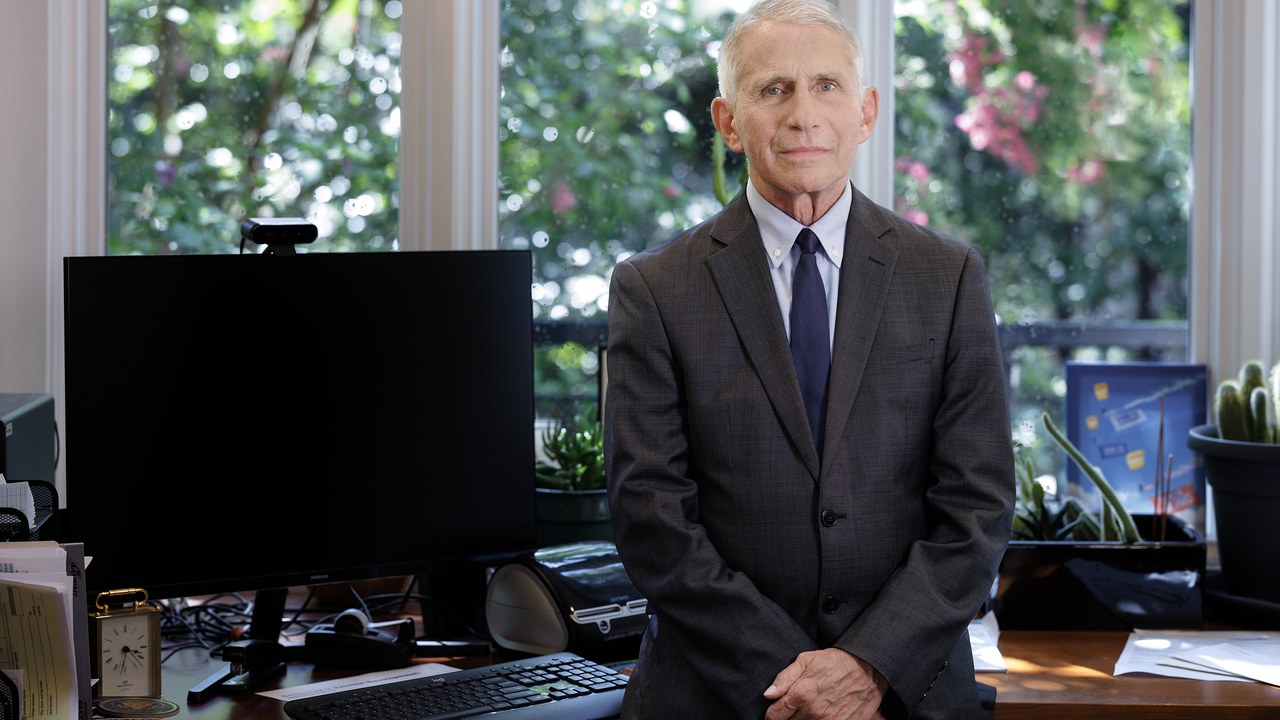
For six years, congressional Republicans have argued that the federal government’s own pandemic scientists worked to bury the question of where COVID-19 came from, and for six years those scientists have called the accusation a smear. On Tuesday afternoon, in a federal courtroom in Greenbelt, Maryland, one of them stopped arguing. David M. Morens, 78, who spent sixteen years as a senior adviser inside the office Anthony Fauci ran, admitted to a federal judge that he conspired to defraud the United States. The thing he conspired to hide was the paper trail on coronavirus research.
The Gmail Account Built to Defeat a Records Request
The mechanics of what Morens admitted are not complicated, and that is what makes them damning. He and two co-conspirators agreed in writing to move their conversations off his official National Institutes of Health account and onto his personal Gmail account, specifically because they anticipated that those conversations would be demanded under the Freedom of Information Act.
They then used that private account to do government business. According to the guilty plea announced by the U.S. Attorney’s Office for the District of Maryland, the three men traded non-public NIH information, coordinated a campaign to push NIH into funding a particular organization, swapped edits on letters written to NIH leadership on that organization’s behalf, and “back-channeled” material to a senior NIAID official. Every one of those exchanges fell inside Morens’s official duties. Every one of them was a federal record that the law required to be created and kept on a government system.
This was not sloppiness. A public servant who forgets to copy an email to the official account has made a mistake. A public servant who signs an agreement with outside parties to route official business through a private inbox in order to defeat a statute has made a plan. Morens has now conceded in court that he made a plan.
The Bat Coronavirus Grant NIH Terminated in April 2020
What set the scheme in motion was money. NIAID had awarded a grant titled Understanding the Risk of Bat Coronavirus Emergence to a nonprofit and its president, and that nonprofit had passed a subaward down to the Wuhan Institute of Virology in Wuhan, China. In April 2020, with the pandemic spreading and questions mounting about whether the virus had escaped a laboratory, NIH terminated the grant.
The indictment returned in April describes what happened next. Morens and a second co-conspirator pledged to help the grantee get the termination reversed and, in the government’s own words, to “counter the narrative that COVID-19 leaked from a lab.” Restoring the funding and shaping the public account of the pandemic’s origin were treated as one project, run out of a personal email account, by a man whose job description included briefing his superior so that information could be relayed to the president, to Congress, and to the public.
Emails released by the House Select Subcommittee on the Coronavirus Pandemic indicate the nonprofit is the EcoHealth Alliance and its president is Peter Daszak, as CBS News reported. Neither is named in the Justice Department’s filings, which refer only to Company #1 and Co-Conspirator 1.
Two Bottles of Wine and a Michelin-Starred Promise
The gratuities count is the detail that will outlive the legal analysis. Morens admitted that he and the grantee conspired to pay illegal gratuities, and the record is unusually blunt about the transaction. The grantee sent wine to Morens’s Maryland house in June 2020 as thanks for his “behind-the-scenes shenanigans.” Morens then went looking for an official act he could perform to deserve it, and settled on writing a scientific commentary in a prominent medical journal arguing that COVID-19 had natural origins.
The same correspondence, according to prosecutors, floated further inducements: meals at Michelin-starred restaurants in Paris, New York, and Washington. A federal adviser accepted a gift, hunted for a way to earn it, and produced a piece of scientific commentary on the single most contested factual question of the pandemic. Americans who spent 2020 being told to trust the science were not told that some of the science was being written to settle a wine debt.
Five Counts Went In and One Came Out
Morens was charged in April with five counts across four categories: conspiracy against the United States, destruction or falsification of records in a federal investigation, concealment or mutilation of records, and aiding and abetting. The records-destruction counts carried up to twenty years each. Under the deal his lawyers struck, he pleaded to a single conspiracy count carrying a maximum of five years, and the Justice Department’s own announcement notes that actual sentences in federal cases are typically well below the maximum and that a district judge sets the number after weighing the sentencing guidelines.
The Justice Department’s language at the indictment stage was considerably hotter than the plea it accepted. Acting Attorney General Todd Blanche called the conduct “a profound abuse of trust at a time when the American people needed it most.” FBI Director Kash Patel said Morens “received kickbacks” for obscuring his communications and promised the bureau would not stop “until you face justice.” What justice turned out to mean was one felony count, no trial, and a sentencing hearing three months from now.
Fauci Runs Through the File and Faces No Charge
The senior NIAID official who received the back-channeled information is identified in the charging documents only as Senior NIAID Official 1. Court filings point to Anthony Fauci, then the institute’s director. He has been charged with nothing, and nothing in the Morens plea alleges that he committed a crime. In 2024, Fauci told lawmakers that Morens was not an adviser to him on institute policy or other substantive issues, acknowledged that much of what Morens did was wrong and violated agency rules, and denied conducting official business on personal email.
That distancing is doing a great deal of work. Morens spent sixteen years as a senior adviser in the director’s office, briefed the director so the director could brief the president and Congress, and was described by prosecutors as back-channeling to him. The man in that chair either knew what his adviser was doing or presided over an office where a subordinate could run a private-email operation for two and a half years without detection. Neither version is flattering, and only one of them is a defense.
The pressure has moved to a different branch. On August 6, the Senate Homeland Security and Governmental Affairs Committee voted 8-5 along party lines to hold Fauci in contempt of Congress after he invoked the Fifth Amendment rather than answer Chairman Rand Paul’s questions under subpoena. “More than a million Americans died from COVID-19,” Paul said. “Many of them died alone.” The referral now sits with the Justice Department, and the decision on whether to seek an indictment belongs to the U.S. attorney in Washington.
Nothing about that is guaranteed to go anywhere. Contempt referrals from a single committee, without a vote of the full Senate, are legally contested, and career prosecutors have declined to charge on thinner and thicker records alike. But the ground has shifted underneath the argument. For six years the response to the lab-leak question was that raising it was conspiracy-mongering, that the scientists involved were being persecuted, and that the record was open to anyone who asked. This week a man who worked inside that record admitted in federal court that he helped hide it. The people who were called cranks for asking to see it were, on this narrow point, right.
This article was produced with AI assistance and reviewed prior to publication.

Julian Harrow specializes in taxation, IRS rules, and compliance strategy. His work helps readers navigate complex tax codes, deadlines, and reporting requirements while identifying opportunities for efficiency and risk reduction. At The Daily Overview, Julian breaks down tax-related topics with precision and clarity, making a traditionally dense subject easier to understand.