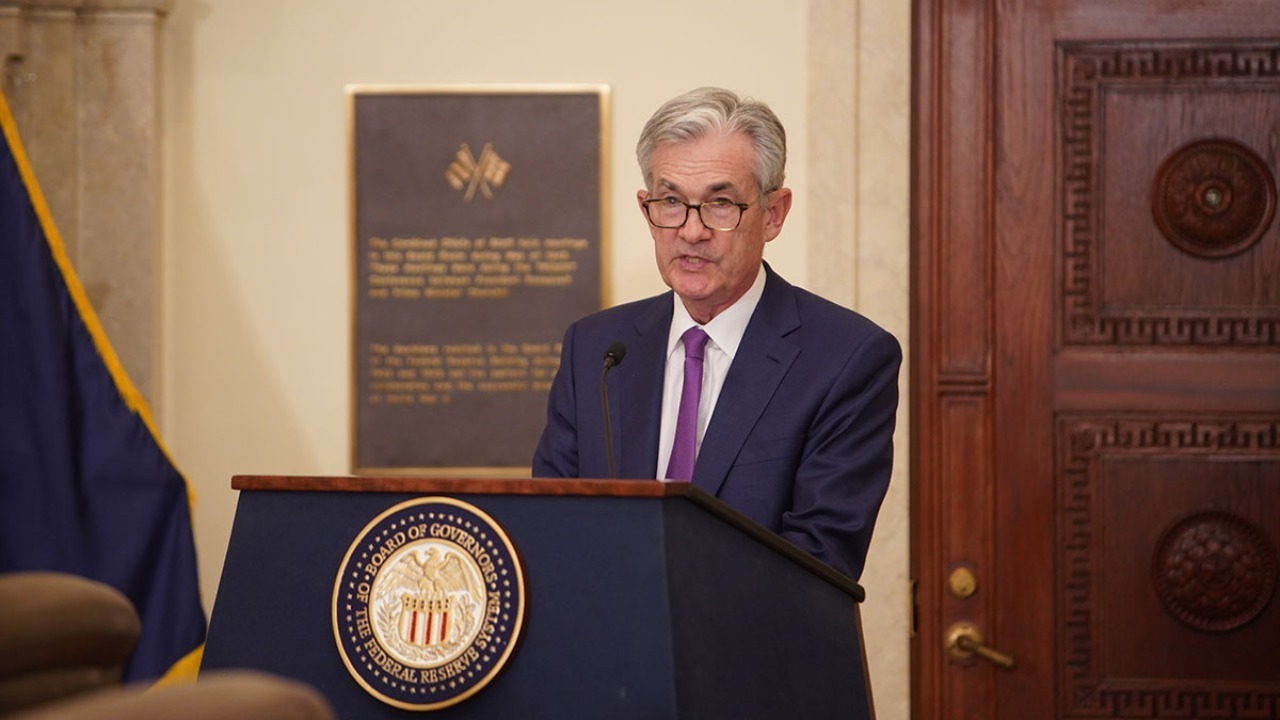
The Federal Reserve has quietly pointed to a new source of strain in the economy, and it is not the usual debate over interest rates. Instead, policymakers are flagging a shift in credit conditions and business sentiment that suggests the expansion is more fragile than headline job and inflation numbers imply. I see this as a warning that the next phase of the cycle will be defined less by how high rates are and more by who can still get financing on reasonable terms.
The Fed’s latest signal: credit is tightening, not loosening
The clearest new warning from the Fed is that credit is no longer just expensive, it is increasingly hard to obtain. In its latest communications, the central bank has highlighted that banks are tightening standards for commercial and industrial loans, commercial real estate, and some consumer credit, a pattern that historically lines up with slower growth and rising default risk. That shift matters because it means monetary policy is now biting through the banking system, not just through market interest rates, and it tends to show up in the real economy with a lag of several quarters, as past cycles have demonstrated in the Senior Loan Officer Survey.
At the same time, Fed officials have stressed that they are not yet seeing the kind of broad-based financial stress that would justify an abrupt pivot, which leaves borrowers squeezed between cautious lenders and a central bank still focused on inflation. In recent remarks, policymakers have pointed to stable bank capital ratios and contained funding pressures, even as they acknowledge that smaller and regional institutions are pulling back from riskier segments such as office towers and leveraged corporate loans, a pattern that shows up in the Fed’s own financial stability assessments. I read that combination as a classic late-cycle configuration: the system looks sound on aggregate metrics, but marginal borrowers are starting to feel the door closing.
Why a credit squeeze hits small businesses and households first
The first casualties of a tighter credit regime are rarely the Fortune 500 companies that can tap bond markets; they are the small firms and households that rely on banks and credit cards. When banks report stricter standards and weaker demand for commercial and industrial loans, it often reflects small and midsize businesses deciding that the cost of borrowing is no longer worth the risk, especially for inventory, hiring, or expansion. Fed surveys show that these firms are facing higher spreads over benchmark rates and more collateral requirements, trends that are particularly acute in sectors like retail, restaurants, and construction, as documented in the Fed’s periodic Beige Book summaries of regional conditions.
Households are feeling a similar pinch through revolving credit and auto loans, where banks have reported tighter standards and higher minimum credit scores for approvals. The Fed’s consumer credit data show that outstanding card balances have climbed while delinquency rates have ticked up from their lows, a combination that tends to precede more aggressive risk management by lenders, as reflected in the central bank’s G.19 consumer credit release. I see that as a sign that the financial cushion built up during the pandemic is thinning out, especially for lower income borrowers who are more exposed to variable rates and fees.
Labor market resilience is masking pockets of stress
On the surface, the labor market still looks solid, which can make the Fed’s new warning sound overly cautious. Payroll growth remains positive, and the unemployment rate is low by historical standards, giving the impression that the economy can absorb higher borrowing costs without much damage. Yet Fed officials have started to emphasize more nuanced indicators, such as slower job openings, longer durations of unemployment for those who lose work, and a cooling in wage growth, all of which are documented in the latest employment situation reports and the Fed’s own labor market dashboards.
Those subtler shifts matter because they tend to show up first in sectors that are most sensitive to financing conditions, including construction, manufacturing, and interest rate exposed services like real estate. The Fed’s regional reports describe employers in some districts scaling back hiring plans or relying more on temporary and part time workers, even as headline job numbers remain respectable, a pattern that appears repeatedly in the Summary of Economic Projections commentary. I interpret that as a sign that the labor market is no longer providing the same buffer it did earlier in the recovery, which makes any additional tightening in credit more consequential for future employment.
Inflation progress gives the Fed less cover for ignoring financial cracks
Another reason the Fed’s latest caution stands out is that inflation has moved closer to its target, reducing the central bank’s justification for tolerating collateral damage in credit markets. Measures of core inflation have eased from their peaks, and market based expectations for future price growth have stabilized, developments that Fed officials have acknowledged in recent policy statements and press conferences, as reflected in the latest FOMC statement. With price pressures moderating, it becomes harder to argue that persistent financial tightening is a necessary cost of restoring price stability.
Yet the Fed has also warned that inflation is not fully subdued, particularly in services and housing, which complicates any move to cut rates or signal a rapid easing of conditions. Policymakers have highlighted that shelter inflation remains elevated relative to pre pandemic norms and that wage growth, while slower, is still above levels consistent with a 2 percent inflation goal, points they have backed up with data from the Consumer Price Index and the Wage Growth Tracker. I see this tension as central to the new red flag: the Fed is caught between an improving inflation backdrop and a credit environment that is tightening faster than it would like, but it lacks a clean trigger to change course.
What the Fed’s red flag means for the next phase of the cycle
For investors, executives, and households, the Fed’s focus on tightening credit conditions is a cue to pay less attention to the exact path of policy rates and more to the availability of financing. Historically, recessions have often been preceded not just by high rates but by a withdrawal of credit, especially to riskier borrowers and sectors, a pattern that the Fed has documented in past household well being and financial stability reports. When I look at the current mix of cautious banks, stretched consumers, and a cooling but still tight labor market, it resembles the late innings of previous expansions where small shocks could tip the balance.
For policymakers, the new warning underscores the need to watch second order effects of their own decisions, including how regulatory expectations and supervisory pressure interact with higher rates to shape bank behavior. The Fed has already noted that some institutions are adjusting their balance sheets in response to both market conditions and evolving capital rules, which can amplify the pullback in lending to commercial real estate and leveraged borrowers, as described in its latest systemic risk review. I expect that as these dynamics play out, the central bank will face growing pressure to clarify how it weighs financial stability against its inflation mandate, and that balance, more than any single rate move, will determine whether this fresh warning turns into a broader downturn or a managed slowdown.
More From TheDailyOverview
- Dave Ramsey warns to stop 401(k) contributions
- 11 night jobs you can do from home (not exciting but steady)
- Small U.S. cities ready to boom next
- 19 things boomers should never sell no matter what

Grant Mercer covers market dynamics, business trends, and the economic forces driving growth across industries. His analysis connects macro movements with real-world implications for investors, entrepreneurs, and professionals. Through his work at The Daily Overview, Grant helps readers understand how markets function and where opportunities may emerge.