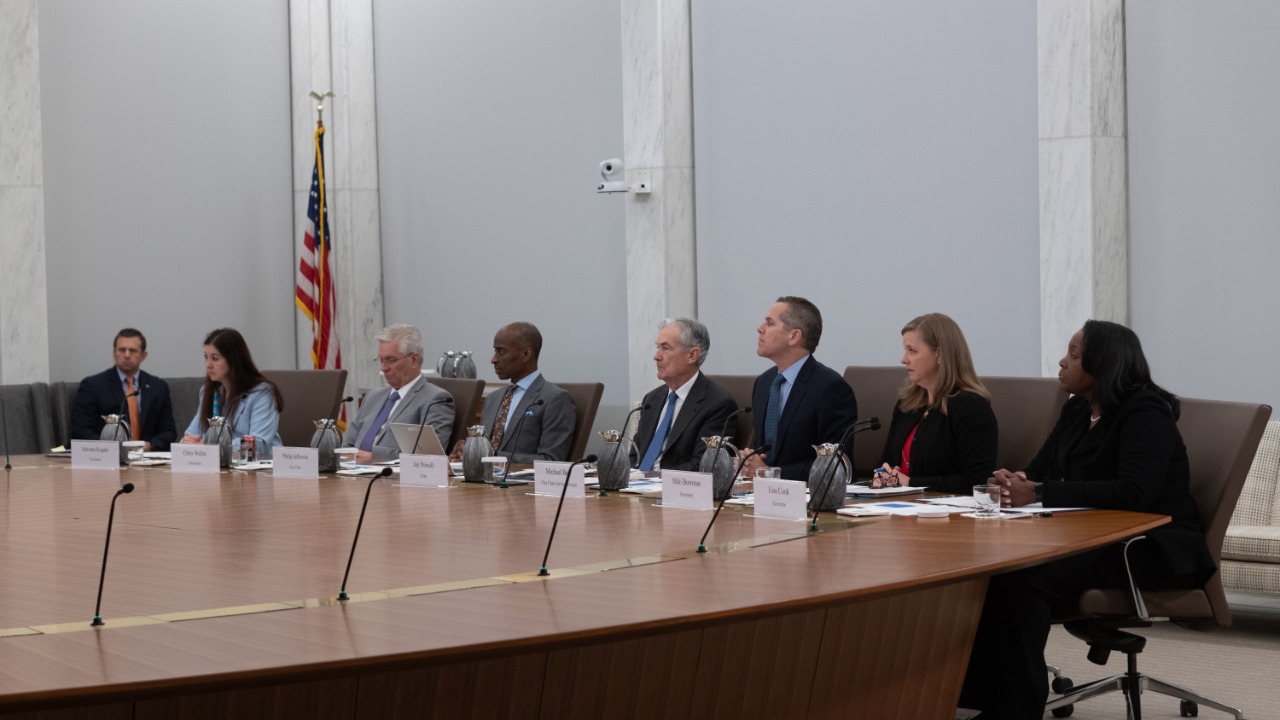
On November 17, 2025, the Federal Reserve’s vice chair used two public appearances to stress that tradeoffs in the current economy reinforce the need to “proceed slowly” on interest-rate cuts, signaling a more cautious stance on policy easing. Later that evening, the vice chair reiterated that economic trade-offs justify lowering rates slowly, underscoring how recent data have cooled expectations for aggressive cuts that had been penciled into earlier projections.
Vice Chair’s Morning Remarks on Rate Caution
The Federal Reserve’s vice chair set the tone early in the day with an 08:30 statement on November 17, 2025, arguing that policy “tradeoffs reinforce the need to proceed slowly” on rate cuts as officials parse evolving signals on inflation and growth. By framing the issue explicitly as a series of tradeoffs, the vice chair acknowledged that while inflation has eased from its peak, price pressures remain persistent enough that a rapid pivot to lower rates could risk undoing hard-won disinflation progress. For investors and businesses that had been anticipating a faster easing cycle, the message was that the central bank is not prepared to declare victory on inflation or to front-load cuts simply to satisfy market expectations.
Those morning remarks also marked a subtle but important deviation from the more optimistic tone that had characterized some prior Federal Reserve commentary, when officials suggested that a steady glide path back to the 2 percent inflation target might allow for more assertive rate reductions. By emphasizing the need to “proceed slowly,” the vice chair aligned the policy outlook with incoming indicators that point to a still-resilient labor market and consumer demand, conditions that could reignite price pressures if borrowing costs fall too quickly. For investors, the implication is that the central bank is prioritizing stability over speed, accepting the risk of slightly tighter financial conditions for longer in order to avoid overheating the economy and triggering another inflationary wave.
Economic Trade-Offs Highlighted in Evening Update
In an update on November 17, 2025, the vice chair returned to the same theme, stating that economic trade-offs justify lowering rates slowly and effectively building on the day’s earlier caution. The evening comments, described in detail in a report on how the Fed vice chair says economic trade-offs justify lowering rates slowly, framed the policy debate as a balancing act between sustaining employment gains and preventing a renewed acceleration in prices. By explicitly tying the pace of cuts to these trade-offs, the vice chair signaled that the central bank is prepared to tolerate some short-term discomfort in credit markets if that is what it takes to keep inflation expectations anchored.
Recent data have sharpened those trade-offs, with solid job creation and wage growth on one side and lingering price pressures on the other, and the vice chair’s evening remarks suggested that this mix has tempered expectations for aggressive policy easing compared with earlier projections. Instead of endorsing the more dovish path that some market participants had anticipated after prior meetings, the vice chair pointed to the need for a more measured approach that calibrates each rate move to the latest readings on inflation, employment, and output. For households and firms, that means borrowing costs are likely to decline more gradually than previously hoped, affecting everything from auto loans on 2025 model-year vehicles to the financing terms available to small businesses planning capital expenditures.
Implications for Federal Reserve Policy Path
The vice chair’s call to “proceed slowly” on rate cuts carries significant implications for the broader Federal Open Market Committee trajectory, including potential adjustments to the dot plot that maps out policymakers’ expectations for future rates. By publicly stressing tradeoffs in both the morning and evening appearances, the vice chair effectively signaled that the median path of projected cuts could shift toward fewer or later moves if inflation data fail to cooperate. That stance suggests the committee is leaning toward a policy path that keeps the federal-funds rate in restrictive territory for longer, even as it begins a gradual easing cycle, in order to preserve credibility on inflation and avoid the perception that it is easing prematurely.
Concrete trade-offs are already visible in the data, with disinflation progress evident in some categories while shelter costs and services inflation remain sticky, and the vice chair’s comments linked that uneven progress to the need for caution. At the same time, the labor market has cooled from its tightest levels but continues to show enough strength that a rapid series of cuts could risk reigniting wage-driven price pressures, a scenario the Fed is keen to avoid. By presenting the morning and evening statements as a cohesive policy signal, the vice chair underscored that the committee is weighing disinflation against labor market risks in real time, and that businesses should plan for a rate environment that normalizes slowly rather than snapping back to pre-pandemic levels.
Market and Broader Economic Reactions
Financial markets reacted quickly to the vice chair’s November 17 comments, with traders reassessing the timing and magnitude of expected rate cuts as the narrative shifted toward economic trade-offs and deliberate pacing. Bond yields, which had previously reflected hopes for a more aggressive easing cycle, adjusted to incorporate the possibility that the Fed will move in smaller increments or over a longer horizon, flattening some parts of the yield curve as investors priced in a slower descent in policy rates. Equity markets also responded, with rate-sensitive sectors such as technology and real estate recalibrating valuations to reflect a path of borrowing costs that may remain elevated relative to earlier expectations, while financial firms weighed the impact of a more extended period of higher net interest margins against the risk of weaker loan demand.
For households and consumers, the shift toward slower easing has immediate and tangible consequences, particularly for mortgage rates and big-ticket purchases that depend on financing. Prospective homebuyers who had been waiting for a rapid drop in 30-year mortgage rates may now face a more gradual decline, influencing decisions about whether to buy existing homes, new construction, or remain renters for longer. Consumer spending patterns could also adjust as credit card rates and auto loans stay relatively high, prompting some families to delay discretionary purchases or trade down to less expensive options, such as choosing a used 2022 Honda CR-V instead of a new 2025 model, in order to manage monthly payments in a still-restrictive rate environment.
Stakeholder Stakes and the Data-Dependent Outlook
The vice chair’s twin messages on November 17 reinforced the Federal Reserve’s data-dependent stance, but they also clarified the stakes for a wide range of stakeholders that must navigate the new policy tone. Large corporations with global supply chains, for example, may find that a slower pace of cuts helps stabilize currency markets and funding conditions, reducing the risk of abrupt swings in exchange rates that can complicate pricing and sourcing decisions. At the same time, smaller firms that rely on bank credit or lines of credit from regional lenders will need to plan for a longer period of relatively high borrowing costs, potentially delaying investments in equipment, software, or hiring that would otherwise support growth.
Investors, meanwhile, are being asked to recalibrate their strategies around a central bank that is explicitly prioritizing the management of trade-offs over the delivery of rapid relief to markets, a shift that could favor sectors and assets better positioned to withstand a prolonged period of tighter financial conditions. The vice chair’s morning statement that tradeoffs “reinforce the need to proceed slowly” on rate cuts, as reported in coverage of how the Fed vice chair says tradeoffs reinforce the need to proceed slowly on rate cuts, and the evening reiteration that economic trade-offs justify lowering rates slowly, together signal that policymakers are prepared to accept some market volatility in exchange for a more controlled descent in inflation. For the broader economy, that approach may ultimately support a more durable expansion, but it also means that the path from here will be shaped less by pre-set timetables and more by each new data release that either validates or challenges the Fed’s cautious course.
More From TheDailyOverview
- Dave Ramsey warns to stop 401(k) contributions
- 11 night jobs you can do from home (not exciting but steady)
- Small U.S. cities ready to boom next
- 19 things boomers should never sell no matter what

Grant Mercer covers market dynamics, business trends, and the economic forces driving growth across industries. His analysis connects macro movements with real-world implications for investors, entrepreneurs, and professionals. Through his work at The Daily Overview, Grant helps readers understand how markets function and where opportunities may emerge.

