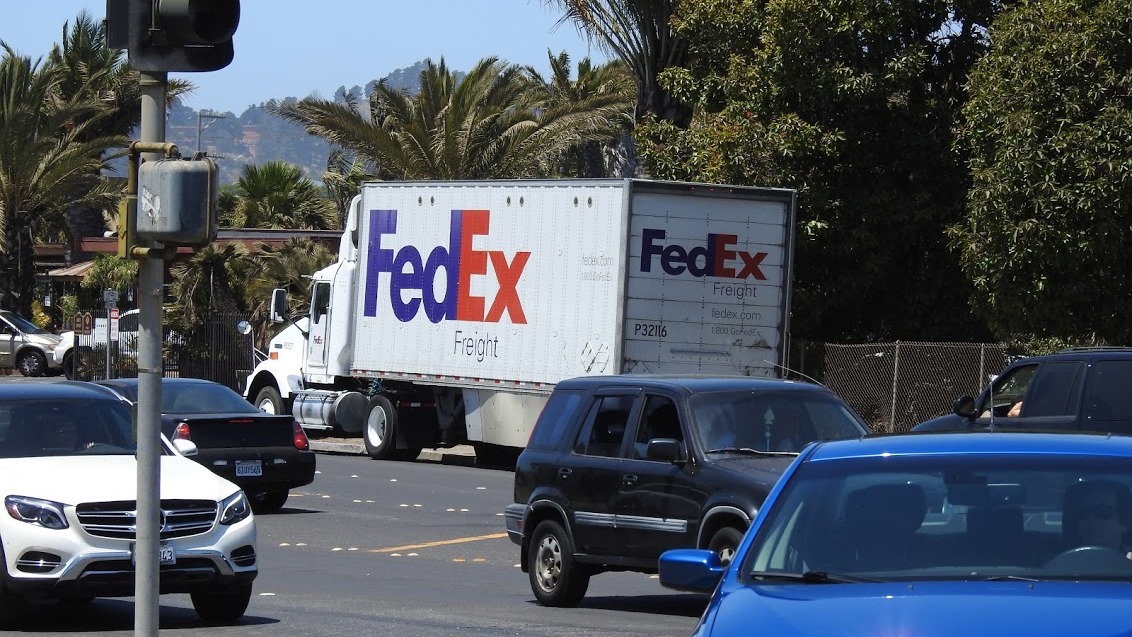
FedEx filed a lawsuit against the U.S. government on February 23, 2026, seeking what it described as a full refund of emergency tariffs after the Supreme Court ruled three days earlier that the Trump administration’s use of the International Emergency Economic Powers Act (IEEPA) to impose broad import duties was unlawful. The global transportation company is among a growing wave of corporations challenging the now-invalidated tariff authority, and its case names U.S. Customs and Border Protection (CBP) and the CBP Commissioner as defendants, according to reporting by The Guardian and the BBC. With the federal government having reported collecting more than $100 billion in customs revenue during that broader period, the potential exposure from refund claims could be significant, though not all of that revenue is tied to the specific IEEPA tariffs at issue.
The lawsuit places FedEx at the center of a high-stakes legal and political fight over the limits of presidential authority in trade policy. Businesses that paid the emergency duties now see a rare opportunity to claw back costs that were once treated as an unavoidable price of doing cross-border commerce. For the government, the litigation wave threatens not only its balance sheet but also the credibility of its past reliance on emergency economic powers to reshape trade relationships overnight.
Supreme Court Rejects Emergency Tariff Authority
The Supreme Court ruled on February 20, 2026, that Donald Trump’s use of IEEPA to impose broad tariffs on imports was unlawful, concluding that the statute does not authorize across-the-board duties simply because the White House declares an economic emergency. The decision rejected the theory that IEEPA can function as a backdoor tariff power, limiting its use to more traditional sanctions tools rather than sweeping taxes on goods from trading partners such as Canada, Mexico, and China. By striking at the legal foundation of the program, the justices effectively invalidated the framework that had justified years of emergency tariffs.
The ruling did more than block future attempts to revive the same tariff schedule. Because the Court rejected the administration’s claimed authority, companies that paid the emergency duties are now testing how much of that money can be recovered and under what procedures. As Associated Press coverage has noted, businesses immediately began exploring how to seek refunds of payments already made, turning what had been a theoretical separation-of-powers dispute into a concrete fight over money. Dozens of companies had already sued before the decision, and the opinion is now being cited as a key precedent in those challenges.
FedEx Lawsuit Targets CBP for Full Recovery
Against that backdrop, FedEx moved quickly. The company, described as a global transportation and postal carrier, filed its complaint seeking what it called a full refund of all emergency tariffs it paid while the IEEPA duties were in force. By naming CBP, its Commissioner, and the United States as defendants, FedEx is asking the courts to compel the very agencies that assessed and collected the duties to return them. That posture underscores that the case is not about future policy design but about undoing the financial consequences of past decisions.
The company’s decision to sue rather than wait for a legislative or administrative solution reflects deep uncertainty over how, or even whether, refunds will be processed automatically. Reporting from The Guardian highlights that federal officials have not outlined any systematic repayment plan, leaving importers to wonder if they must litigate individually to recover their money. For a logistics giant that handles millions of cross-border parcels and freight shipments, even relatively small per-shipment tariffs add up to significant exposure. By filing early, FedEx also positions itself to help shape the legal theories and procedural pathways that other claimants may follow.
The Refund Mechanics Nobody Has Settled
While the Supreme Court answered the core constitutional question, it left open the practical issue of how companies can actually get their money back. A briefing from the Congressional Research Service outlines two main jurisdictional routes through the U.S. Court of International Trade, under 28 U.S.C. sections 1581(a) and 1581(i). The first route covers situations where an importer filed a formal protest with CBP over a tariff charge and then challenged CBP’s denial of that protest in court. The second is a broader “residual” jurisdiction provision that can capture disputes not neatly covered by the protest process. Both routes converge in the same specialized court, raising the prospect that the Court of International Trade could be inundated with refund litigation.
Procedural details that once seemed esoteric now carry enormous financial consequences. Statutes of limitations, protest-filing requirements, and record-keeping standards may determine which companies can obtain full refunds and which are left with only partial relief or none at all. Trade lawyers interviewed in Reuters analysis stress that uncertainty over these mechanics is pushing many businesses toward immediate court filings rather than waiting for Congress or the executive branch to design a uniform remedy. The result could be a patchwork of outcomes as different judges confront novel questions about how to unwind an unlawful tariff regime that operated for years.
$100 Billion in Revenue Now Under Scrutiny
The stakes of that legal uncertainty become clearer when viewed against the government’s own public accounting of tariff revenue. In June 2025, the Department of Homeland Security announced that it had collected more than $100 billion in customs revenue, explicitly crediting the surge to the administration’s aggressive trade agenda. That milestone announcement now doubles as a rough indicator of the government’s potential exposure, even though not all of that money flowed from the specific IEEPA tariffs the Supreme Court invalidated. The figure nevertheless illustrates the scale of the cash flows that passed through CBP while the emergency duties were in effect.
CBP’s own trade statistics, which break out duties, taxes, and fees by fiscal year, include footnotes marking when particular IEEPA-based rates took effect on imports from Canada and under so-called reciprocal tariff provisions. Those records are likely to become central exhibits in refund litigation, as companies attempt to trace which portions of their payments rested on now-unlawful authority. For FedEx and similarly situated importers, reconstructing that history will be crucial to quantifying damages. For the government, the same data could be used to argue for narrower interpretations of liability, such as limiting refunds to transactions where importers preserved their rights through timely protests.
Broader Implications for Trade, Politics, and the Courts
FedEx’s lawsuit underscores a broader fight over the limits of presidential power in trade policy and the practical consequences of unwinding an emergency tariff program through the courts. In the coming months, as judges sort through competing interpretations of IEEPA, the Court of International Trade’s jurisdiction, and the federal government’s refund obligations, the outcomes could shape how future administrations attempt to use emergency economic powers in trade disputes.
More From The Daily Overview
*This article was researched with the help of AI, with human editors creating the final content.

Grant Mercer covers market dynamics, business trends, and the economic forces driving growth across industries. His analysis connects macro movements with real-world implications for investors, entrepreneurs, and professionals. Through his work at The Daily Overview, Grant helps readers understand how markets function and where opportunities may emerge.

