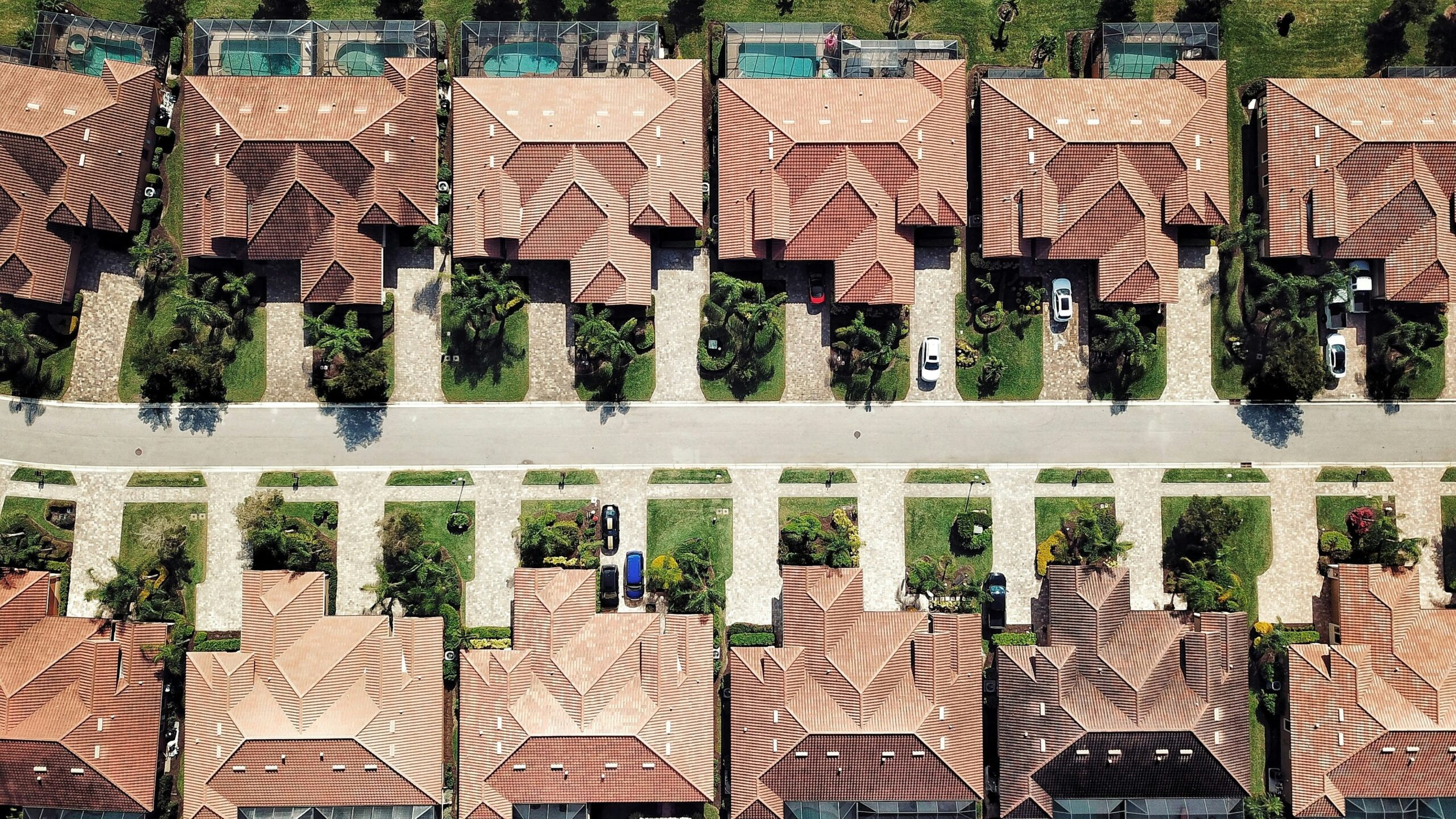
The Florida House of Representatives moved quickly on a sweeping property tax relief proposal on February 19, 2026, passing HJR 203 by a vote of 80 to 30. The joint resolution, which proposes a constitutional amendment to phase out non-school ad valorem taxes on homestead properties, now heads to the Florida Senate for consideration. If the measure ultimately reaches voters and wins approval, it would strip counties, cities, and special districts of their ability to levy property taxes on primary residences while leaving school district funding intact.
What HJR 203 Would Change for Homeowners
At its core, the resolution targets every property tax line item on a homeowner’s bill except the portion that funds public schools. County government levies, municipal taxes, and special district assessments on homestead properties would all be subject to a phased elimination. The measure moved through the House Ways and Means Committee and the State Affairs Committee before reaching the floor as a constitutional amendment proposal to end non-school ad valorem taxes on primary residences. Because it amends the state constitution, HJR 203 would require voter approval on a future ballot rather than simply a governor’s signature, placing the ultimate decision in the hands of Floridians.
Representative Miller, the bill’s sponsor, framed the proposal as a direct response to affordability pressures. “I filed HJR 203 to give meaningful Property Tax relief to Floridians,” Miller stated in a filing explanation posted on the House bill page, pointing to the burden that property taxes place on the average-priced Florida home. Supporters argue that eliminating non-school property taxes on homesteads would provide long-term, structural relief rather than a one-time rebate or temporary millage reduction. The 80-to-30 floor vote suggests broad but not unanimous support within the Republican-controlled chamber, with 30 members voting against a plan that would fundamentally restructure how local governments fund services and potentially shift fiscal pressures in ways that are not yet fully understood.
A Fast Track Through the House Floor
The speed of the bill’s movement through the chamber is itself a story. On February 19, HJR 203 was read a second time, had floor Amendment 357969 adopted, received its third reading, and passed the House in a single legislative day. That compressed timeline, reflected in both the House and Senate tracking records, left little room for extended public debate on a measure that would reshape local government finance across all 67 Florida counties. The engrossed bill text, which incorporates the language from Amendment 357969, represents the final version transmitted to the Senate and will be the basis for any further committee analysis or floor amendments in the upper chamber.
The rapid calendar movement raises a practical question that most coverage of the bill has not addressed: whether the compressed floor schedule gave lawmakers enough time to weigh the downstream effects on local budgets. Property taxes are the single largest revenue source for many Florida counties and municipalities, funding everything from fire rescue and law enforcement to parks, libraries, and road maintenance. Removing the non-school portion for homestead properties does not merely reduce a line item on a tax bill. It eliminates the primary funding mechanism that local elected officials use to set their own spending priorities independent of Tallahassee. The 30 “no” votes may reflect concern about that structural shift as much as any opposition to tax relief itself, especially for lawmakers representing jurisdictions with limited alternative revenue options such as tourist taxes or utility fees.
SB 201 and the Broader Legislative Package
HJR 203 does not exist in isolation. A related proposal, SB 201, also addresses homestead property tax relief. Where HJR 203 envisions a phased elimination, HJR 201 sets a hard start date that would rapidly zero out local non-school property tax bills for primary residences. The Senate measure’s specific mechanics and any related funding provisions are reflected in its bill text and analyses as it moves through the process.
The existence of parallel proposals in the House and Senate underscores that lawmakers are weighing different approaches as the issue moves through the process. The two measures share the same goal of ending non-school property taxes on homesteads, but their structural differences matter. A phased approach gives local governments time to adjust budgets, find alternative revenue sources, or lobby for state backfill funding, potentially smoothing the transition for counties that rely heavily on residential tax bases. An immediate cutoff, as HJR 201 envisions, would force a sharper fiscal reckoning and could trigger abrupt service reductions if replacement revenue is not identified. The law-enforcement funding restrictions in HJR 201 also hint at the political calculus involved: legislators want to promise tax cuts without being blamed for any reduction in police staffing or response times, even if other local services such as libraries, code enforcement, or parks and recreation ultimately absorb the brunt of the cuts.
How Local Governments Could Feel the Impact
For homeowners, the promise of eliminating non-school property taxes on homesteads is straightforward: lower annual bills and greater predictability as housing costs rise. For local governments, however, the implications are more complex. Counties, cities, and special districts use property taxes not only to fund day-to-day operations but also to secure bonds, plan long-term infrastructure, and respond to emergencies such as hurricanes. Phasing out or abruptly ending non-school ad valorem revenue on primary residences would narrow their tax base, potentially increasing reliance on commercial properties, rental units, and non-homestead real estate. That shift could change how local officials zone land, approve new developments, or prioritize economic growth strategies, as they seek to protect remaining taxable value.
Some local leaders may look to fees, assessments, and state transfers as partial substitutes, but each option carries trade-offs. Higher user fees for services like solid waste, stormwater, or recreation can be more regressive than property taxes, hitting lower-income households hardest. Special assessments can be challenged as unfair or unevenly applied. Greater dependence on state appropriations, meanwhile, would tie local budgets more tightly to decisions in Tallahassee, weakening home rule and potentially politicizing basic services. Because HJR 203 and its companion proposals are framed as constitutional amendments, they would lock these structural changes into place, making it difficult for future legislatures to adjust course if unintended consequences emerge.
What the Senate Path Looks Like
After passing the House, HJR 203 was transmitted to the Florida Senate for further action, as reflected in the chambers’ official online bill records. That committee assignment is telling. Appropriations is where fiscal impact receives the closest examination, and senators will need to grapple with a central tension: how do counties and cities replace lost revenue without raising other fees, cutting services, or relying on increased state transfers. An official fiscal impact analysis was not clearly posted alongside the bill information in the linked online records at the time of publication, leaving a gap for readers trying to model long-term budget effects.
The Senate’s reception remains an open question. No direct statements from Senate leadership about HJR 203 have surfaced in the official bill history beyond the procedural referral to Appropriations, and the joint resolution still must meet a three-fifths supermajority threshold in both chambers before it can be placed on a statewide ballot. That higher bar gives senators leverage to demand changes, slow the timeline, or favor the more gradual approach embedded in HJR 203 over the faster schedule in HJR 201. If the Senate amends the House version, the two chambers would need to reconcile differences before the end of session. Only then could a final joint resolution be filed with the Department of State and scheduled for voter consideration. Until that happens, Floridians watching the debate will have to rely on the evolving bill texts and the official House records for clues about how far lawmakers are willing to go in reshaping the property tax system that underpins local government in the state.
More From The Daily Overview
*This article was researched with the help of AI, with human editors creating the final content.

Julian Harrow specializes in taxation, IRS rules, and compliance strategy. His work helps readers navigate complex tax codes, deadlines, and reporting requirements while identifying opportunities for efficiency and risk reduction. At The Daily Overview, Julian breaks down tax-related topics with precision and clarity, making a traditionally dense subject easier to understand.

