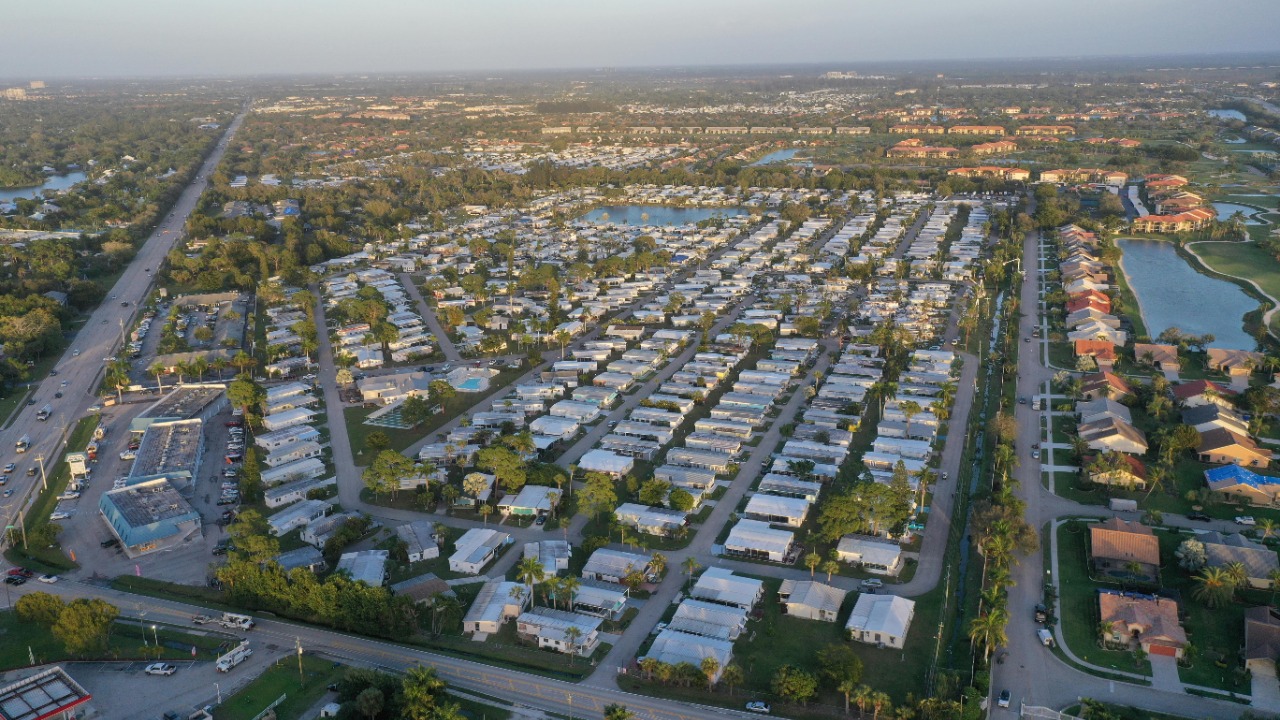
Florida’s housing market is starting to flash the kind of stress signals that rarely resolve quietly. Prices remain high, but the foundations under them are shifting as insurance costs spike, inventory climbs, and migration patterns cool from their pandemic frenzy. I see a market that still looks strong on the surface yet is increasingly defined by financial strain, rising risk, and a growing mismatch between what homes cost and what residents can realistically afford.
Insurance shocks are turning ownership into a high-risk bet
The most immediate pressure point in Florida housing is not list prices, it is the cost and availability of insurance. Homeowners who once treated insurance as a routine line item are now confronting premiums that can rival mortgage payments, along with abrupt policy cancellations that leave them scrambling. I see this as a structural shock rather than a temporary annoyance, because the drivers are long-term forces like hurricane risk, reinsurance costs, and carrier withdrawals, not short-lived market noise.
Reporting shows that major private insurers have pulled back from coastal and high-risk areas, forcing many owners into the state-backed Citizens Property Insurance Corporation, which was designed as an insurer of last resort rather than a mass-market solution. As more policies migrate to Citizens, lawmakers and regulators have warned that the system itself faces growing exposure, a concern reflected in efforts to depopulate Citizens by pushing customers back into the private market even when those alternatives are more expensive. At the same time, reinsurers have raised prices for the coverage that underpins Florida carriers, a shift that has filtered directly into higher homeowner premiums and stricter underwriting standards. These dynamics, documented across multiple insurance reports and state data, suggest that insurance risk is now baked into the cost of owning a Florida home rather than an occasional storm-season surprise.
Affordability is eroding even as inventory builds
At the same time, the basic math of buying in Florida has turned sharply against first-time buyers and middle-income households. During the pandemic boom, prices surged faster than wages as remote workers and retirees bid up homes from Miami to Tampa and smaller inland cities. That run-up has not fully reversed, even as mortgage rates climbed, which means buyers today face a combination of elevated prices, higher borrowing costs, and steeper insurance bills. In practical terms, I see a growing share of would-be buyers priced out or pushed into smaller, older, or more remote properties than they would have considered just a few years ago.
Market data shows that key metros such as Miami, Orlando, and Jacksonville have seen their affordability indices deteriorate, with monthly ownership costs consuming a larger slice of household income. At the same time, listings have started to accumulate, particularly in suburban subdivisions and investor-heavy neighborhoods where sellers are testing the market at aspirational prices. Several affordability analyses and inventory trackers point to a shift from the frenzied bidding wars of 2021 and 2022 toward longer days on market and more frequent price cuts. That combination, high carrying costs for buyers and rising supply, is a classic early warning that the balance of power is starting to tilt away from sellers even if headline price indices have not yet rolled over in a dramatic way.
Investor-heavy pockets look especially vulnerable
One of the more fragile parts of Florida’s housing landscape sits in neighborhoods where investors, rather than owner-occupants, dominate the rolls. During the low-rate era, institutional landlords and small-scale investors alike poured into single-family rentals and short-term vacation properties, particularly in markets like Cape Coral, Fort Myers, and parts of central Florida. I view those investor clusters as potential pressure valves for the broader market, because they are more likely to sell quickly if cash flow deteriorates or financing tightens.
Evidence from recent ownership studies shows that investor purchases made up a significant share of transactions in several Florida counties during the boom years, especially in newly built subdivisions and condo complexes near tourist corridors. As insurance premiums climb and local governments adjust property tax assessments to reflect higher valuations, the economics of holding those units as rentals or short-term listings have become more challenging. Some landlords have responded by raising rents aggressively, a trend captured in multiple rental market reports, but there are limits to how far tenants can stretch. If rent growth stalls while expenses keep rising, I expect more investors to test the resale market, which could add to inventory in precisely the areas that saw the fastest appreciation on the way up.
Migration tailwinds are slowing, not reversing
Florida’s population story has been one of its strongest defenses against talk of a housing downturn. The state attracted hundreds of thousands of new residents during and after the pandemic, many of them remote workers from higher-cost states who could afford to pay more for housing. That inflow helped justify rapid price gains and gave builders confidence to keep adding supply. I still see migration as a net positive for demand, but the pace has cooled from its peak, and the composition of newcomers is shifting in ways that matter for housing.
Recent migration data indicates that while Florida continues to gain residents from states like New York, New Jersey, and Illinois, the surge has moderated compared with the early pandemic years. At the same time, some long-time Floridians are leaving, citing rising housing costs, insurance burdens, and concerns about climate risk. Surveys and outmigration studies highlight that younger families and service workers, who are essential to the state’s tourism and healthcare sectors, are among those feeling squeezed. A slower but still positive population trend means demand is unlikely to collapse, yet it also removes some of the extreme upward pressure that once made any listing feel like a guaranteed quick sale at a premium price.
Climate and flood risk are being priced in, unevenly
Underlying many of these financial stresses is a more fundamental reality: Florida is on the front line of climate and flood risk, and markets are starting to treat that risk as a cost rather than an abstraction. Sea level rise, stronger storms, and repeated flooding have pushed insurers, lenders, and some buyers to differentiate more sharply between properties that are relatively resilient and those that sit in harm’s way. I see this as a gradual repricing rather than a sudden collapse, but it is already creating winners and losers at the neighborhood level.
Studies of flood exposure and climate valuation show that homes in high-risk zones are beginning to trade at discounts compared with similar properties on safer ground, even when headline metro-level price indices still look strong. Federal changes to flood insurance rating formulas have also raised premiums for some coastal and low-lying properties, adding another layer of cost that buyers must factor into their budgets. In parallel, local governments are debating and, in some cases, implementing resilience projects such as seawalls, drainage upgrades, and building code changes, which can support values in protected areas while leaving unprotected zones more exposed. The result is a patchwork market where two houses a few blocks apart can face very different long-term trajectories, a nuance that broad statewide averages tend to obscure.
What these warning signs mean for buyers and owners
Put together, these threads point to a Florida housing market that is not on the brink of a 2008-style crash but is clearly moving into a more precarious phase. For current owners, the main risk is not that their home value suddenly halves, but that the total cost of staying put keeps climbing through insurance, taxes, and maintenance tied to climate resilience. For prospective buyers, especially those relying on conventional financing and modest down payments, the challenge is threading a needle between paying too much for a stretched budget today and waiting so long that rising costs or tighter lending standards shut the door entirely.
Data from recent delinquency reports and construction surveys does not yet show a wave of distress sales or a collapse in building activity, which suggests that the market still has buffers. However, the convergence of high insurance premiums, eroding affordability, investor sensitivity, slower migration, and climate repricing is not something I can dismiss as background noise. For anyone with a stake in Florida housing, the message is to pay closer attention to the fine print, from policy renewals to flood maps, because the most important shifts are happening in the details rather than the headlines.
More From TheDailyOverview
- Tennessee loses $2.6B megafactory and faces major layoffs
- Retired But Want To Work? Try These 18 Jobs for Seniors That Pay Weekly
- What to do with your pennies after the U.S. stops minting them
- Home Depot CEO warns of a troubling customer trend in stores

Elias Broderick specializes in residential and commercial real estate, with a focus on market cycles, property fundamentals, and investment strategy. His writing translates complex housing and development trends into clear insights for both new and experienced investors. At The Daily Overview, Elias explores how real estate fits into long-term wealth planning.

