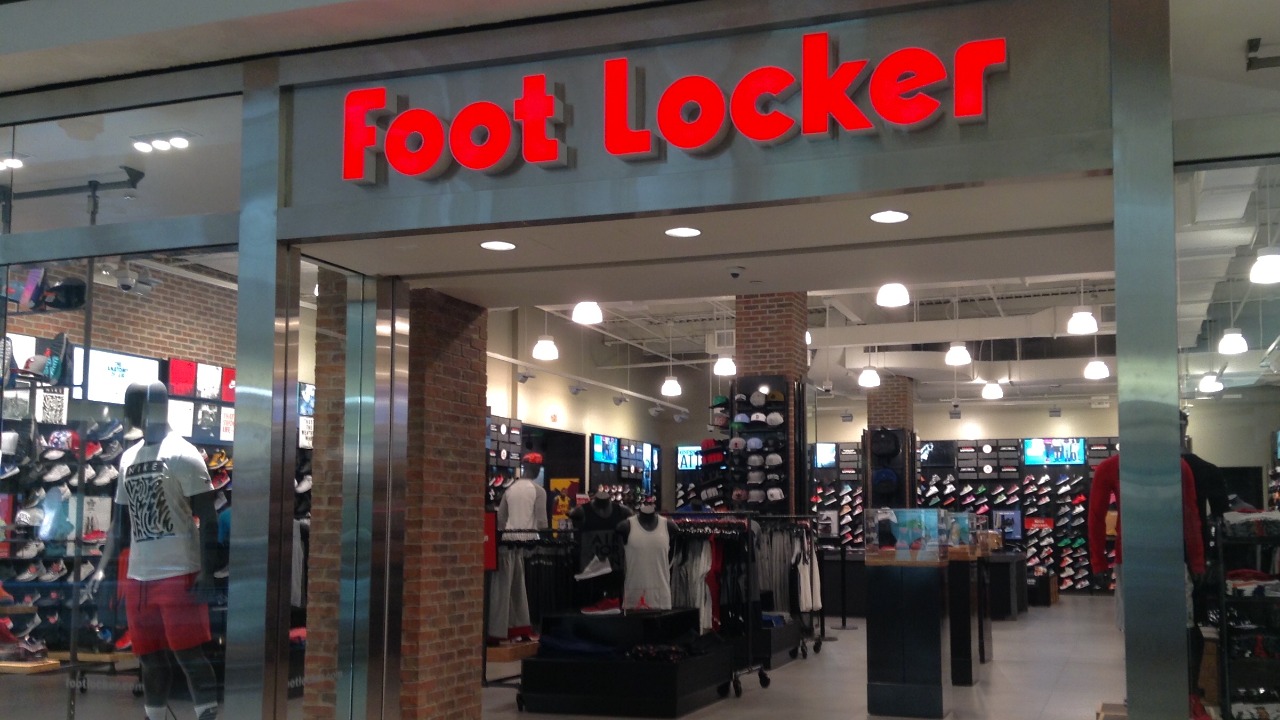
Foot Locker is preparing a sweeping reset of its brick-and-mortar footprint in the United States, with hundreds of mall stores slated to close and thousands of jobs potentially affected over the next two years. The company is betting that a leaner, more strategically placed store network, combined with stronger digital sales, can stabilize a business that has been squeezed by changing shopping habits and tougher competition.
As the retailer accelerates its “Lace Up” turnaround plan, roughly 400 U.S. locations are expected to go dark by 2026, putting as many as 10,000 roles at risk while investment shifts toward larger, experience-focused formats and off-mall sites. The scale of the restructuring underscores how quickly the traditional sneaker store model is being rewritten in the era of direct-to-consumer brands and online-first shoppers.
Foot Locker’s 400-store pullback and what it really means
The headline number of 400 U.S. store closures signals a major retrenchment, but the company is framing it as a strategic pruning rather than a retreat from physical retail altogether. Under its multi-year “Lace Up” strategy, Foot Locker has outlined plans to shut a large share of its legacy mall-based locations while opening or remodeling stores in formats it believes better match how customers shop today. The closures are concentrated in underperforming sites, particularly older in-line mall stores that no longer justify their rent or traffic expectations, according to the company’s turnaround disclosures.
Management has paired that contraction with a commitment to invest in new concepts such as community-focused “neighborhood” stores, larger “power” stores, and off-mall locations that can showcase broader assortments and more immersive experiences. In its recent investor presentations, Foot Locker has described a plan to reduce its overall North American store count while increasing average store size and productivity, a shift that helps explain how hundreds of closures can coexist with selective openings and remodels in priority markets. The 400-store figure, drawn from the company’s public guidance, therefore represents a reshaping of the fleet rather than a simple contraction in square footage.
Why up to 10,000 jobs are in the crosshairs
The human cost of shutting 400 stores is substantial, and the estimate that as many as 10,000 positions could be affected reflects the labor-intensive nature of specialty retail. A typical Foot Locker or Champs Sports location employs a mix of full-time managers, assistant managers, and part-time associates, and when those stores close, most of those roles disappear unless workers can be redeployed. Based on staffing levels disclosed in prior store-level filings and industry-standard headcounts for similar chains, analysts have projected that the cumulative impact of the planned closures could put roughly 10,000 jobs at risk across sales floors, back rooms, and local management tiers, a figure that aligns with the scale of the company’s store base reduction.
Foot Locker has said in its restructuring updates that it will look for opportunities to transfer employees into nearby stores or into new-format locations where possible, but it has also acknowledged that not every role can be preserved. Severance costs and related charges tied to workforce reductions are already appearing in its financial statements, with the company flagging restructuring and impairment expenses in recent quarterly reports. For affected workers, the shift underscores how quickly a mall-based retail job can become vulnerable when a chain accelerates its exit from older centers, even as the same employer invests in new stores a few miles away.
Malls lose another anchor as traffic patterns shift
The decision to shutter hundreds of mall stores lands at a difficult moment for traditional shopping centers, which have already seen a steady drip of apparel and specialty tenants leave over the past decade. Foot Locker has been a familiar presence in enclosed malls, often near food courts or department store anchors, and its exit from weaker centers will remove a recognizable draw for younger shoppers. In its “Lace Up” materials, the company has been explicit that it plans to reduce its exposure to so-called “C and D” malls while concentrating remaining mall stores in higher-performing “A and B” properties, a strategy that mirrors broader retail migration patterns documented in recent mall traffic analyses.
For landlords, losing a sneaker chain that reliably pulled in teen and young adult traffic can complicate efforts to keep corridors vibrant and justify rents. Real estate research cited in Foot Locker’s own investor presentations shows that off-mall power centers and open-air lifestyle centers have been gaining share of retail openings, while enclosed malls have struggled to backfill vacated space with equally strong brands. As Foot Locker pivots toward those off-mall formats, it is effectively voting with its leases on where it believes future foot traffic will be strongest, leaving some older malls to lean more heavily on entertainment, dining, or non-retail tenants to fill the gap.
Inside the “Lace Up” turnaround strategy
Foot Locker’s store closures are only one piece of a broader turnaround blueprint that management has labeled “Lace Up,” a multi-year plan to reset the brand’s positioning, product mix, and profitability. At the core of that strategy is a push to simplify the portfolio, sharpen the focus on sneaker culture, and rebuild margins that have been pressured by markdowns and inventory missteps. The company has laid out specific financial targets in its strategy overview, including a goal of returning to sustainable sales growth and expanding operating margin through a mix of cost savings and higher productivity per store.
Operationally, “Lace Up” includes initiatives to streamline banners, with some overlapping concepts consolidated or repositioned, and to invest in data-driven merchandising that better aligns assortments with local demand. Foot Locker has also highlighted plans to upgrade store technology, from mobile checkout to improved inventory visibility, and to deepen partnerships with key brands while expanding its own private-label offerings. These moves, detailed in recent capital markets presentations, are meant to ensure that the smaller, reconfigured store fleet can generate more revenue and profit per square foot, offsetting the loss of volume from shuttered locations.
From mall corridors to off-mall “power” and community stores
The most visible manifestation of Foot Locker’s reset is the shift in where and how it shows up for customers. Instead of relying on compact mall in-line stores, the company is leaning into larger “power” stores that can showcase a wider range of footwear and apparel, along with “community” formats tailored to local neighborhoods. In its store strategy breakdown, Foot Locker has said it wants a higher proportion of its North American locations to be off-mall, in strip centers and street locations that offer easier parking, more flexible layouts, and often lower occupancy costs, a direction spelled out in its store fleet plan.
These new formats are designed to be more experiential, with space for events, customization, and storytelling around key brands, rather than just rows of stacked shoe boxes. The company has pointed to early examples of such stores in major cities as proof that shoppers will travel for a richer experience, and it has committed capital expenditure toward rolling out similar concepts in additional markets. According to its latest annual filing, Foot Locker expects the mix of off-mall locations to rise steadily as leases expire in older malls and new-build projects come online, gradually tilting the portfolio toward formats it believes can better withstand e-commerce competition.
Digital growth and the rise of omnichannel sneaker shopping
Behind the physical reshuffle is a recognition that sneaker shopping has become deeply omnichannel, with customers bouncing between apps, websites, and stores before making a purchase. Foot Locker has reported that digital sales now account for a significantly larger share of its revenue than they did before the pandemic, and it has invested heavily in its mobile app, website, and fulfillment capabilities to keep pace with rivals. In its recent earnings materials, the company has highlighted growth in click-and-collect orders, ship-from-store capabilities, and loyalty-driven digital engagement as key offsets to declining traffic in some legacy locations.
The store closures, in that context, are partly about aligning the physical network with a world where many customers start their journey online and use stores as pickup points, try-on venues, or service hubs rather than the sole place they browse. Foot Locker’s disclosures show that it is integrating inventory systems so that shoppers can see real-time availability and choose how they receive their purchases, a capability that depends more on strategically placed, well-stocked hubs than on sheer store count. By trimming underperforming sites and reinvesting in technology and logistics, the company is trying to ensure that its remaining stores function as nodes in a broader omnichannel ecosystem, a shift that is evident in its digital strategy updates.
Competition from Nike, Adidas, and direct-to-consumer rivals
Foot Locker’s need to rethink its footprint is also a response to intensifying competition from the very brands that fill its shelves. Over the past several years, Nike, Adidas, and other major labels have pushed aggressively into direct-to-consumer channels, from their own flagship stores to apps like Nike’s SNKRS and Adidas CONFIRMED, reducing their reliance on wholesale partners. Foot Locker has acknowledged in its risk disclosures that changes in vendor distribution strategies, including a shift toward selling directly to consumers, have weighed on its sales and forced it to diversify its brand mix.
At the same time, specialty competitors and generalists alike are vying for sneaker shoppers, from JD Sports and Finish Line to Dick’s Sporting Goods and Amazon. That crowded landscape makes it harder for a mall-based chain to rely on convenience alone, especially when many of the hottest releases are available through brand-owned channels. Foot Locker’s response, as outlined in its strategic roadmap, is to deepen select brand partnerships where it can offer differentiated assortments, expand into adjacent categories like apparel and accessories, and use its new-format stores to create experiences that pure e-commerce players cannot easily replicate.
Financial pressure, store economics, and investor expectations
The decision to close 400 stores is rooted in hard financial math as much as in shifting consumer behavior. Foot Locker has faced declining comparable-store sales in several recent quarters, along with margin pressure from promotions and elevated inventory levels, trends it has detailed in its quarterly earnings releases. Underperforming stores drag on profitability not only through weak sales but also through fixed costs like rent and staffing, and the company has been candid that pruning those locations is essential to restoring healthier returns on invested capital.
Investors have been watching closely to see whether the “Lace Up” plan can stabilize results and set the stage for renewed growth, and the store closure program is a key proof point. In its latest 10-Q filing, Foot Locker outlined expected restructuring charges tied to lease terminations, asset impairments, and severance, but it also projected future savings from lower occupancy and operating expenses. The company has framed the near-term financial hit as a necessary step to improve store-level economics, arguing that a smaller but more productive fleet will ultimately support stronger earnings and give it more flexibility to invest in growth initiatives.
What shoppers and employees should watch next
For customers, the most immediate impact of Foot Locker’s reset will be the disappearance of familiar stores in certain malls and neighborhoods, along with the emergence of larger, more immersive locations in others. Shoppers who rely on a nearby mall store may find themselves redirected to an off-mall site or to the company’s app and website, where Foot Locker is concentrating more of its exclusive drops and loyalty rewards. The company has encouraged customers to use its digital tools to locate remaining stores and check product availability, a shift it has promoted in its consumer-facing updates as closures roll out.
Employees, meanwhile, will be watching for store-specific announcements as leases come up for renewal and as new-format locations open in their regions. Foot Locker has said in its presentations to investors that it aims to retain talent where possible by moving staff into growth stores, but it has also prepared stakeholders for ongoing restructuring as it works through its multi-year plan. The next phases of the “Lace Up” strategy, including how quickly the company can ramp up its new concepts and whether digital growth can offset lost mall traffic, will determine whether this wave of closures and job risk ultimately marks a painful contraction or a successful reset of one of America’s best-known sneaker retailers.
More From TheDailyOverview

Grant Mercer covers market dynamics, business trends, and the economic forces driving growth across industries. His analysis connects macro movements with real-world implications for investors, entrepreneurs, and professionals. Through his work at The Daily Overview, Grant helps readers understand how markets function and where opportunities may emerge.