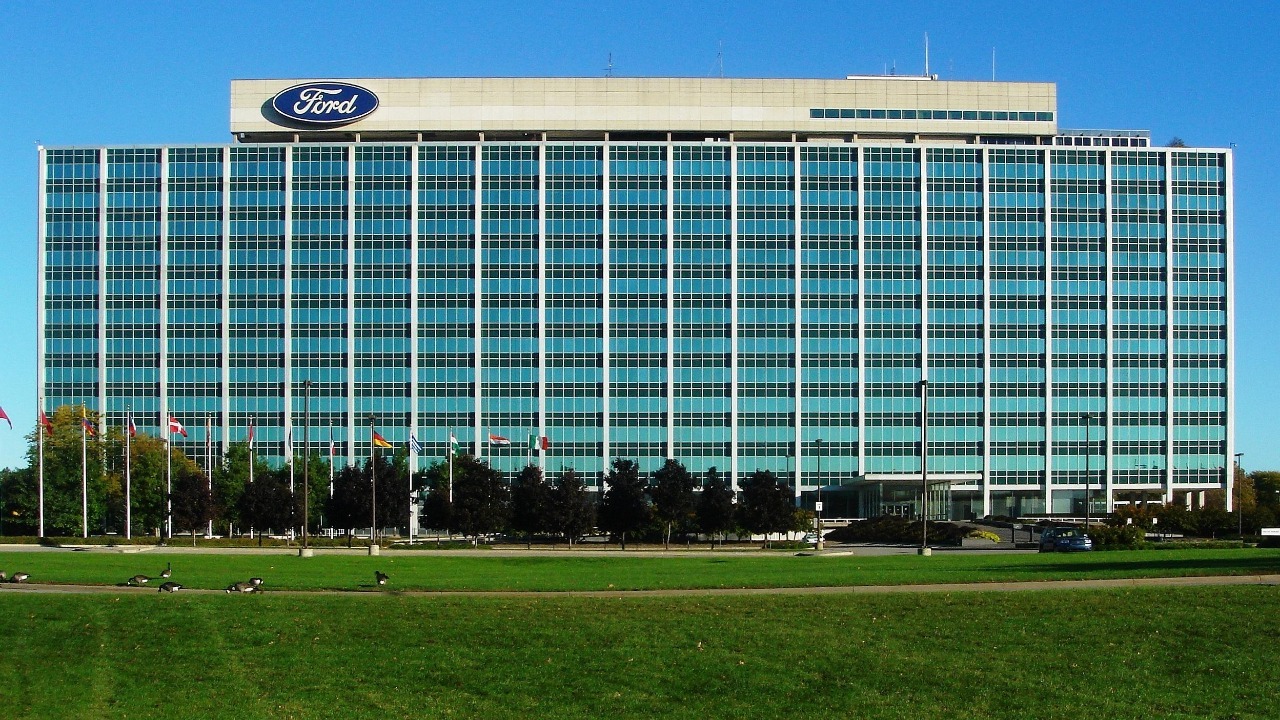
Ford Motor Co. is moving to unwind its BlueOval SK battery joint venture in Kentucky and says it is investing $1.9 billion to overhaul its Louisville Assembly Plant to build an electric midsize pickup. The twin moves, unfolding against the backdrop of a $19.5 billion corporate writedown and a recently decided utility rate case, leave Kentucky workers facing uncertainty on one end and residents potentially staring at higher electricity bills on the other. The result is a high-stakes experiment in whether public subsidies, private investment, and utility regulation can be aligned to keep an auto state competitive in an era of volatile electric-vehicle demand.
Ford Exits Its Battery Joint Venture
In a December 2025 filing with federal securities regulators, Ford disclosed that it had entered a disposition agreement with SK On and BlueOval SK that effectively unwinds its battery joint venture in Kentucky. Under the terms, a Ford subsidiary will acquire two Kentucky battery plants and their equipment, with the deal expected to close in the first half of 2026. Ford told investors it anticipated roughly $3 billion in pre-tax impairment and related charges in the fourth quarter of 2025 tied to the transaction, a recognition that the facilities are now worth far less than the company once projected when the EV market looked more promising.
The disposition raises questions about the future of a multi‑billion‑dollar loan that the U.S. Department of Energy closed in December 2024 for battery plants in Glendale, Kentucky, and Stanton, Tennessee. That loan was structured around a joint venture that no longer exists in its original form, yet neither DOE nor Ford has publicly explained whether the terms will be amended, enforced as written, or partially unwound. The tension between a Ford-controlled subsidiary acquiring these plants and federal financing originally premised on a joint venture leaves open the possibility of amended terms or other changes, but so far no official filings have clarified how the transfer will affect repayment schedules, job commitments, or technology benchmarks embedded in the loan.
Louisville Gets a $1.9 Billion Lifeline
Even as Ford retreats from its battery partnership, the company has committed to a major retooling of the Louisville Assembly Plant to build an all-new electric midsize pickup platform. According to the Kentucky Cabinet for Economic Development, the $1.9 billion project is expected to secure 2,200 existing jobs, with production of the new vehicle targeted for a second-quarter 2027 launch. To keep Ford anchored in Louisville, the Kentucky Economic Development Finance Authority approved supplemental incentives under the Kentucky Jobs Retention Act, effectively trading future tax revenues for a promise that the plant will remain active and pivot to electric trucks rather than face downsizing or closure.
The math on paper can look encouraging when job tallies are compared across projects, but the workers affected by battery-plant changes are not necessarily the same people whose jobs are tied to Louisville Assembly. But the workers losing battery-plant jobs are not necessarily the same people who will end up on assembly lines building electric pickups, and the geographic spread between Glendale and Louisville complicates any simple redeployment story. Kentucky’s incentive database shows that the state has layered multiple retention and expansion agreements across Ford’s footprint, yet those awards do not guarantee that displaced battery workers will be retrained, relocated, or hired into the retooled plant. With the new truck not slated to launch until 2027, gaps in timing could leave some workers facing months or years without comparable employment.
A Rate Case That Hits Ratepayers
Large-scale industrial overhauls require substantial new power, and Kentucky Utilities recently sought permission to raise what it charges customers in a base-rate proceeding before the Kentucky Public Service Commission. That case, filed as Docket 2025‑00113, culminated in a Final Order entered on February 16, 2026. Base-rate cases determine how much a regulated utility can bill residential, commercial, and industrial customers to recover infrastructure investments and operating expenses, meaning the commission’s order directly shapes the bottom line on monthly electric bills.
The timing underscores how industrial policy, corporate strategy, and household finances intersect. Grid upgrades needed to supply industrial-scale power to retooled auto plants and battery facilities create cost pressures that utilities typically spread across their entire customer base. While the PSC docket does not single out Ford as the driving force behind the rate request, the overlap between a nearly $2 billion plant overhaul and a utility seeking higher rates in the same territory is difficult to ignore. Kentucky residents who never set foot inside an auto plant could still see some grid costs reflected in broader rates over time, even as they confront their own higher cost of living from any increase in electric bills.
Ford’s Broader EV Retreat Adds Pressure
The Kentucky developments are unfolding against a backdrop of a broad strategic pullback from electric vehicles. In December 2025, Ford told investors it would record a $19.5 billion charge as it scrapped or scaled down several EV programs, citing weakening demand and shifts in federal policy. That writedown dwarfs the $3 billion impairment linked to the BlueOval SK disposition and signals that Ford no longer sees its once-ambitious EV portfolio as a uniformly promising bet. Instead, the company is concentrating on a narrower set of projects it believes can weather policy reversals and uneven consumer interest, with Louisville’s electric pickup now one of the marquee remaining efforts.
This context heightens the stakes for Kentucky. Ford is effectively wagering $1.9 billion that an electric midsize pickup will find enough buyers by the time production ramps in 2027, even as it acknowledges deep losses on earlier EV investments. Federal research spending on advanced batteries and drivetrains, documented in Energy Department archives and in ARPA‑E initiatives, has helped lower technology costs and improve performance, but public dollars cannot guarantee that consumers will embrace every new model. If demand for electric trucks stalls or policy incentives weaken further, Louisville could face the same headwinds that undermined the original BlueOval SK vision, leaving state and local officials to explain why generous subsidies failed to deliver lasting security for workers or ratepayers.
What Kentucky Workers and Ratepayers Face Next
For Kentucky’s workforce, the immediate challenge is navigating a transition that looks orderly in spreadsheets but chaotic on the ground. Battery-plant employees confronting layoffs must decide whether to wait for potential openings at Louisville Assembly, seek retraining in other sectors, or leave their communities altogether in search of comparable wages. State officials have touted incentive packages and training programs as tools to smooth that transition, but the gap between policy design and lived experience can be wide, particularly when the new jobs are in different locations, demand different skills, or arrive on a delayed timeline. The risk is that communities built around promised EV investments will instead see a churn of short-lived construction work followed by a smaller set of permanent positions than originally advertised.
Ratepayers, meanwhile, are being drawn into the state’s industrial strategy whether they like it or not. The PSC’s rate order will determine how much of Kentucky Utilities’ grid spending is allocated to households versus large industrial customers, and those choices will reverberate in family budgets long after ribbon-cuttings and press conferences fade. If Ford’s retooled plant succeeds, proponents will argue that higher rates were a worthwhile trade for preserving thousands of jobs and keeping Kentucky at the center of North American vehicle production. If the project falters or EV demand weakens further, residents may feel they were asked to underwrite a corporate gamble that did not pay off. In that sense, the story unfolding around Ford’s Kentucky operations is not just about one company’s strategy but about how the costs and benefits of the energy transition are shared among workers, corporations, and the public at large.
More From The Daily Overview
*This article was researched with the help of AI, with human editors creating the final content.

Grant Mercer covers market dynamics, business trends, and the economic forces driving growth across industries. His analysis connects macro movements with real-world implications for investors, entrepreneurs, and professionals. Through his work at The Daily Overview, Grant helps readers understand how markets function and where opportunities may emerge.

