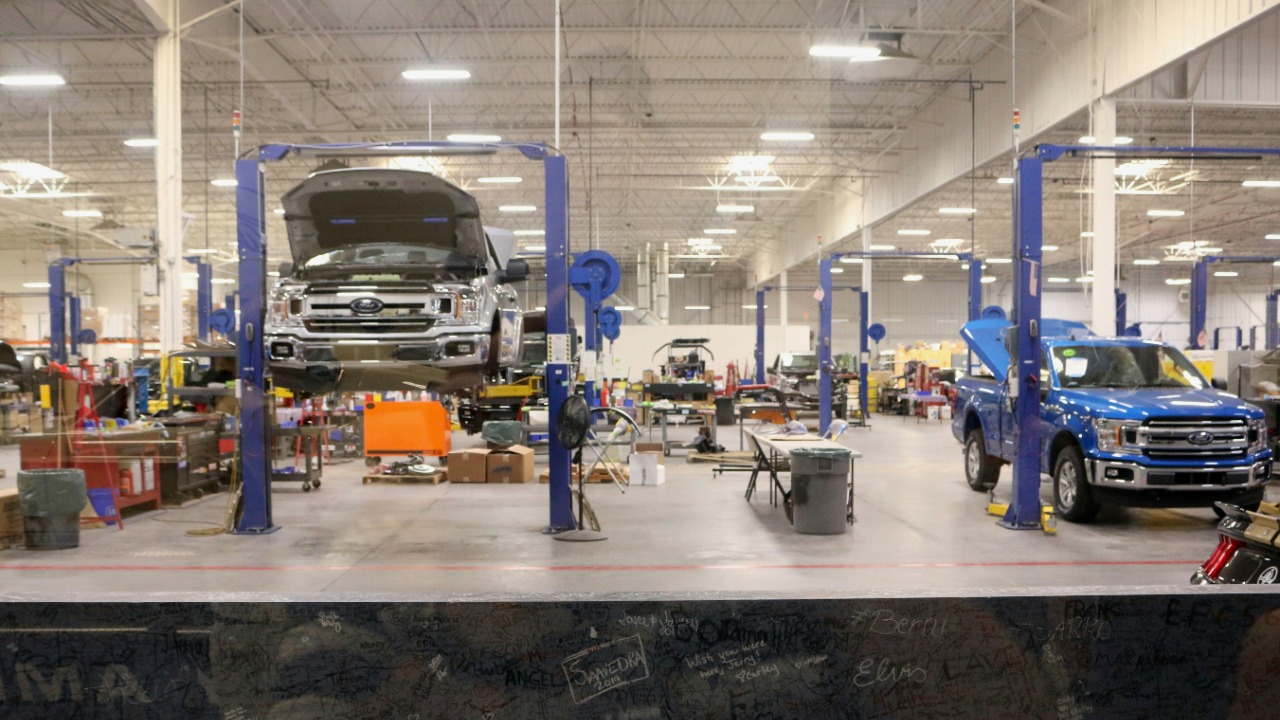
Ford is dangling six-figure paychecks and still cannot find enough people to keep its service bays humming. The company’s leader has turned that frustration into a warning, arguing that thousands of unfilled mechanic jobs are a symptom of a deeper breakdown in how America values and trains skilled workers. If a major automaker cannot staff well paid, stable roles, the country’s broader promise of middle class opportunity looks increasingly fragile.
At the center of the alarm is Ford CEO Jim Farley, who says the automaker has roughly 5,000 open mechanic positions that can pay around $120,000 a year and yet remain vacant. He has started to frame those empty lifts and idle service bays as a national problem, not just a corporate headache, pointing to a widening gap between the jobs that actually exist and the careers young Americans are being pushed to pursue.
‘We are in trouble in our country’
When I listen to Ford CEO Jim Farley describe his staffing problem, it sounds less like a recruiting pitch and more like a distress signal. He has said the company has about 5,000 m mechanic openings at dealerships, with pay that can reach $120 for workers who master the craft and stick with it, yet he still cannot fill them and has warned, “We are in trouble in our country” as a result, a concern captured in detailed reporting on his comments at a recent event about the shortage. In a separate account of the same warning, Farley is again quoted stressing that those 5,000 m roles, tied to a $120 pay level, are sitting open even as many Americans say they are struggling to find work, underscoring how mismatched the labor market has become between available jobs and available skills.
Farley has not limited his concern to Ford’s own headcount. In a video shared in Dec, he broadened the lens to argue that more than one million skilled trade and essential jobs across the United States are going unfilled, even though many of those roles pay strong wages and historically built the country’s middle class, a point he made while highlighting how these positions underpin everything from transportation to public safety in his social media message. When a CEO who oversees one of the world’s largest automakers starts talking about a million missing workers, it is not just a complaint about overtime costs, it is a statement about whether the basic economic ladder that once defined America is still intact.
High pay, empty bays
The most jarring part of Farley’s warning is that these are not marginal, low wage jobs that people might understandably avoid. He has repeatedly emphasized that Ford’s dealerships have 5,000 mechanic roles that can pay around $120K per year, and that those positions are going unfilled even as he publicly insists America is “in trouble” because of it, a combination that has been laid out in detail as analysts explain why this mismatch is such a problem for the broader economy for workers and consumers. Another breakdown of the situation notes that the $120,000 salary on offer for experienced technicians is nearly double the average U.S. income according to the Social Security Adm, which makes the persistent vacancies even more striking and suggests that pay alone is not enough to overcome the cultural and educational headwinds facing the trades for this line of work.
Farley has been blunt that this is not a minor inconvenience. In Nov, he said he has 5,000 open mechanic jobs with up to six figure salaries and called the situation “a very serious thing,” tying the shortage to a broader decline in manually skilled workers and a long running shift away from trade schools that once fed dealership service departments into steady careers. When a job that can support a family, pay a mortgage, and offer long term stability sits empty, the problem is not just about recruiting, it is about whether the country’s education and guidance systems are steering people toward the opportunities that actually exist.
A skilled trade crisis, not just a Ford problem
What is happening in Ford’s service bays is part of a much larger strain on the skilled workforce that keeps the physical economy running. Earlier in Sep, According to a survey by PRT Staffing, 17.4% of companies in manufacturing reported worker shortages, a figure that hints at how widespread the gap has become in sectors that rely on technicians, machinists, and other hands on roles across the industrial landscape. Analysts who have dug into Farley’s comments describe the 5,000 high paying mechanic jobs as a vivid example of “High Paying Jobs or Contract Laying in Plain Site,” arguing that the headlines about a weak job market obscure the reality that many employers cannot find qualified people even when they are ready to pay six figures for critical roles.
Others have framed the situation as “America’s Skilled Trade Crisis,” noting that the Ford CEO Warns of 5,000 Unfilled Mechanic Jobs Despite Six figure salaries as a symbol of how the backbone of the American economy is being neglected in favor of more glamorous white collar paths that do not always deliver better outcomes. In one widely shared summary, the situation was boiled down to a stark line, “Can’t find mechanics to work for $120k,” with Farley stressing that the $120,000 salary figure is not hypothetical but a real world offer that still fails to attract enough candidates, even as Musk reacts from the sidelines to the idea that such well paid jobs are being left on the table while the talent pipeline dries up.
Over one million essential jobs missing workers
Farley has tried to connect the dots between the empty service bays at Ford and a broader shortfall in essential workers across the economy. In another Dec message, he said Ford CEO Jim Farley is sounding the alarm on a crisis hitting the U.S. economy, pointing to over one million essential trade positions that exist on paper but lack the workforce to fill them, from auto technicians to first responders and equipment operators who keep infrastructure functioning in communities across the country. That scale matters, because it suggests the issue is not confined to one company or one industry, but is instead a systemic shortfall that could slow everything from emergency response times to the rollout of new manufacturing projects.
The disconnect is especially glaring when set against the way young people are being advised to build their careers. A widely circulated LinkedIn post in Nov by JOHN HENRY BANCOLO, who describes himself as “Ask Me” and an AI Advocate Enthusiast, highlighted that there are 5,000 Job Openings With 6 figure potential in Ford’s service network and contrasted that with the intense competition for entry level tech and office roles, arguing that the United States is overlooking a viable path to prosperity for a generation that has been told the only route to success runs through a four year degree even as high paying trades go begging. When more than a million essential jobs are short staffed and a prominent CEO is pleading for mechanics, it raises hard questions about whether the country’s education and workforce systems are aligned with reality.
Why this shortage hits every driver
For most people, the impact of this shortage will not show up as a statistic, it will show up as a longer wait to get a car fixed or a higher bill when the work is finally done. In a detailed breakdown of Farley’s comments, one analysis quoted him saying, “Those jobs are out there: mechanics in a Ford dealership. As of this morning, we had 5,000 openings. A bay with a lift, all the tools, and a six figure income if you stay in it,” spelling out how each unfilled role means one less person available to diagnose a check engine light or replace a failing battery pack on a late model F-150 or Mustang Mach-E when something goes wrong. Another social media clip in Nov, shared under the handle rapstreetplustv, underscored that Ford CEO Jim Farley says the company currently has around 5,000 open mechanic positions, reinforcing that this is not a theoretical future risk but a present day constraint on how quickly dealerships can serve customers who rely on their vehicles.
The strain is already visible inside the company’s own operations. An in depth look at Ford’s service challenges noted that recall plagued Ford cannot find enough technicians, with the CEO acknowledging there are 5,000 openings despite the company’s need to process a heavy load of warranty and recall work, a situation that reporter Michael Gauthier described as a significant bottleneck for both the automaker and its customers as vehicles wait for attention. Labor advocates have picked up the theme as well, with one summary under the headline Ford CEO Warns America Is In Trouble noting that the Car Giant Has 5,000 Open Mechanic Jobs Paying $120,000/Year Going Unfilled and arguing that the country needs to invest in training a next generation of people who can keep increasingly complex vehicles on the road before the shortage gets worse.
More From TheDailyOverview

Grant Mercer covers market dynamics, business trends, and the economic forces driving growth across industries. His analysis connects macro movements with real-world implications for investors, entrepreneurs, and professionals. Through his work at The Daily Overview, Grant helps readers understand how markets function and where opportunities may emerge.

