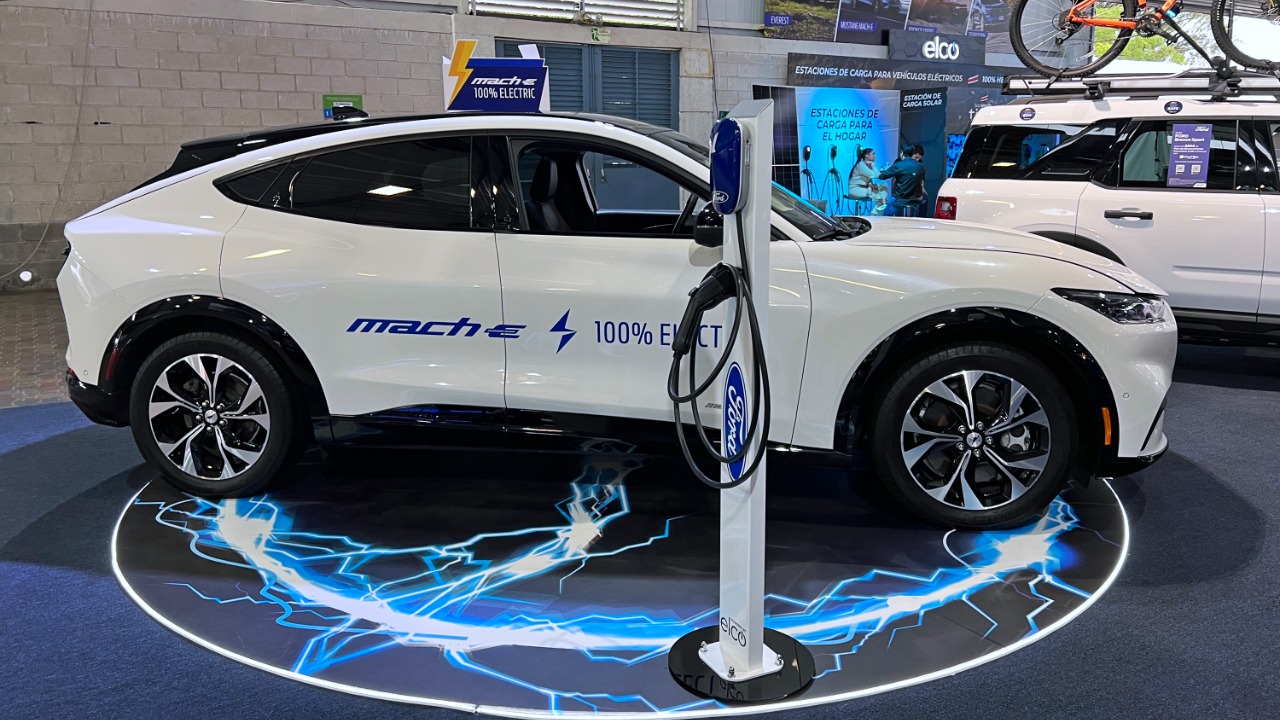
Ford’s electric vehicle business just hit a wall, with U.S. battery EV sales collapsing by roughly three-fifths in November after the loss of a key federal incentive. The sudden drop is not only a blow to Ford’s own transition plans, it is also a sharp warning about how fragile mainstream demand for plug-in models remains when prices rise even slightly.
Instead of a smooth glide path from early adopters to the mass market, the numbers now show a market that can still seize up when policy support is pulled back. I see Ford’s plunge as a stress test of the entire EV strategy in the United States, from pricing and product mix to how quickly traditional automakers can really pivot away from internal combustion.
The scale of Ford’s EV slide
The headline figure is stark: the company’s U.S. electric lineup suffered a 61 percent year over year drop in November, leaving total EV deliveries at just 4,247 units. Within that slump, the flagship electric pickup was hit hardest, with the F‑150 Lightning and recording a 72 percent decline while other electric models fell 49 percent. That kind of contraction in a single month is not a normal fluctuation, it is a sign that a key pillar of demand has been knocked out.
Ford’s own November update underscored how concentrated the weakness was in plug-in products, even as other parts of the portfolio held up better. Ford Motor Co reported that overall U.S. sales only dipped slightly compared with a year earlier, with the real drag coming from EVs and some SUVs that “tanked” relative to prior volumes. In other words, the company’s traditional trucks and gasoline models are still doing the heavy lifting while the electric side, which is supposed to be the growth engine, is suddenly shrinking.
Tax credits vanish, affordability bites
The timing of the collapse is not a mystery. Earlier this year, the federal incentive that had effectively shaved $7,500 off the sticker price of many new electric vehicles began to fade for several models, including key Ford nameplates. Once that cushion disappeared, buyers were suddenly staring at the full transaction price of an electric pickup or crossover, and for a lot of households that is still a bridge too far. Executives across the industry have been warning that affordability is the main barrier to adoption, and Ford’s November numbers are a vivid confirmation.
Analysts tracking the company’s performance have explicitly tied the November shock to this policy shift. One breakdown of Ford’s November EV Sales Plunge described a steep 61% year over year decline as “Post Tax Credit Reality Bites,” a blunt way of saying that the market for these vehicles is still highly sensitive to even modest changes in effective price. When I look at that framing, it is hard to avoid the conclusion that the federal incentive was doing more than just nudging fence sitters, it was propping up the entire business case for mass market EVs at Ford’s current cost structure.
Model-specific setbacks and production pauses
The pain is not spread evenly across Ford’s electric lineup, and the F‑series pickup illustrates how product-specific issues can magnify a broader market slowdown. Reporting on the company’s November results highlighted that Ford’s EV sales plunge 60% coincided with the F‑150 Lightning still on hold, removing one of the most visible and heavily marketed EVs from the showroom floor. When a halo product like that is sidelined, it does not just cut volumes, it also dulls the broader brand message that Ford is at the forefront of electric innovation.
Other reporting has drilled into how these setbacks intersect with Ford’s global competitive position. A detailed look at the company’s EV performance by Lavina Shahu set the November plunge against the backdrop of rising pressure from rivals like BYDDF and BYDDY, as well as Ford’s own plans for new electric models scheduled to launch in 2027. From my vantage point, that combination of near term production pauses and long lead times for the next generation of vehicles leaves Ford exposed in the middle of the decade, just as price competition is intensifying.
A broader “EV winter” in the U.S. market
Ford’s slump is dramatic, but it is not happening in isolation. Across the U.S. auto industry, executives have been warning of what some now call an “EV winter,” a period when early adopter demand has been largely satisfied and the next wave of buyers is far more price sensitive. Industry leaders have been “sounding the alarm bells” that the end of the $7,500 tax credit for many models would collide with high interest rates and stubbornly expensive batteries, creating exactly the kind of slowdown now visible in Ford’s numbers.
Marketwide data show that the sales pace that defined the first three quarters of the year is starting to cool. Analysts tracking U.S. retail trends note that the market continues to slow from the earlier surge that had been fueled by tariff worries and the rush to buy before incentives changed, a shift captured in their assessment that the market continues to slow as affordability woes mount. When I line that up with Ford’s 61 percent EV decline, it looks less like a company specific misstep and more like an early, severe case of a broader industry chill.
Ford’s longer-term EV ambitions under pressure
The irony is that Ford entered this rough patch with some momentum. The company has been touting how its U.S. business has been outpacing rivals, noting that Retail Sales Grow at Double the Industry Pace, with Ford Motor Company U.S. retail sales gaining 17 percent in one recent quarter and full year growth outpacing the combined sales of GM and Stellantis. Customers have been favoring Ford’s electrified vehicles, including hybrids, which suggests that the appetite for lower emission options is real even if pure battery EVs are now stumbling.
That distinction between hybrids and full battery models may be the key to Ford’s next phase. The company’s own communications emphasize that electrified vehicles helped drive its outperformance, even as the latest data show battery EVs shrinking sharply. When I put those pieces together, the path forward looks less like a straight sprint to all electric and more like a staggered transition in which hybrids carry much of the load while Ford works to bring down EV costs, resolve issues around the F‑150 Lightning, and roll out the new models that analysts like Lavina Shahu note are scheduled for 2027. The November plunge is a setback, but it is also a brutally clear signal about what has to change for Ford’s electric strategy to succeed without the crutch of generous tax credits.
More From TheDailyOverview

Grant Mercer covers market dynamics, business trends, and the economic forces driving growth across industries. His analysis connects macro movements with real-world implications for investors, entrepreneurs, and professionals. Through his work at The Daily Overview, Grant helps readers understand how markets function and where opportunities may emerge.

