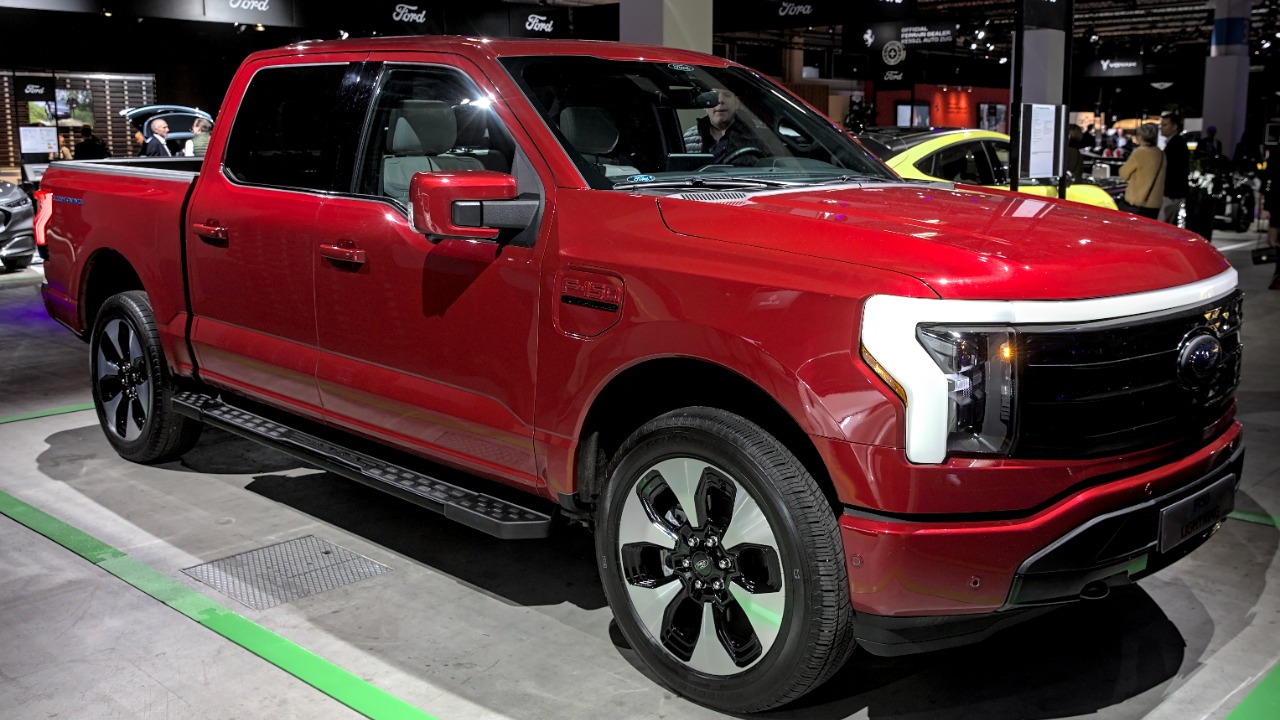
Ford is currently considering whether to discontinue production of its electric F-150 Lightning truck, a decision that could mark the vehicle as one of the first significant casualties of the recent slowdown in the U.S. electric vehicle (EV) market. This potential move underscores the mounting challenges facing automakers as they navigate shifting consumer demands and economic pressures. While some analysts previously viewed the slowdown as a temporary blip, Ford’s internal discussions suggest a more profound and persistent issue within the industry.
Ford’s Internal Deliberations on the F-150 Lightning
Ford’s contemplation of scrapping the electric version of its iconic F-150 truck highlights the significant pressures the company faces in the evolving EV landscape. According to a recent report, the decision is driven by a combination of factors, including production costs, supply chain issues, and slower-than-expected sales. The F-150 Lightning, once heralded as a flagship model in Ford’s electric lineup, now faces an uncertain future as the company reassesses its strategy in response to market realities.
Since its launch, the F-150 Lightning has been a central component of Ford’s push into the EV market. However, the challenges of maintaining competitive pricing and ensuring a steady supply of components have complicated its production. These issues are compounded by broader market dynamics, including fluctuating demand and increased competition from other automakers. Ford’s deliberations reflect a strategic pivot as the company seeks to balance its ambitions with the practicalities of the current market environment.
The Recent U.S. EV Sales Slowdown
The electric F-150 is emerging as a prominent example of the recent EV sales slowdown in the United States. As reported by MarketWatch, the slowdown has affected major automakers, with electric truck sales particularly impacted. The F-150 Lightning, despite its initial promise, has struggled to maintain its market position amid these challenges.
Key indicators of the slowdown include declining sales figures and increased competition from other EV models. The F-150 Lightning’s performance is being closely watched as a barometer for the broader market, with its struggles highlighting the difficulties faced by traditional automakers in adapting to the rapidly changing landscape. Comparisons with competing models reveal that while some brands have managed to sustain growth, others, like Ford, are grappling with the realities of a more competitive and less predictable market.
Contrasting Views on the EV Market Trajectory
In May 2024, some analysts suggested that the slowdown in U.S. electric vehicle sales might be a temporary phenomenon rather than a lasting trend. A Bloomberg report characterized the dip in sales as a blip, driven by short-term factors such as supply chain disruptions and economic uncertainty. This optimistic view contrasts sharply with Ford’s current considerations regarding the F-150 Lightning, which indicate a more cautious approach to the market’s future.
The evolving sentiment reflects a broader uncertainty about the trajectory of EV adoption in the U.S. While some industry observers remain hopeful about long-term growth, the immediate challenges faced by companies like Ford suggest that the path forward may be more complex. The juxtaposition of these perspectives underscores the need for automakers to remain agile and responsive to both short-term fluctuations and long-term trends in consumer behavior and technological advancement.
Implications for Ford and the Broader Auto Industry
If Ford decides to discontinue the F-150 Lightning, the impact on its overall EV portfolio could be significant. The model has been a key part of Ford’s strategy to establish itself as a leader in the electric truck market. Scrapping it would not only affect Ford’s financial commitments but also alter its competitive positioning. The decision could have ripple effects across the U.S. truck market, where the electric F-150 was positioned as a pioneer.
For the broader auto industry, Ford’s potential move may signal a shift in how traditional automakers approach the EV market. As companies reassess their strategies in light of the slowdown, industry-wide responses could include increased focus on cost efficiency, innovation in battery technology, and strategic partnerships. These adjustments will be crucial as manufacturers navigate the complexities of a market that is both promising and challenging.
More From TheDailyOverview
- Dave Ramsey warns to stop 401(k) contributions
- 11 night jobs you can do from home (not exciting but steady)
- Small U.S. cities ready to boom next
- 19 things boomers should never sell no matter what

Grant Mercer covers market dynamics, business trends, and the economic forces driving growth across industries. His analysis connects macro movements with real-world implications for investors, entrepreneurs, and professionals. Through his work at The Daily Overview, Grant helps readers understand how markets function and where opportunities may emerge.

