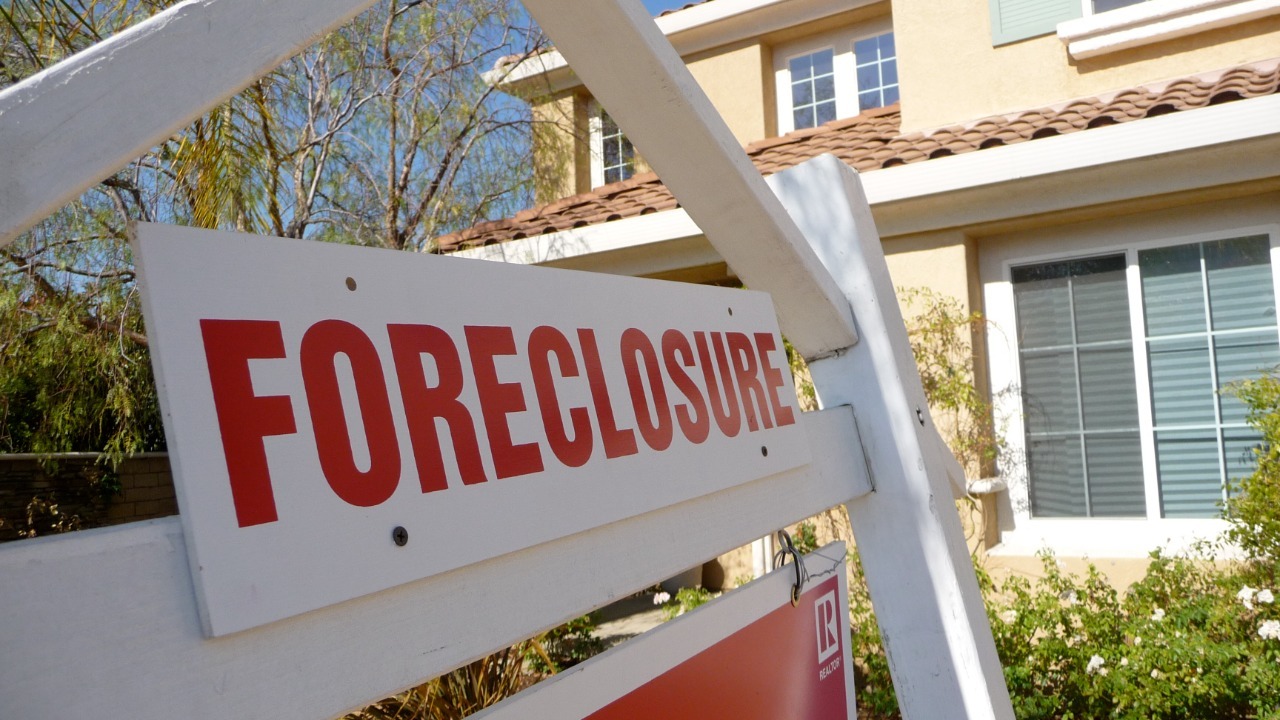
America’s housing market is entering a brutal new phase, with banks seizing roughly 40,000 homes in a single month and foreclosure filings climbing for the eleventh time in a row. What looked like a manageable comedown from pandemic-era protections is hardening into a systemic shock that is reshaping neighborhoods, labor markets, and family balance sheets at the same time. The core story is not just about distressed borrowers, it is about an economy that is quietly normalizing higher risk for anyone who needs a place to live.
The numbers point to a slow-motion crisis that is spreading from tourism hubs to suburbs, small towns, and minority communities that never fully recovered from the last downturn. I see a widening gap between the reassuring tone of official forecasts and the lived reality of households juggling stagnant wages, rising insurance costs, and mortgages that no longer fit their incomes. The question now is not whether foreclosures are rising, but how far this wave will run before policymakers and lenders change course.
The new foreclosure wave by the numbers
The latest data show a housing system under mounting stress, not a brief blip. According to industry tracking, banks moved to take control of roughly 40,000 homes in a single recent month, part of a pattern in which foreclosure activity has risen on a year-over-year basis for eleven consecutive months. That kind of streak signals a structural shift, the point where individual hardship hardens into a trend that investors, local governments, and families can no longer dismiss as noise.
Behind that headline figure is a broader surge in filings, including default notices, scheduled auctions, and completed repossessions. One detailed review of the January market found that overall foreclosure activity was up sharply from a year earlier, with the share of properties moving all the way to bank ownership increasing as well, a sign that more borrowers are running out of options before they can sell or modify their loans. The same analysis from ATTOM underscores that this is not a one-off spike but part of a sustained climb that has now extended into 2026.
Tourism states at the epicenter
The pain is not evenly distributed. Tourism-heavy states that rode a boom in short-term rentals and second homes are now seeing some of the steepest fallout as visitor spending cools and carrying costs rise. In one national snapshot, foreclosure filings were reported to have jumped 32% from a year earlier, with the analysis by Julie Taylor highlighting that two tourism-driven states ranked among the highest in the country for distress.
Another breakdown of January activity found that, nationally, one in every 3,547 housing units had a foreclosure filing during the month, with Delaware singled out for having the highest foreclosure rate in the country. Delaware’s economy leans heavily on beach tourism and seasonal employment, so when travel budgets tighten and service jobs wobble, homeowners who stretched to buy near the water are often the first to fall behind. This pattern supports the idea that tourism states are acting as the front line of the current shock, with distress radiating outward as investors and workers relocate.
From 2025’s warning signs to 2026’s escalation
The current spike did not come out of nowhere. In 2025, U.S. banks launched foreclosure proceedings on 367,460 properties, a 14% rise from the year before, at the same time job growth fell to a 22-year low as pandemic-era protections faded. That figure, echoed in another analysis that cited 367,000 homes seized nationwide, was an early warning that the safety net built during the health crisis was being dismantled faster than household finances could adjust.
By early 2026, those warning lights had turned into a dashboard full of red. A separate review of 2025 data noted that Foreclosures increased 14% in 2025 to the same 367,460 filings, describing the shift as a meaningful break from 2024 even if levels remained below the worst of the last crash. When I connect those dots with the eleventh straight month of rising activity in 2026, the picture that emerges is of a system that has been tightening for at least two years, with job market weakness and the end of temporary relief acting as twin accelerants.
Why this is not 2008, but still dangerous
One of the most persistent narratives in housing circles is that today’s market looks nothing like the subprime-fueled bubble that burst in 2008. On some key points, that is correct. Lending standards are tighter, most borrowers have more equity, and there is no equivalent to the exotic adjustable-rate products that detonated last time. In a recent economic outlook session, chief economist Lawrence Yun pushed back hard on crash talk, arguing that comparisons to the last crisis are “nonsense” and that the current environment is fundamentally different, a view reflected in the 2026 outlook for brokers.
I think that reassurance is only half the story. The absence of a subprime bubble does not mean the system is safe, it means the fault lines have shifted. Instead of toxic loan products, the pressure points are stagnant wages, higher interest rates, and a labor market that has cooled sharply. When Yun later doubled down, saying that crash narratives are “nonsense” in a separate segment of the same discussion, it highlighted a gap between macro-level comfort and the micro-level reality of families who are one missed paycheck away from default. The risk this time is less about a sudden collapse in prices and more about a grinding erosion of homeownership for those on the margins.
Minority and low-income households on the front line
Foreclosure is never evenly spread across the population, and the current wave is no exception. Minority and low-income households, who were more likely to work in sectors hit hardest by the job growth slowdown, are bearing a disproportionate share of the strain. In many metro areas, these borrowers bought during the pandemic at elevated prices, often with thinner savings cushions and less access to family wealth that could help bridge a rough patch. When hours are cut or service jobs disappear, there is simply less slack in the system.
Although the available data do not break out every demographic detail, the geographic patterns are telling. States and counties with higher shares of Black and Latino residents, and with concentrations of lower wage service work, are showing some of the sharpest increases in filings in the latest Real Estate Trends data, which note that completed foreclosures increased nearly 59 percent in certain categories. That suggests the crisis is amplifying long-standing inequities: households that were locked out of the last decade’s wealth gains are now the first to lose what little housing security they managed to build.
Government lifelines that too few homeowners use
On paper, the policy toolkit for struggling homeowners is more robust than it was before the last crash. Federal guidance spells out forbearance options, loan modifications, and refinancing pathways that can help borrowers stay in their homes if they act early. A detailed fact sheet titled What Options Are if I Can’t Pay My Mortgage, Rent or Utility Bills walks through steps homeowners can take with their servicers to avoid foreclosure, including working with housing counselors to identify relief programs.
In practice, these lifelines often function more like fine print than front-line defenses. Many borrowers do not know they exist until they are already deep in delinquency, and even then the process can be confusing and slow. I hear repeatedly from housing advocates that servicers vary widely in how proactively they communicate options, and that language barriers and distrust of financial institutions keep some of the most vulnerable families from seeking help. The result is a policy paradox: the tools exist, but they are not being deployed at the scale or speed that the current foreclosure wave demands.
State experiments and uneven protection
While federal programs set the baseline, states are quietly running their own experiments in foreclosure prevention, with mixed results. Some have expanded legal aid funding, streamlined mediation between borrowers and lenders, or created emergency mortgage assistance funds that can cover a few months of payments for households facing temporary hardship. Others have focused on tightening timelines for notices and hearings so that homeowners have a clearer window to respond before a property is auctioned.
The patchwork nature of these efforts means a borrower’s fate can depend heavily on their ZIP code. In states that moved quickly to build on federal guidance and invest in outreach, advocates report more successful loan workouts and fewer completed repossessions relative to the volume of initial filings. In places that relied mainly on national programs and lender discretion, the rising tide of filings documented in the latest foreclosure report is translating more directly into families losing their homes. That unevenness is likely to widen regional gaps in homeownership and wealth over the next several years.
Internal migration: from beach towns to factory belts
One underappreciated consequence of the current distress is a quiet reshuffling of where Americans live and work. As foreclosures climb in tourism-dependent regions, some displaced homeowners are looking inland to industrial and logistics hubs where jobs are steadier and housing is still relatively affordable. This is not a mass exodus, but the early signs are visible in local anecdotes and in the way certain Midwestern and Southern metros are absorbing new residents who previously owned in coastal or resort communities.
The logic is straightforward. If a family loses a home in a beach county where service jobs are volatile and insurance premiums are rising, the next move is often to a region with more predictable paychecks and lower housing costs. Analysts who warned that Foreclosures are projected to spike as distressed properties surface in 2026 also noted that investors are circling these markets, ready to buy at a discount and convert former owner-occupied homes into rentals. That dynamic could stabilize prices in some industrial heartlands while deepening price declines and hollowing out ownership in vacation economies.
What the next year is likely to bring
Looking ahead, the trajectory of foreclosures will hinge on three forces: the labor market, interest rates, and policy urgency. If job growth remains stuck near its recent 22-year low, the pipeline of delinquent loans from 2025 will keep feeding into 2026’s foreclosure statistics. Based on the existing trend of eleven straight months of annual increases and the backlog of borrowers who exited forbearance without fully recovering their incomes, I expect filings to rise further this year, with a plausible range of another 20 to 30 percent in the hardest hit regions if conditions do not improve. That is a projection, not a certainty, but it aligns with the direction of the data so far.
The second force is how quickly lenders and policymakers adapt. If servicers ramp up early outreach, states expand targeted aid, and federal agencies simplify access to the relief described in the What Options Are guidance, the worst-case scenarios can still be avoided. If, instead, the system continues to treat each foreclosure as an isolated event rather than part of a broader pattern, the country will drift toward a more landlord-dominated housing landscape. The stakes are not abstract: for hundreds of thousands of families, the next twelve months will determine whether homeownership remains a foundation for stability or becomes a brief chapter between two stretches of renting.
More From The Daily Overview
*This article was researched with the help of AI, with human editors creating the final content.

Elias Broderick specializes in residential and commercial real estate, with a focus on market cycles, property fundamentals, and investment strategy. His writing translates complex housing and development trends into clear insights for both new and experienced investors. At The Daily Overview, Elias explores how real estate fits into long-term wealth planning.

