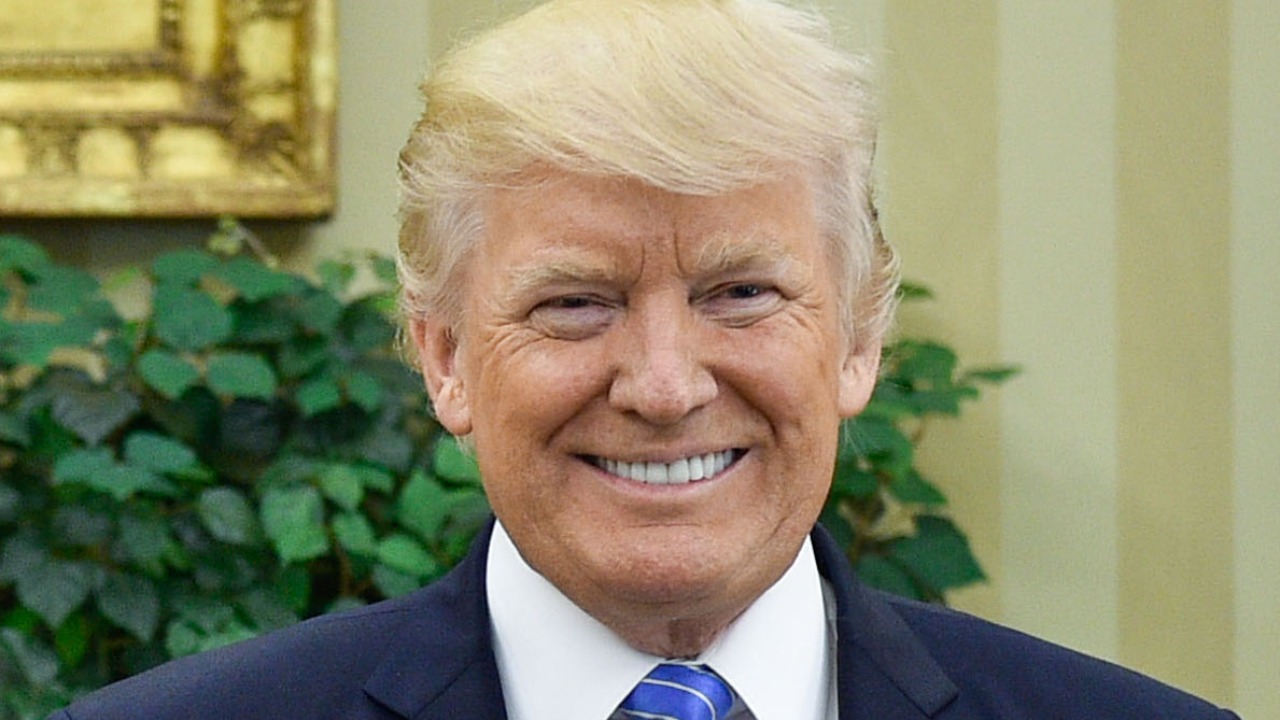
The global push for a 15 percent minimum tax on large corporations has survived a turbulent renegotiation, but the final compromise leaves the United States on the outside of the core enforcement regime. While more than 145 countries have agreed to move ahead, President Donald Trump has secured an exemption that keeps U.S.-headquartered multinationals under domestic rules rather than the new international floor. The result is a landmark deal that still claims global reach, yet now hinges on how one very large holdout chooses to play its advantage.
The global minimum tax that almost fell apart
The 15 percent minimum tax was conceived as a way to stop big companies from shifting profits into low tax jurisdictions and to ensure that digital giants paid more where they actually did business. After years of negotiation, more than 145 countries endorsed an updated framework that keeps the core idea intact, even as they accepted carve outs that would have been unthinkable when talks began. The Organization for Economic Cooperation and Development, often shortened to OECD, remains the convening force behind this effort, and its members have treated the minimum rate as a test of whether multilateral tax rules can keep up with globalized business.
From the start of his term, President Donald Trump signaled that he saw the original OECD blueprint as a threat to U.S. tax sovereignty and to the competitiveness of American firms. He declared in an early executive order that the United States would not implement the global minimum tax as designed, a stance that set the stage for months of hard bargaining over how far the rest of the world was willing to go without Washington on board, according to reporting on the updated framework. The eventual compromise preserves the 15 percent benchmark for participating countries, but it does so while explicitly accommodating the White House demand that U.S.-based groups not be subject to foreign top up taxes.
How the U.S. exemption was engineered
The exemption for U.S.-headquartered companies did not emerge overnight, it was the product of a coordinated strategy by the administration and key lawmakers. Treasury officials worked in close coordination with Congress to persuade other governments that a deal without the United States would be weaker than one that bent to accommodate it. That argument gained traction as finance ministries weighed the risk of sparking tax disputes with the world’s largest economy against the benefits of a purist approach to the minimum tax.
In its own account of the talks, Treasury has emphasized that it secured agreement from the more than 145 participating countries in the OECD and related groupings to accept a structure in which U.S.-headquartered multinationals remain subject only to U.S. minimum tax rules. That means foreign tax authorities will not be able to impose their own top up charges on those groups to bring their effective rates up to 15 percent. The carve out is framed by the administration as a defense of domestic lawmaking authority, but for other governments it is also a pragmatic concession that keeps the broader project alive.
What the carve out actually covers
The practical effect of the new arrangement is that large companies with their headquarters in the United States are shielded from the core enforcement tool of the global minimum tax. Instead of facing a patchwork of foreign top up levies, they will calculate any additional liability under U.S. rules, with the Internal Revenue Service, not overseas tax offices, deciding how much they owe. That structure is designed to reassure boards and investors that they will not be hit with overlapping claims on the same profits in multiple jurisdictions.
According to the Treasury description of the agreement, U.S.-headquartered multinationals will remain subject to only U.S. minimum tax rules, rather than the 15 percent global minimum tax on the multinationals agreed by the OECD, a point that has been echoed in market commentary on the U.S. agreement with the OECD. The carve out does not extend to foreign groups that operate in the United States, which will still face the new minimum rules in their home jurisdictions, but it does mean that some of the largest global players, particularly in technology and pharmaceuticals, will navigate a different regime from their non U.S. rivals.
Trump’s negotiating win and political framing
For President Donald Trump, the exemption is being cast as a signature victory in his broader effort to reassert national control over economic policy. The administration has argued that the original global minimum tax plan, developed under his predecessor, would have ceded too much authority to international bodies and exposed U.S. companies to what it calls extraterritorial overreach. By forcing a renegotiation that left the global framework intact but carved out U.S. groups, the White House can claim to have defended domestic interests without blowing up the entire project.
Accounts of the final stretch of talks describe how the Trump administration notched a major win for U.S. companies on a Monday when international negotiators agreed to carve out U.S. business from the global minimum tax, a move that officials framed as protecting American workers and businesses from extraterritorial overreach, as detailed in coverage of the carve out. Politically, that narrative dovetails with the president’s broader skepticism of multilateral constraints, turning a complex tax compromise into a straightforward story of standing up to foreign pressure.
OECD’s balancing act to keep the deal alive
For the OECD, the challenge has been to preserve the credibility of the global minimum tax while accommodating the demands of its most powerful member. The organization has presented the updated agreement as a necessary evolution that reflects political realities without abandoning the core objective of limiting profit shifting. By keeping the 15 percent benchmark and securing commitments from more than 145 countries to implement it, the OECD can still argue that the world is moving toward a more coordinated corporate tax system.
At the same time, the decision to exempt U.S.-headquartered groups underscores how far the final deal has moved from the original vision of a truly uniform regime. Reports on the new agreement note that it exempts U.S. companies from OECD 15 percent global minimum tax rules that were designed to shut down tax havens and reduce aggressive tax planning, a shift that has raised questions about whether other countries will now seek their own exceptions, as highlighted in analysis of the relief deal for U.S. multinationals. The OECD’s balancing act is to present this as a one off accommodation rather than an open invitation to unravel the rules.
How the exemption reshapes competition
The carve out has immediate implications for how companies structure their operations and where they choose to book profits. U.S.-based multinationals now know that, as long as they remain headquartered in the United States, they will not face foreign top up taxes to reach the 15 percent floor, which could make the U.S. an even more attractive corporate home. That advantage may be particularly significant for sectors that rely heavily on intangible assets, such as software and pharmaceuticals, where tax planning has historically been most aggressive.
Reports on the final deal emphasize that the Organization for Economic Cooperation and Development has finalized an arrangement exempting U.S. multinational corporations from the global minimum business tax, while still expecting other countries to apply the 15 percent rate to their own groups, according to accounts of how U.S.-based companies will be exempt. That asymmetry could tilt competition in favor of firms with U.S. headquarters, at least in the short term, and may prompt some non U.S. groups to consider redomiciling if the benefits outweigh the costs.
Critics warn of a blow to tax fairness
Tax transparency advocates and civil society groups have reacted sharply to the U.S. exemption, arguing that it undermines the very rationale for a global minimum tax. Their concern is that allowing the largest home country of multinationals to opt out of the enforcement mechanism will encourage others to seek similar treatment, weakening the deterrent against shifting profits into low tax jurisdictions. They also warn that the carve out could reduce the additional revenue that lower income countries had hoped to collect from highly profitable foreign firms.
One account of the reaction notes that Tax transparency groups have criticized the amended OECD plan, warning that the deal risks nearly a decade of global progress on corporate tax reform and could leave the system more fragmented than before, as described in reporting on how Tax advocates view the exemption. From that perspective, the U.S. win is not just a national advantage but a setback for efforts to ensure that large corporations pay a fair share wherever they operate.
Why business groups are applauding
Corporate lobbyists and business associations, by contrast, have welcomed the exemption as a relief from what they saw as a looming compliance nightmare. For them, the prospect of navigating dozens of different top up tax regimes, each with its own calculation rules and dispute procedures, threatened to add significant cost and uncertainty. Keeping U.S.-headquartered groups under a single domestic minimum tax framework is seen as a way to simplify planning and reduce the risk of double taxation.
Industry focused coverage notes that Treasury announced the U.S. exemption from the global minimum business tax in a way that highlighted the role of Jan negotiations and stressed that the decision would provide clarity for banks and other multinationals, a message amplified in the ABA Banking Journal Home Newsbytes account of the announcement. Business groups argue that a stable and predictable tax environment is essential for long term investment decisions, and they see the carve out as a step in that direction, even if it leaves the broader global framework more complex.
What comes next for global tax cooperation
The immediate question now is how other governments will respond to a deal that keeps the global minimum tax alive but allows the United States to sit partly outside it. Some finance ministries may push ahead with implementation in the hope that the framework will prove its worth and eventually draw Washington into fuller participation. Others may slow walk their own legislation or seek additional concessions, arguing that they should not be held to stricter standards than the world’s largest economy.
Earlier accounts of the negotiations stressed that Jan was a pivotal moment, when President Donald Trump, Treasury, Congress and the OECD all had to decide whether to salvage the project or let it unravel, as described in reporting on how more than 145 countries agreed to the updated framework. With the compromise now in place, the longer term test will be whether this hybrid model, a global minimum tax that exempts the largest home country of multinationals, can deliver on its promise to curb profit shifting without triggering a new wave of tax competition.
More From TheDailyOverview

Julian Harrow specializes in taxation, IRS rules, and compliance strategy. His work helps readers navigate complex tax codes, deadlines, and reporting requirements while identifying opportunities for efficiency and risk reduction. At The Daily Overview, Julian breaks down tax-related topics with precision and clarity, making a traditionally dense subject easier to understand.