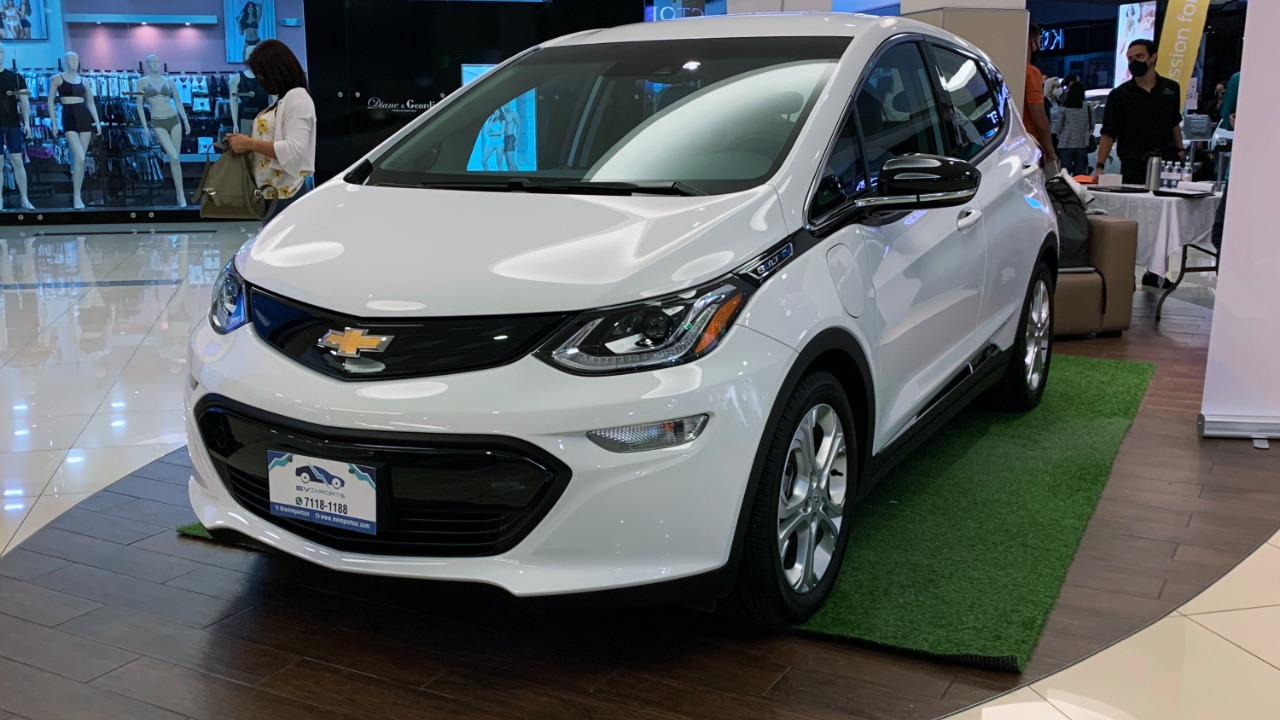
General Motors is giving budget-conscious drivers a narrow window to buy what is arguably the last truly affordable new electric car in America. The revived Chevy Bolt is back with a roughly $30,000 price tag, but GM has already set an end date for production, effectively giving low income buyers about a year and a half to act before the model disappears again. The move crystallizes a broader tension in the EV transition, where policy, profit and politics are colliding over who actually gets access to clean transportation.
The Bolt’s brief reprieve raises a blunt question: is this a genuine commitment to accessible electrification or a short-term gesture before GM pivots back to higher margin vehicles? With federal incentives in flux and factory plans shifting, the answer matters most for households that have been told EVs will eventually save them money, but are now being asked to race a clock.
The Bolt’s whiplash history: from pioneer to repeat cancellation
The Chevy Bolt has already lived several lives, which is part of why this new 18‑month window feels so precarious. On April 25, 2023, On April Chevrolet discontinued the Bolt, which had been introduced in 2016 and had grown into one of the best selling plug in cars in the United States. That decision cut short the run of a model that had quietly become a workhorse for early adopters who wanted range and practicality without luxury pricing, and it left a gap in the lower end of the EV market just as more drivers were starting to consider going electric.
After that first cancellation, the Bolt’s value story only became clearer. Early in 2023, Early reports noted that used examples of the Chevy Bolt could be found for around $12,000, undercutting almost every other modern EV on the road. That combination of low purchase price and relatively low running costs turned the Bolt into a cult favorite among cost conscious drivers, even as Chevrolet itself pivoted marketing and investment toward larger electric SUVs and trucks.
GM’s 18‑month clock and the politics behind it
The latest twist is that GM has brought the Bolt back, but only on a timer. Reporting on the company’s internal planning indicates that Chevy Bolt Production Will End In 2027, with GM telling analysts that the decision is tied directly to political and economic shifts, including pressure from tariffs and the need to reconfigure plants for other vehicles, according to Chevy Bolt Production. That timeline effectively gives buyers about 18 months of meaningful availability before production winds down and dealer inventories start to thin.
GM’s broader factory strategy underscores how contingent the Bolt’s return really is. The company has confirmed that its Fairfax assembly plant will take on production of internal combustion models exclusively, a shift described as a response to geopolitical changes and tariff policy that make it more attractive to build ICE vehicles there, according to GM ditches electric. In that context, the Bolt looks less like a long term pillar of GM’s lineup and more like a short term offering slotted in while the company rebalances its factories and responds to President Donald Trump’s trade and industrial policies.
A $30,000 EV that can drop under $20,000
For low income buyers, the Bolt’s appeal is simple: it is one of the few new EVs that can credibly be described as affordable. At launch, the refreshed 2027 model has been advertised around $29,000, with some reports rounding that to a $30,000 price point for typical configurations, and the car uses more robust and cost effective LFP battery cells to help keep costs down, according to LFP. That sticker price is already lower than many compact crossovers with gasoline engines, and it comes with the promise of lower fueling and maintenance costs over time.
Layer federal incentives on top and the math gets more striking. Earlier guidance on the outgoing Bolt noted that they officially carry a starting price of $26,500 plus a $995 destination fee, pushing the window sticker to $27,495, and that with the help of federal tax credits the effective cost could fall under $20,000 for most buyers, according to $26,500. A change in federal EV tax credit law for 2024 even allowed most Americans to use the Bolt’s $7,500 tax credit as a down payment at the point of sale, turning that incentive into immediate purchasing power rather than a refund months later, as described in $7,500.
Tax credits, income caps and the fine print
The catch is that not every buyer can access those savings, and the rules are getting more complex just as the Bolt’s clock starts ticking again. Understanding New EV Tax Credit Requirements has become essential, because to qualify for the EV tax credit a New EV must meet specific guidelines on assembly, battery sourcing and price caps, and the buyer’s income must be below certain thresholds, according to Understanding New EV. For low income households, those income caps are less of a barrier than they are for affluent buyers, but the paperwork and dealership know how can still be intimidating.
There is also a parallel set of rules for used EVs that could matter if the new Bolt’s production run is short and a secondary market builds quickly. To qualify as a customer for the used EV tax credit, you Must be an individual who bought the vehicle for use and not for resale, and the car itself must meet age and price limits, according to Must. For buyers who miss the 18 month window for a new Bolt, those used incentives could be the only way to get into the model at a manageable price, especially if dealers and lenders are slow to pass through the full value of new car credits.
“Poor people” and the optics of a disappearing budget EV
The way GM has handled the Bolt’s on again, off again life has not gone unnoticed by advocates for affordable electrification. One analysis framed the situation bluntly, saying Chevrolet has been playing with the Bolt’s life the same way a cat plays with its prey, teasing it and giving it brief moments of reprieve before threatening to kill it again, and arguing that GM gives poor people 18 months to buy the $30,000 Chevy Bolt before it is killed again, according to Chevrolet. That language may be provocative, but it captures a real frustration among drivers who see the Bolt as their only realistic path into a new EV.
Lately, the biggest question around the Chevrolet Bolt is not about range or reliability, but whether the car’s value without incentives still makes sense once the model is discontinued again, as noted in a Lately tax credit guide. If GM follows through on its plan to end production in 2027, buyers who stretch their budgets to buy a Bolt today will have to live with the knowledge that their car was effectively orphaned by its manufacturer within a couple of years, a dynamic that can weigh on resale values and long term confidence.
Limited availability by design
Even during its comeback, the Bolt is not being treated like a mass market staple. After a brief pause in production, GM has announced, by popular demand, that the Bolt is making a return for the 2027 model year, but the company has also signaled that availability will be limited and time bound, according to an After overview of the relaunch. That framing reinforces the sense that the Bolt is being used to plug a short term gap in GM’s lineup rather than being nurtured as a long term entry level EV.
Reports from early dealer arrivals describe the new $29,000 2027 Chevy Bolt hitting showrooms with a clear warning that it could be gone again soon, and that the language of “limited availability” remains attached to the model, according to Plus. That scarcity narrative can create urgency that helps dealers move inventory, but it also risks leaving slower moving or less informed buyers shut out, particularly in regions where EV adoption has lagged and dealer staff are still climbing the learning curve.
GM’s Ultium pivot and the Bolt’s place in the lineup
Behind the Bolt’s short leash is GM’s broader technology and product strategy. Using GM ( General Motors ) Ultium Technology Barra said the new Bolt will be built from the Ultium technology that General Motors is rolling out across its electric portfolio, including models like the Chevy Blazer EV and Chevy Silverado EV, according to Using GM. That shift should, in theory, give the Bolt better economies of scale and access to newer battery chemistries, but it also means the car is competing internally for resources with larger, more profitable vehicles built on the same platform.
A separate report on the Bolt’s comeback notes that after several years off the market, the Chevy Bolt is back for 2027 as America’s budget EV, but that its Return Will Not Last Long because GM plans to end production as early as 2027 in favor of other Ultium based models and to avoid reliance on a plant in China, according to Report. In that light, the Bolt’s role looks less like a cornerstone of GM’s electrification plan and more like a bridge product that helps the company meet regulatory and political expectations while it scales up more lucrative EVs.
More From TheDailyOverview
*This article was researched with the help of AI, with human editors creating the final content.

Elias Broderick specializes in residential and commercial real estate, with a focus on market cycles, property fundamentals, and investment strategy. His writing translates complex housing and development trends into clear insights for both new and experienced investors. At The Daily Overview, Elias explores how real estate fits into long-term wealth planning.

