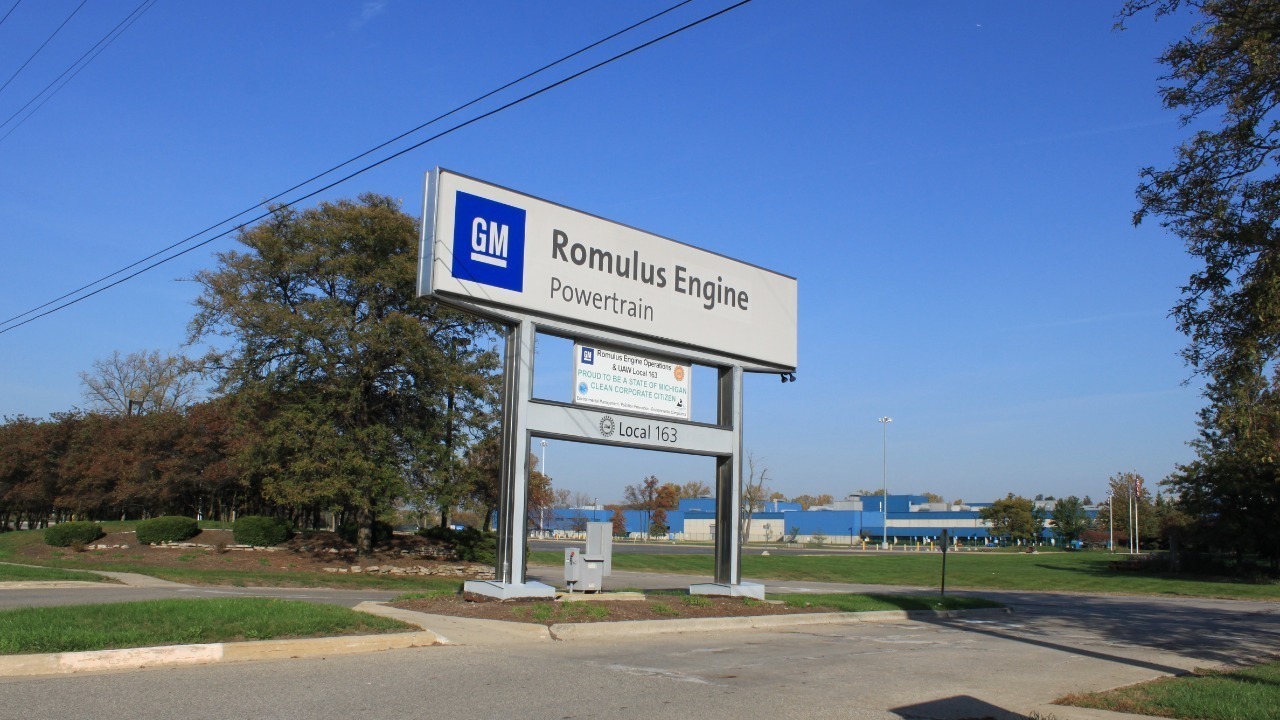
General Motors is ripping up a key part of its electric-vehicle playbook, cutting 2,900 jobs and closing a $102 million factory just as the industry’s transition was supposed to hit its stride. The move crystallizes how quickly the EV boom narrative has flipped into a story of retrenchment, stranded investment, and hard choices for workers and towns that bet on a battery-powered future.
Instead of a smooth glide from gasoline to zero-emission models, GM is now juggling layoffs, plant shutdowns, and multibillion-dollar accounting hits as demand cools and policy support shifts. The fallout stretches from Detroit to small Midwest communities, and it is forcing the company to rethink everything from its factory footprint to its once-vaunted technology partnerships.
The 2,900-job shock and a $102 million factory left idle
The centerpiece of GM’s latest reset is a decision to eliminate 2,900 positions tied to a $102 million plant in the Midwest, a facility that was once pitched as a cornerstone of the company’s electric future. Instead of ramping up, the site is being shuttered, leaving 2,900 people facing unemployment right around the holidays and turning what was marketed as a growth engine into a symbol of stalled ambition. Reporting on the 2,900 jobs underscores how workers from Detroit to Ohio are being asked to uproot their lives or accept unemployment as the price of GM’s strategic pivot.
The closure is part of a broader restructuring that has hit an entire Midwest town particularly hard, where GM is axing a $102 million factory and laying off 1,700 people, leaving what local leaders describe as an economic blackout. In that community, 1,700 unionized hourly workers are staring at indefinite layoffs or transfers that could take them far from their homes, all tied to a plant investment of $102 million that is now being unwound. Coverage of the 1,700 layoffs makes clear that the Midwest is absorbing the brunt of GM’s EV rethink, with a $102 million bet turning into a painful write-off for both the company and the community.
Factory Zero, Corvette, Silverado: a patchwork of cuts
The 2,900-job hit is not happening in isolation, it is landing on top of a series of cuts that have already rattled GM’s workforce. At Factory Zero in Detroit, the company has moved to permanently lay off 1,145 workers even as it touts record profits, a move that has fueled anger among rank-and-file members of the UAW and drawn scrutiny from the World Socialist Web. Earlier restructuring plans centered on Factory Zero in Detroit also called for cutting 1,200 jobs as the plant shifted to a single shift, underscoring how a flagship EV facility has become a focal point for job losses rather than growth.
Beyond Detroit, GM has been trimming at more traditional sites as well, idling production of some of its most iconic nameplates. The company has laid off 1,145 workers while extending shutdowns at plants that build Corvette and Silverado models, a step framed as part of a broader effort to balance inventories and capital spending. Reporting on the Corvette and Silverado shutdowns describes GM as executing a series of extended idles as it navigates competing priorities, while separate coverage of more than 1,100 permanent cuts at two locations has drawn sharp criticism from The UAW and local leaders highlighted in The Brief.
A Midwest manufacturing belt under strain
For the broader Midwest, GM’s retrenchment is not just a corporate story, it is a regional economic shock. The shutdown of a $102 million plant has been described as gutting the Midwest, with 1,700 union workers forced to choose between transfers and unemployment as the company pulls back on EV-related capacity. One detailed account of the Plant Shutdown Guts notes that General Motors announced indefinite layoffs for 1,700 union workers at a $102 million facility, tying the decision to the loss of federal EV tax credits and a reassessment of demand.
Another analysis of how the Midwest is being gutted by $102 million in GM plant closures points to two key facilities at the heart of the restructuring, including Factory Zero in Detroit, which is cutting 1,200 jobs as it moves to a single shift. That report on the Midwest closures emphasizes that 1,700 union workers face transfers or unemployment, and warns that the cumulative effect of these decisions could reshape manufacturing employment in the region for years to come.
From EV moonshot to multibillion-dollar write-downs
Behind the factory closures and pink slips is a financial reckoning that has forced GM to admit its EV strategy is not delivering as planned. The company has already signaled that it will take a $6 billion writedown tied to its shift in electric-vehicle strategy, a charge that will be booked as a special item in its fourth-quarter earnings and that executives warn may not be the last. Reporting on the $6 billion writedown notes that GM expects further charges in 2026 as it continues to realign its EV investments, a sign that the financial impact of its earlier optimism will linger.
On top of that, GM has told investors to brace for a total charge of $7.1 billion in the fourth quarter as it shifts away from some EV commitments in North America. The company has explicitly cited weakening EV demand, the termination of certain consumer tax incentives, and a decision to produce more gas-powered vehicles as drivers of that $7.1 billion hit. In a detailed breakdown of the $7.1B charge, GM is described as reducing more than 3,000 jobs and scaling back EV capacity, while another industry briefing on Daily Drive for notes that GM is taking $7 billion in EV-related charges even as AI dominates the conversation at CES, a juxtaposition that captures how quickly investor attention has shifted away from electric cars.
Demand reality check: hybrids, tax credits, and shifting consumers
GM’s retrenchment is not happening in a vacuum, it reflects a broader cooling in the U.S. auto market and a more complicated consumer response to electrification than many executives predicted. Legal and industry analysts tracking the sector expect U.S. total new light-vehicle sales in January 2026 to decline 2.7%, a modest but telling pullback that lands just as automakers are trying to justify massive EV investments. In a recent Key Legal Insights from Foley’s Automotive Team, analysts highlight that hybrids and range-extended EVs are gaining traction as consumers hedge against charging gaps and resale uncertainty, complicating the pure battery-electric push that GM had embraced.
Policy shifts have added another layer of risk, particularly as some federal EV tax credits have been scaled back or restructured. GM itself has linked its decision to shut a $102 million plant and lay off 1,700 union workers to the loss of federal EV tax credits, arguing that the economics of certain models no longer pencil out without that support. The report on the $102M Midwest factory notes that General Motors just cut nearly 3,000 jobs across Michigan and other states, with 2,900 people facing unemployment during the holidays and nearly 3,000 jobs gone before the new year, underscoring how quickly policy and demand can combine to flip a business case.
Strategic pivots: from fuel cells to full-size trucks
As the EV dream frays, GM is not simply shrinking, it is also reshaping where and how it bets on alternative technologies and profitable segments. One sign of that recalibration is the end of its joint fuel cell venture with Honda, a partnership that once symbolized a long-term commitment to hydrogen but is now being wound down as both companies re-evaluate their priorities. An in-depth look at how the Honda and GM fuel cell venture is ending describes an automotive manufacturing sector navigating an exceptionally complex transition, with battery-electric vehicles facing their own headwinds and 1,550 workers on temporary layoff as companies juggle multiple powertrain bets.
At the same time, GM is leaning back into the kinds of vehicles that have long generated its fattest margins, particularly full-size trucks and SUVs. In Orion, Michigan, the company is firing up a plant to build full-size trucks and SUVs, a shift that will see models like the Chevrolet Silverado and GMC Sierra take center stage again. One report notes that Chevrolet also builds the Silverado in a factory in Canada and that Michigan Governor Gretchen Whitmer praised the announcement as good news for Michigan’s economy, even as questions linger about what it means for other EV-focused facilities. The detailed coverage of Michigan production underscores how GM is reallocating capacity from some EV programs back to proven profit centers, even as it keeps one foot in the electrification race.
Workers caught between record profits and restructuring
For GM’s workforce, the strategic pivot has translated into a sense of whiplash, especially after a period of record profits and high-profile labor battles. At Factory Zero, the decision to permanently lay off 1,145 workers amid strong earnings has fueled criticism that the company is prioritizing shareholder returns over job security, a theme that runs through the Factory Zero coverage that also highlights UAW silence on the cuts. Elsewhere, union leaders have pointed to earlier rounds of restructuring, including permanent layoffs at two locations that were scheduled weeks in advance, as evidence that General Motors is using the EV transition as cover for deeper cost-cutting, a concern amplified in reporting that quotes The UAW and local union presidents in General Motors coverage.
Workers also see a longer arc of job losses that predates the current EV reset, including a notorious round of cuts in which 15,000 people were laid off even as executives defended large payouts at the top. A widely shared segment in Thousands of Workers Out as GM Makes Controversial Cuts recalls how the company found $22 billion to give one person while it laid off 15,000 people, and how parts distribution centers that generated billions of dollars in revenue were still targeted. Against that backdrop, the latest 2,900-job reduction and the shuttering of a $102 million plant in the Midwest look less like a one-off response to EV headwinds and more like the continuation of a long-running pattern in which workers absorb the risk of GM’s strategic bets while the company reserves flexibility to pivot when those bets do not pay off.
More From The Daily Overview
*This article was researched with the help of AI, with human editors creating the final content.

Grant Mercer covers market dynamics, business trends, and the economic forces driving growth across industries. His analysis connects macro movements with real-world implications for investors, entrepreneurs, and professionals. Through his work at The Daily Overview, Grant helps readers understand how markets function and where opportunities may emerge.

