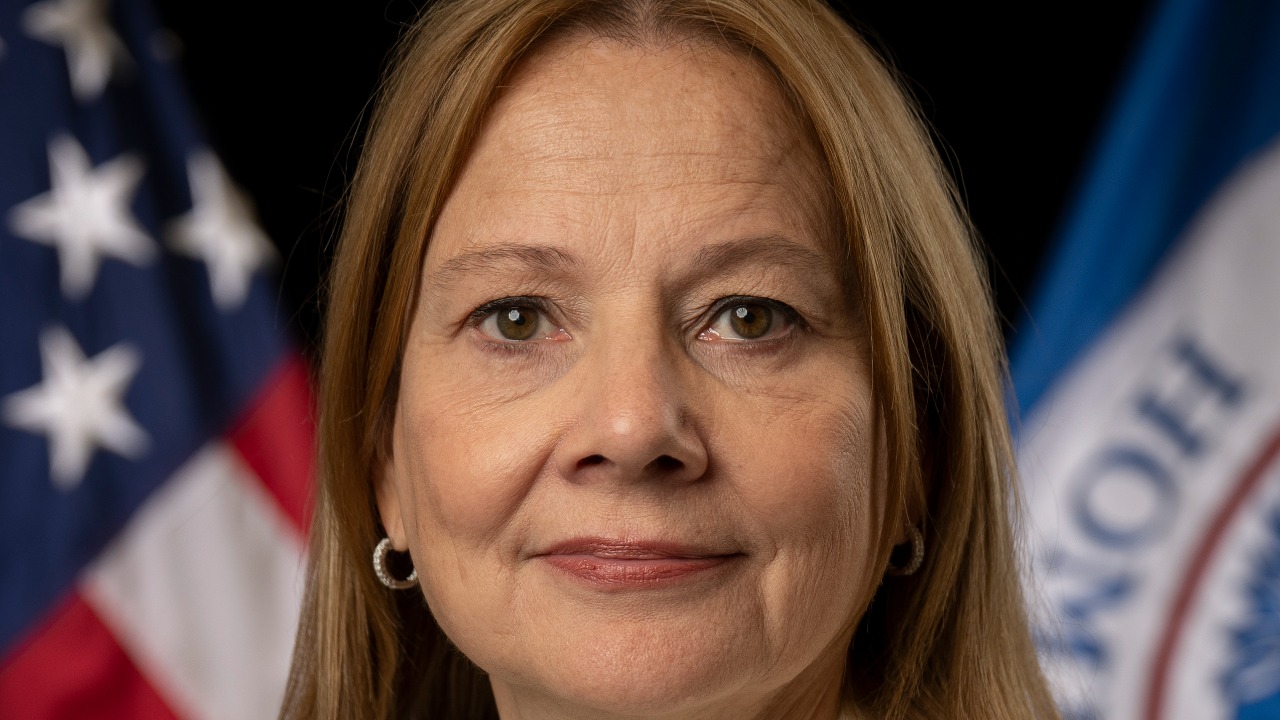
General Motors chief executive Mary Barra has quietly upended one of the Biden administration’s favorite electric vehicle talking points. After years of public praise from President Joe Biden that cast GM as the company “electrifying the entire automobile industry,” she has now acknowledged in private conversations with the president that Elon Musk and Tesla deserve more of that credit. The admission exposes a rare crack in the carefully managed alliance between Detroit, the White House and a broader EV agenda built on symbolism as much as sales.
Her behind-the-scenes message matters because it cuts against a narrative that has often sidelined Tesla, even as the company’s cars dominate EV registrations and shape global expectations for battery-powered vehicles. By telling Biden directly that Musk and Tesla led the way, Barra is not only correcting the record, she is also signaling how far the politics of the transition to electric vehicles have drifted from the underlying market reality.
The private correction that rewrites a public narrative
Mary Barra’s disclosure that she privately told Biden he was giving credit to the wrong company is striking precisely because it contradicts the president’s own public script. According to reporting on her comments, the CEO said she had informed Biden that Musk and Tesla deserved more recognition for the rise of EVs in the United States, even as the White House spotlighted GM as the face of the transition. In recounting that conversation, she emphasized that she did not want “to take credit for things,” a pointed acknowledgment that the administration’s praise had outpaced GM’s actual EV footprint and that the early risk-taking came from Musk’s company rather than from Detroit’s largest incumbent automaker, a point underscored in coverage of GM’s CEO.
Her account of that private exchange did not surface in a vacuum. At the New York Times DealBook Summit, she told interviewer Andrew Ross Sorkin that she had already “set the record straight” with Biden, making clear that Tesla’s role in mainstreaming EVs could not be erased by a few high-profile factory visits or speeches. A social media post from Tesla Owners Silicon Valley captured the moment, noting that At the New York Times DealBook Summit, GM CEO Mary Barra told Andrew Ross Sorkin she had privately corrected the president. For a chief executive who has benefited from presidential praise and federal support, publicly revealing that kind of behind-the-scenes pushback is a calculated move that reshapes how both GM and the White House can talk about EV leadership.
How Biden’s GM praise sidelined Musk and Tesla
Biden’s embrace of GM as the standard-bearer for electrification has long been a sore point for Elon Musk, and Barra’s comments retroactively validate why. When the president lauded a “major competitor” for “electrifying the entire automobile industry,” Musk reacted with open anger, arguing that the administration was ignoring the company that had actually built the mass-market EV business. Reporting on that episode describes how Elon Musk was outraged after Biden’s remarks, which framed GM as the company driving the EV revolution while leaving Tesla out of the picture.
The symbolism was especially stark when Biden visited GM’s “Factory Zero” plant in Detroit and hailed Mary Barra as the leader who was “electrifying the entire automobile industry.” At that point, Tesla’s Model 3 and Model Y were already defining the EV market, while GM’s own electric offerings were limited and its Ultium platform was still ramping up. Later coverage of Barra’s remarks has pointed out that Back in 2021, President Biden used that Detroit appearance to frame GM as the vanguard of the EV shift, even though Tesla had already built a global brand around battery-powered cars. Barra’s new admission effectively concedes that the president’s rhetoric did not match the underlying sales data.
Mary Barra’s balancing act between humility and corporate pride
Barra’s decision to credit Musk and Tesla privately, while still defending GM’s own record, reflects a careful balancing act between humility and corporate pride. In her recent comments, she has stressed that she does not want to “take credit for things” that Tesla achieved first, yet she also argues that GM saw the EV opportunity early and invested heavily to scale it. One detailed account of her remarks notes that she acknowledged Tesla’s pioneering role but insisted that “for an OEM of scale, we are first, full stop,” a line that captures how she wants GM to be seen as the first traditional automaker to commit fully to electrification, even if it followed Musk into the market, as highlighted in coverage of What distinguishes us … for an OEM.
That dual message is also evident in how she has framed her conversations with Biden. Reports on her remarks describe how the CEO, referred to simply as “She” in some accounts, privately told Biden that Elon Musk and Tesla deserved more credit, even as she continued to champion GM’s own EV roadmap in public. One summary notes that GM CEO says to set the record straight, She privately talked to Biden on Elon Musk and told him Tesla should be recognized. It is a nuanced stance: she is willing to correct the president on who led the EV charge, but she is not surrendering the argument that GM is now the most important legacy manufacturer in the space.
Inside the White House EV strategy and its political fallout
The White House’s preference for spotlighting GM and other unionized legacy automakers has always been about more than technology. Biden’s EV strategy is intertwined with labor politics, industrial policy and the administration’s broader climate agenda, which leans heavily on companies with deep roots in Midwestern manufacturing states. That is why the president’s praise for GM’s “Factory Zero” and his repeated references to Mary Barra as a central figure in the EV transition carried such weight, even as Tesla’s nonunion plants in California and Texas were producing the bulk of America’s electric cars. One account of the political dynamics notes that Joe Biden Credited GM CEO Mary Barra For EVs, But She Said Credit Should Go To Elon Musk, underscoring how the administration’s messaging has now been undercut by the very executive it elevated.
That disconnect has had real political consequences. Musk’s frustration with the White House’s refusal to acknowledge Tesla’s role helped sour his relationship with Biden and fueled a broader narrative among his supporters that the administration was punishing a successful innovator for being outside the traditional labor and political structures. The backlash intensified when Biden’s comments about a “major competitor” electrifying the industry were perceived as a direct snub of Tesla, a moment that reporting describes as a turning point when Biden’s comments sparked outrage among Tesla fans and investors. Barra’s new candor about Tesla’s pioneering role does not erase that history, but it does complicate the White House’s effort to keep its EV story tightly aligned with a handful of favored corporate partners.
Why Barra’s admission matters for the future of EV policy
By openly acknowledging that Musk and Tesla deserve more credit, Barra has effectively invited Washington to recalibrate how it talks about EV leadership. Her comments make it harder for policymakers to pretend that the transition is being led primarily by legacy manufacturers, and they highlight the risk of letting political considerations overshadow market realities. One detailed account of her remarks notes that General Motors Co., identified by its stock symbol NYSE, has been central to Biden’s industrial strategy, yet even in that context she has now said the credit for kick-starting the EV era should go to Musk, a point captured in coverage that states General Motors Co was praised while she redirected the applause.
Her stance also lands at a moment when other political figures are reassessing how the administration handled Tesla. Even Vice President Kamala Harris later acknowledged that it was a mistake to convene high-profile EV events without including Musk, writing in her campaign book that such exclusions undermined the credibility of the broader climate push. Reporting on Barra’s remarks notes that General Motors CEO Mary Barra revealed her private conversation with Biden in a context that also referenced how Even Vice President Kamala Harris later acknowledged the mistake, tying her admission to a broader rethinking of alliances and EV policy debates. Taken together, those shifts suggest that the next phase of EV policy will have to grapple more honestly with Tesla’s central role, even as the White House continues to court GM and other traditional automakers as partners in its industrial strategy.
More From TheDailyOverview
- Tennessee loses $2.6B megafactory and faces major layoffs
- Retired But Want To Work? Try These 18 Jobs for Seniors That Pay Weekly
- What to do with your pennies after the U.S. stops minting them
- Home Depot CEO warns of a troubling customer trend in stores

Grant Mercer covers market dynamics, business trends, and the economic forces driving growth across industries. His analysis connects macro movements with real-world implications for investors, entrepreneurs, and professionals. Through his work at The Daily Overview, Grant helps readers understand how markets function and where opportunities may emerge.