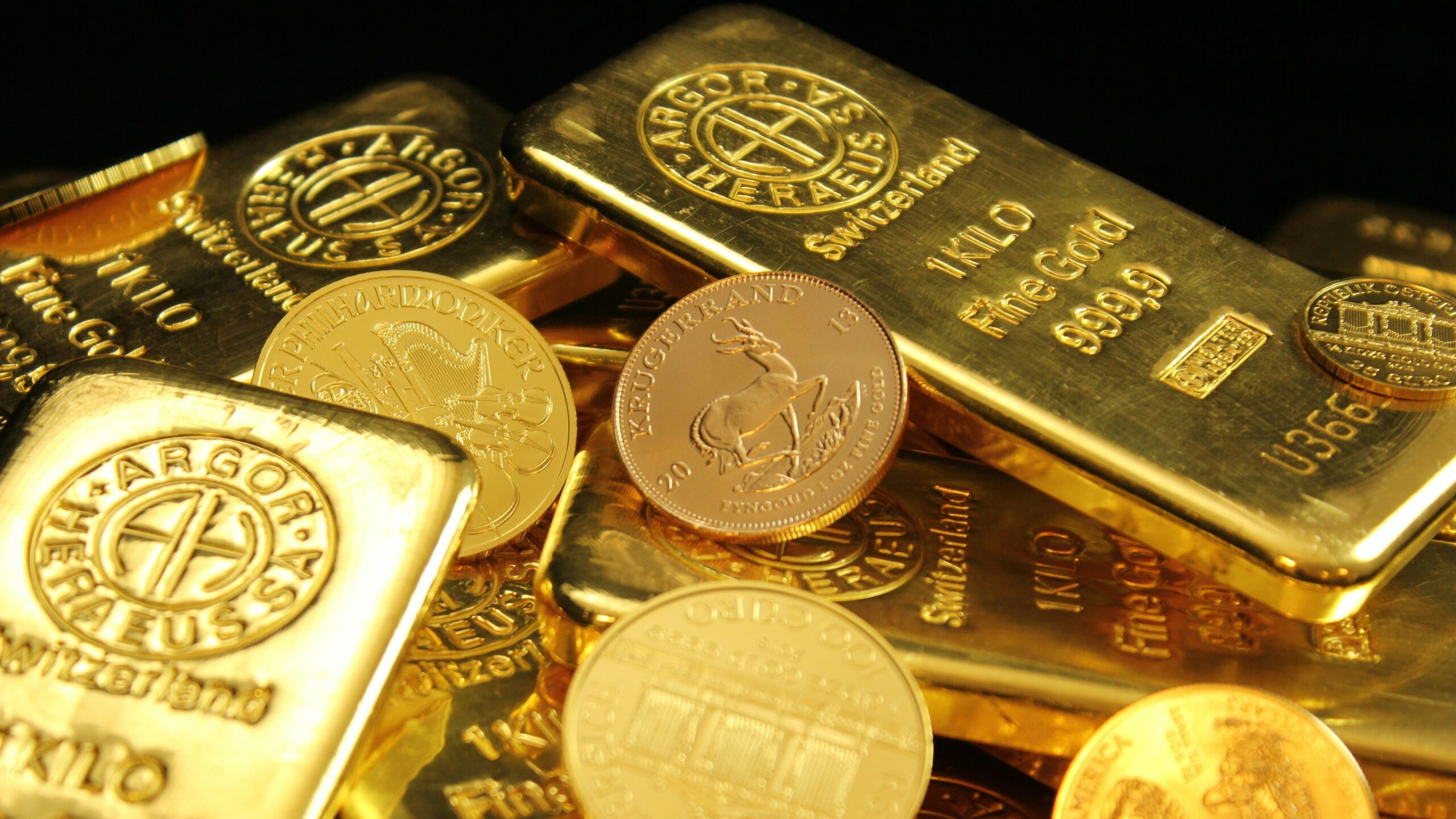
Gold has spent most of 2025 defying skeptics, and at least one forecaster now believes the metal could reach $6,000 an ounce, before the end of 2026. That call sits well above the consensus, but a fresh industry poll suggests the broader professional community is not far behind in its optimism. The gap between the boldest prediction and the crowd average reveals a market wrestling with deep uncertainty about central bank behavior, currency stability, and geopolitical friction, all of which feed directly into how high gold can climb.
Industry Insiders Peg Gold Near $5,000
The most concrete measure of where gold professionals think prices are headed came out of the London Bullion Market Association’s conference in Kyoto. A survey of 106 respondents at the LBMA gathering produced an average forecast of approximately $4,980 per ounce for the association’s next annual meeting on October 5, 2026. That figure represents a strong vote of confidence from traders, refiners, miners, and analysts who handle physical and paper gold every day.
What makes the LBMA number useful is the breadth of the sample. With 106 responses drawn from across the global bullion supply chain, the result is not the product of a single bank’s research desk or a lone commentator with a book to sell. It functions as a weighted snapshot of institutional sentiment at a moment when gold had already pulled back from recent highs. The fact that the average still landed just shy of $5,000 signals that the industry views recent price weakness as a pause, not a reversal.
The $6,000 Outlier and Why It Matters
Against that near-$5,000 consensus, the $6,000 call stands out sharply. Outlier predictions in commodity markets often get dismissed as attention-seeking, but they serve a real analytical purpose: they force a conversation about tail risks that consensus models tend to smooth away. A forecast that overshoots the crowd by roughly 20 percent is effectively arguing that the standard assumptions about inflation, interest rates, and dollar strength are too conservative.
The logic behind an extreme gold target usually rests on compounding stress scenarios. If two or three major risk factors fire simultaneously, say, a renewed trade war, aggressive central bank gold purchases by non-Western nations, and a sharp decline in real interest rates, the price response can be nonlinear. Consensus surveys like the LBMA poll capture the most likely single path forward. They are less equipped to capture the cumulative effect of overlapping shocks, which is exactly the scenario a $6,000 forecast implies. That does not make the call correct, but it highlights a blind spot in averaging exercises.
What Drives the Range of Predictions
Between the roughly $4,980 consensus and the $6,000 ceiling, the spread of professional opinion reflects genuine disagreement about a handful of key variables. Central bank buying has been one of the strongest structural supports for gold over the past two years. Nations looking to diversify reserves away from the U.S. dollar have absorbed large quantities of physical metal, and the pace of those purchases is the single biggest swing factor in most forecasting models. If buying accelerates, the upside case strengthens. If it plateaus, the consensus number looks more appropriate.
Interest rate expectations form the second major fault line. Gold pays no yield, so its opportunity cost rises when real rates climb and falls when rates drop. Forecasters who expect the Federal Reserve and other major central banks to cut rates aggressively over the next year tend to land on higher gold targets. Those who see rates staying elevated, or only declining slowly, project more modest gains. The LBMA survey average of approximately $4,980 likely reflects a blend of both camps, which is why it sits comfortably above current prices but well below the most aggressive calls.
Why Consensus Forecasts Often Lag Reality
History offers a useful caution about trusting the middle of the road. In past gold bull markets, consensus forecasts have consistently underestimated the speed and magnitude of price moves during periods of genuine stress. The 2020 rally past $2,000 caught many analysts off guard, as did the subsequent grind higher through 2024 and into 2025. Survey averages tend to anchor to recent prices and extrapolate moderate gains, which works well in calm markets but poorly during regime changes.
The current environment has several characteristics of a regime change. The post-2022 shift in central bank reserve management, the fragmentation of global trade into competing blocs, and persistent fiscal deficits in major economies all represent structural, not cyclical, forces. If those forces intensify rather than moderate, the LBMA’s near-$5,000 average could prove to be the floor rather than the ceiling. That is the core argument embedded in the $6,000 forecast: that the world is undergoing a durable repricing of hard assets, and the consensus has not yet caught up.
Risks That Could Cap the Rally
No gold forecast exists without a downside scenario, and the bears have legitimate arguments. A sudden resolution of major geopolitical tensions, an unexpected surge in real economic growth, or a sharp reversal in central bank buying patterns could all pull the rug out from under prices. Gold is also vulnerable to a strong dollar environment; if the U.S. currency rallies on safe-haven flows or higher relative yields, gold priced in dollars faces a headwind, even if demand in other currencies holds firm.
Recession risk cuts both ways. A global downturn would likely push central banks toward easier monetary policy, which supports gold. But a severe recession could also trigger forced liquidation of gold positions by funds and institutions needing cash, creating short-term price drops even in a structurally bullish environment. The 2008 financial crisis demonstrated this dynamic clearly: gold initially sold off alongside everything else before recovering and eventually reaching new highs. Forecasters projecting more conservative targets are implicitly pricing in some version of this whipsaw risk.
What the Spread Tells Investors
For anyone holding gold or considering a position, the range of professional forecasts carries a practical message. The floor of serious opinion sits well above where gold traded for most of the past decade, suggesting that even cautious analysts see the metal’s structural supports as intact. The ceiling, represented by the $6,000 call, reflects a world in which multiple risk factors converge and the metal acts as the primary release valve for global financial stress.
The LBMA survey’s near-$5,000 average offers a useful anchor precisely because it is not the product of a single analyst’s model. It aggregates the views of professionals who have direct exposure to physical supply and demand, hedging flows, and refining economics. When that crowd lands on a number, it carries weight that a standalone bank forecast does not. At the same time, the survey’s methodology, a simple average of responses at a single conference, means it can miss the fat tails of the distribution. Investors who rely solely on the consensus number may be underestimating both the upside and the downside.
Reading Between the Forecasts
The real takeaway from the current batch of gold predictions is not any single number but the direction and conviction behind the range. From roughly $5,000 to $6,000, every serious forecast points higher. The disagreement is about magnitude, not direction. That kind of directional unanimity among professionals with real capital at stake is uncommon and worth paying attention to, even for observers who are skeptical of price targets in general.
Where the forecasts diverge most is on timing and catalysts. The $6,000 camp needs multiple stress factors to align within a compressed window. The consensus camp expects a steadier grind higher driven by ongoing central bank accumulation and gradual rate normalization. Both paths lead to higher gold prices; they simply disagree on the slope of the climb. For readers weighing their own exposure, the question is less about picking the right number and more about understanding which scenario, the steady grind or the stress-driven spike, better matches their own view of where the global economy is headed over the next twelve months.
Gold markets have a long history of surprising both bulls and bears. The current spread of professional opinion, anchored by the LBMA’s institutional survey and stretched by more aggressive individual calls, suggests that the surprise over the coming year is more likely to come from the upside than the downside. Whether that means $5,000 or $6,000 depends on variables that no survey can fully capture, but the weight of professional conviction has clearly shifted toward higher ground.
More From The Daily Overview
*This article was researched with the help of AI, with human editors creating the final content.

Grant Mercer covers market dynamics, business trends, and the economic forces driving growth across industries. His analysis connects macro movements with real-world implications for investors, entrepreneurs, and professionals. Through his work at The Daily Overview, Grant helps readers understand how markets function and where opportunities may emerge.

