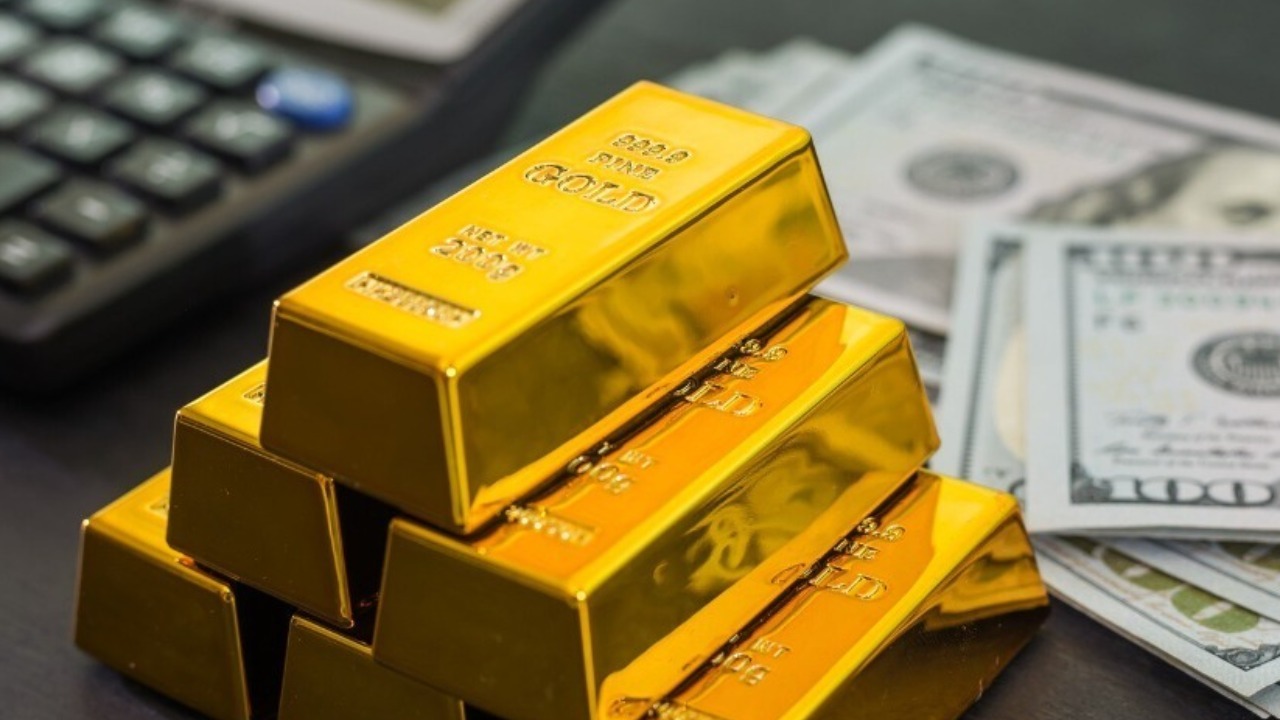
Gold has sprinted through Wall Street’s latest targets, leaving even bullish forecasters scrambling to catch up. After a blistering run that pushed prices to fresh records, the metal has already cleared the level Goldman Sachs only just set, while a leading JPMorgan strategist is now sketching out a path toward an eye‑watering $8,500 per ounce. The speed of the move is forcing investors to rethink what “expensive” looks like in a world of entrenched geopolitical risk and stubborn inflation.
At the same time, the rally is proving anything but linear, with sharp intraday swings and profit‑taking sell‑offs punctuating the climb. That volatility is not a contradiction to the bullish case, it is part of it, as capital rotates into perceived safe havens and then periodically cashes out. I see the tug‑of‑war between short‑term traders and long‑term allocators as the defining feature of this phase of the gold market.
Gold blows past Goldman’s fresh target
The most striking signal of how fast sentiment has shifted is that Gold has already overshot a forecast that was itself considered aggressive only days ago. In an analyst note in Jan, Goldman Sachs lifted its end‑2026 target to $5,400 per ounce, arguing that a mix of macro uncertainty and investment demand justified a higher long‑term equilibrium price. That call, framed as a bold step up from previous expectations, has already been eclipsed in the spot market, where the metal’s surge has carried it beyond the $5,400 line far sooner than the bank anticipated.
The fact that a major house like Goldman Sachs could raise its view to $5,400 and still find the market racing ahead underlines how quickly the narrative has flipped from cautious optimism to full‑blown momentum. Social‑media commentary has highlighted how Gold breaches last target, turning what was meant to be a medium‑term waypoint into a rear‑view mirror. For investors, that is both exhilarating and unnerving: it validates the bullish thesis, but it also raises the risk that positioning and expectations are running ahead of fundamentals.
JPMorgan’s $8,000 and $8,500 scenarios
Into that gap between old targets and new prices steps JPMorgan, with a roadmap that stretches far beyond $5,400. A detailed scenario from the bank, outlined in Jan, sketches a world in which portfolio reallocations and persistent macro stress push the metal toward $8,000 per ounce by the end of the decade. The logic is straightforward: if private investors and institutions steadily increase their allocation to bullion as a hedge against geopolitical and macro uncertainty, the incremental demand can overwhelm relatively inelastic supply.
On top of that long‑term framework, a separate strategist has floated an even more aggressive path, with Gold potentially climbing toward $8,500 in a more extreme risk‑off environment. Reporting on the current rally notes that Gold’s soaring so that the previous Goldman target looks stale, and that a JPMorgan analyst now sees room for prices to stretch another leg higher if capital flows accelerate. I read these numbers less as precise predictions and more as markers of how far the Over the horizon has shifted in the minds of big‑ticket allocators.
Spot prices, pullbacks and the reality check
For all the excitement around five‑figure scenarios, the tape is still reminding traders that nothing moves in a straight line. After a powerful run‑up, Gold recently slipped to 5,180.31 USD per troy ounce, a drop of 4.77% from the previous day that reflected investors locking in gains. That kind of single‑day swing is a feature of late‑stage rallies, where leveraged players and short‑term funds are quick to take profits at the first sign of fatigue, even as longer‑horizon buyers remain in the market.
Yet even with that setback, the broader trend remains sharply higher, with the same data showing that Over the past month the metal has risen strongly as inflation worries and an uncertain outlook keep demand elevated. I see the recent 4.77% pullback less as a reversal and more as a stress test of conviction: those who believe the structural drivers are intact will treat dips toward levels like 5,180.31 USD as opportunities, while latecomers who chased the move may find themselves shaken out. The balance between those two camps will determine whether the next big figure is closer to $5,000 or to the $8,000 and $8,500 markers now being discussed.
Why big banks keep lifting their gold calls
Behind the headline‑grabbing targets sits a deeper shift in how major institutions think about the metal’s role in portfolios. Earlier commentary from a Writer who described themselves as an editor who somehow won an Emmy captured how Gold’s safe‑haven status in a period of geopolitical uncertainty has driven prices to record highs. That safe‑haven narrative has only intensified as investors question the independence of central banks and the durability of fiat currencies, making bullion a kind of insurance policy against policy error and political shocks.
At the same time, other banks are quietly ratcheting up their own assumptions. In Jan, UBS raised its forecast for the first three quarters of 2026 to $6,200 per ounce, signalling that $6,200 is no longer seen as an outlier but as a base case for a sustained period. However, that same analysis acknowledged that such levels would likely attract bouts of profit taking as investors periodically cash in after surges. I interpret this as a recognition that the new range for gold is structurally higher, even if the path within that range is choppy.
What an $8,500 world would mean for investors
If the market ever does approach the $8,000 to $8,500 zone mapped out by JPMorgan, the implications would ripple far beyond bullion ETFs and coin dealers. A move of that magnitude from current levels would represent a gain of more than 40% according to one analysis of Gold, a shift that would reprice everything from mining equities to emerging‑market currencies. In such a world, central banks that have been quietly adding to their reserves would look prescient, while countries and companies reliant on dollar funding could find themselves under renewed pressure as investors question the stability of paper assets.
For individual investors, the lesson is not to blindly chase the most eye‑catching target, whether it is $5,400, $6,200, $8,000 or $8,500, but to understand why those numbers are being floated in the first place. The common thread across the Goldman Sachs upgrade, the UBS forecast, and the JPMorgan scenarios is a belief that the current era of geopolitical tension, contested monetary policy and fragile confidence is not going away quickly. I see gold’s rocket‑like ascent past the latest Goldman call, and the 34‑style precision with which strategists now slice potential upside, as a reflection of that deeper unease. In that sense, the real story is not just about how high the metal can go, but about what it says regarding the world investors expect to face in the years ahead.
More From TheDailyOverview
*This article was researched with the help of AI, with human editors creating the final content.

Grant Mercer covers market dynamics, business trends, and the economic forces driving growth across industries. His analysis connects macro movements with real-world implications for investors, entrepreneurs, and professionals. Through his work at The Daily Overview, Grant helps readers understand how markets function and where opportunities may emerge.

