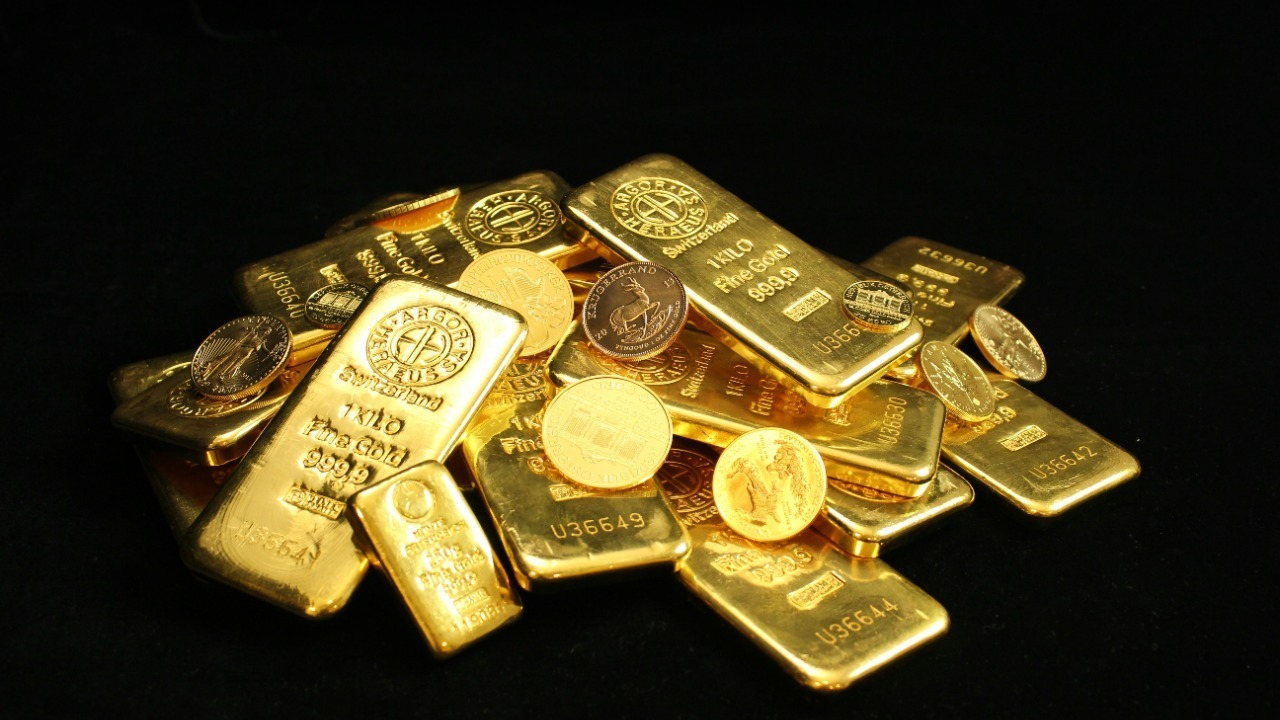
Gold’s blistering rally has pushed the metal above $4,400 an ounce for the first time, while silver has surged to its own record as traders double down on expectations of aggressive interest rate cuts. The move caps a year in which precious metals have shifted from a defensive niche to the center of global market conversation, reshaping how investors think about safety, inflation and the future of money. I see this twin breakout as less a speculative blow‑off and more a referendum on the credibility of central banks and the durability of the current economic cycle.
Behind the headlines, the story is about policy, not just price. As the Fed signals it is closer to easing, and geopolitical risks refuse to fade, gold and silver are behaving like a parallel vote of no confidence in paper assets. The question now is whether these levels can be sustained, and what they reveal about the balance of fear and greed driving global capital.
Gold’s record run and the Fed pivot narrative
Gold’s climb through $4,400 has been powered by a potent mix of rate‑cut bets and anxiety about the global backdrop. Spot prices have not only breached $4,400 but, at the intraday peak, hit $4,426.66, a level that would have seemed outlandish even to committed gold bugs a few years ago. I see that move as the market’s way of front‑running a Fed pivot, with traders wagering that the central bank will prioritize growth and financial stability over a final push against inflation, a dynamic that has already driven a powerful bid into $4,400 and $4,426.66.
Rate expectations matter because gold does not pay interest, so its appeal rises when yields on cash and bonds are expected to fall. As investors have shifted toward a view that the Fed will cut more and sooner, the opportunity cost of holding bullion has dropped, encouraging both institutional and retail buyers to add exposure. In parallel, reports that gold has gained roughly two‑thirds this year underscore how quickly sentiment has flipped from skepticism to fear of missing out, with the metal’s surge to $4,400 framed squarely around Fed policy and simmering geopolitical strife.
Silver’s historic breakout and its 2025 catch‑up trade
If gold has been the headline act, silver has been the surprise chart‑topper. After lagging gold for much of the past decade, Silver has exploded higher this year, with prices up more than 140 percent and, in European trading, finally breaching $70 per ounce for the first time. I read that as a classic catch‑up move: once gold’s breakout convinced investors that the precious metals bull market was real, capital rotated into the more volatile, thinner silver market, amplifying every incremental bid into a vertical move that carried prices through $70.
What makes silver’s move especially striking is that it is both a monetary and an industrial metal. Investors are buying it as a hedge against market uncertainty and currency debasement, but demand is also tied to sectors like solar panels and electronics that are sensitive to the broader Economy. That dual role can turn silver into a high‑beta play on gold, which is exactly what has happened as Gold and silver rise to records on rate‑cut bets and global risks. The same forces that pushed gold to fresh highs have pulled silver into uncharted territory, with the metal’s historic rally framed as part of a broader Precious Metals repricing rather than a standalone anomaly.
Safe‑haven demand, geopolitical stress and the search for insurance
Beyond the mechanics of interest rates, I see the latest surge as a barometer of unease about the global order. Investors are not just reacting to the Fed; they are also responding to a world where geopolitical flashpoints, from regional conflicts to trade tensions, have become a persistent feature rather than a passing scare. In that environment, gold’s role as a hedge against tail risks has been reinforced, with the metal’s relentless climb through $4,400 per ounce on Monday described as another all‑time high in what has become a sustained move to diversify beyond traditional finance, a pattern captured in the framing of Gold Smashes and Silver Eyes $70.
Silver is benefiting from the same psychology. When investors worry about currency debasement or systemic shocks, they often reach for both metals, treating them as complementary forms of insurance. The fact that Silver has not only followed gold higher but set its own record at $70 suggests that the search for hedges has spilled beyond the most liquid instruments into markets that can move sharply on incremental flows. I view that as a sign that the demand is broad based rather than confined to a narrow group of speculators, with buyers ranging from macro hedge funds to retail investors using online platforms to add small allocations as a form of personal financial insurance.
Big‑bank forecasts and what they signal about 2026
When Wall Street’s largest institutions start projecting further gains after a year like this, it tells me the rally has moved from contrarian to consensus. Goldman Sachs Group Inc is among the banks now forecasting that gold prices will keep rising in 2026, laying out a base‑case scenario in which monetary easing and persistent geopolitical risk continue to support demand. That kind of outlook matters because it shapes how asset managers build their models and allocate capital, and it reflects a belief that the forces driving gold to its current highs are structural rather than fleeting, a view embedded in the detailed projections attributed to Goldman Sachs Group Inc.
At the same time, I am cautious about treating any bank forecast as destiny. History is full of examples where extrapolating a strong year in commodities into the future has ended badly for latecomers. Yet the fact that major institutions are comfortable talking about higher levels after gold has already topped $4,400 and silver has smashed through $70 suggests they see a regime shift in how investors value non‑yielding assets. In their models, lower real yields, ongoing central bank buying and a structurally more volatile geopolitical landscape justify keeping gold and silver as core holdings rather than tactical trades, which in turn can become a self‑fulfilling support for prices as more portfolios bake those assumptions in.
What this means for everyday investors and the wider market
For individual investors watching Gold Tops and Hits New All, Time High, the temptation is either to chase the move or dismiss it as a bubble. I think the more useful response is to treat the current price action as a signal about the broader financial environment. When Spot gold is trading around levels like $4,400 and $4,426.66 and silver is near $70, it is a sign that markets are questioning the staying power of low inflation, stable currencies and predictable policy. That does not mean everyone should rush into bullion, but it does argue for revisiting portfolio resilience, from how much cash you hold to your exposure to rate‑sensitive assets, in light of what these metals are telling you about perceived risk.
On a systemic level, the twin records in gold and silver highlight a quiet shift in the hierarchy of safe assets. For years, government bonds, especially U.S. Treasuries, were the default refuge. Now, with investors bracing for rate cuts and worrying about debt sustainability, non‑yielding stores of value are reclaiming some of that role. I see that as part of a broader diversification trend in which investors are spreading their bets across physical metals, digital assets and alternative strategies rather than relying solely on the old 60/40 stock‑bond mix. Whether the current prices hold or correct, the message from $4,400 gold and $70 silver is clear: confidence in the status quo is no longer taken for granted, and markets are willing to pay up for insurance against whatever comes next.
More From TheDailyOverview

Grant Mercer covers market dynamics, business trends, and the economic forces driving growth across industries. His analysis connects macro movements with real-world implications for investors, entrepreneurs, and professionals. Through his work at The Daily Overview, Grant helps readers understand how markets function and where opportunities may emerge.

