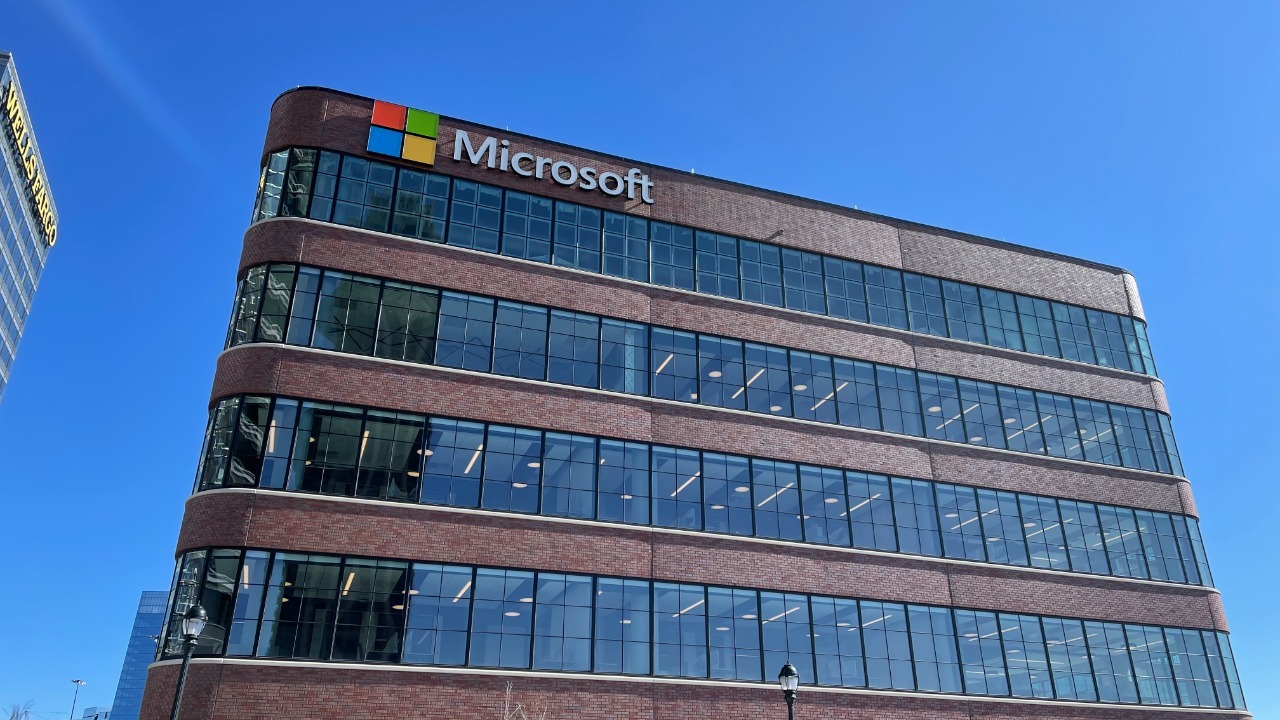
Goldman Sachs has just torn up its old view of Microsoft and replaced it with one of the most aggressive targets on a mega-cap tech stock heading into earnings season. The bank is leaning hard into the idea that Microsoft’s artificial intelligence push is still underappreciated, even after a powerful run in the shares. With a key quarterly report looming, the new target price raises the stakes for both the company and investors who have treated Microsoft as the safest way to play the AI boom.
I see this call as a litmus test for how far Wall Street is willing to stretch valuations for AI leaders before the next wave of hard numbers arrives. It is not just a vote of confidence in Microsoft’s balance sheet or its cloud franchise, it is a statement that Copilot, AI agents and the company’s broader software ecosystem could justify a much richer multiple than the market is currently assigning.
Goldman’s bold new target and what it implies
Goldman Sachs has moved from a constructive stance on Microsoft to a far more assertive one, centering its thesis on Copilot and AI agents as the next leg of growth. In its latest call, Goldman argues that the broader market is not fully pricing in how deeply these tools can be embedded across productivity software, developer workflows and business processes, effectively creating a new layer of monetization on top of existing licenses for Microsoft 365 and other products. The bank’s commentary makes clear that Copilot and AI are not side bets but the core of its upgraded view on Goldman.
Goldman Sachs has paired that qualitative conviction with a strikingly high price objective on the stock. In its latest research, the firm describes a remarkably confident tone on Microsoft, or MSFT, just ahead of a key earnings report on January 28, and it frames the upside in the context of a significantly higher fair value than where the shares trade today. The bank has discussed a $650 price target with an overweight stance, signaling that it sees substantial room for appreciation from current levels as AI adoption accelerates across the company’s cloud and software franchises, and it has wrapped that view into a broader call on MSFT.
From initiation to escalation: how the target jumped
The latest move builds on a rapid evolution in Goldman’s coverage of the stock. Earlier in Jan, the firm launched what it called a Goldman Coverage Initiation on Microsoft with a Buy rating and a $655 target, explicitly flagging that figure as its central case for where MSFT could trade as AI monetization ramps. That initiation laid out a range of outcomes, including a high forecast of 700.00 USD, and it framed Microsoft as a structural winner in both enterprise and consumer technology markets, with the $655 level serving as a marker of how far earnings power could expand if AI-driven demand materializes as expected for Goldman Coverage Initiation.
That initial call has already been sharpened into an even more bullish framing. In a follow-on note, the firm described its stance under the banner Goldman Sachs Rates Microsoft, highlighting that it sees a $655 Target and a 37% Upside from prevailing prices, while reiterating the Buy recommendation on MSFT. By spelling out that 37% potential gain, Goldman is effectively telling clients that Microsoft still offers growth-stock style returns despite its massive market capitalization, and it is doing so on the back of confidence in the company’s positioning across cloud, productivity software and AI-infused services in both enterprise and consumer technology markets, a view it has attached directly to Goldman Sachs Rates.
The earnings countdown and what Microsoft must prove
The timing of Goldman’s aggressive stance is not accidental. Microsoft is heading into its FY26 second-quarter earnings report, with the company’s own investor materials flagging the Upcoming Microsoft FY26 Q2 Earnings and offering investors tools such as GET NOTIFICATION alerts and access to the latest ANNUAL REPORT. That calendar event, highlighted on the company’s investor relations page, is the moment when management will have to back up the AI narrative with concrete numbers on cloud growth, Copilot adoption and the impact of AI in Windows and other core franchises, all of which are signposted on Upcoming Microsoft.
Under the hood, Microsoft has been repositioning its entire product stack around AI, from the operating system to the cloud. The company’s main site showcases how Copilot and related AI capabilities are being woven into Windows, Office, Azure and developer tools, signaling that this is not a single product but a horizontal capability that touches everything from small business workflows to large-scale data center operations. That breadth is central to Goldman’s thesis that the market is underestimating the revenue and margin uplift from AI, and it is visible in how Microsoft now presents itself to customers and investors.
Valuation, upside math and the AI arms race
To understand how ambitious Goldman’s target is, it helps to look at where the stock trades today. Microsoft Corp MSFT on NASDAQ recently closed at 459.86, a move of 3.20 or 0.70%, with the quote data also showing a 52 week range of 344.79 to 555.45, along with details on Volume, Open, Day High and other trading metrics. Framed against that backdrop, a $655 or $650 target implies a significant premium to both the current Close and the prior 52 week high, underscoring just how much earnings growth and multiple expansion Goldman believes AI can unlock for Microsoft Corp MSFT.
Goldman’s optimism is not a sudden pivot but the culmination of a multi-quarter build in confidence around Microsoft’s AI strategy. After Microsoft reported better-than-expected fiscal third-quarter results earlier in its last financial year, the bank raised its price target on MSFT and highlighted how the company’s AI business was already contributing to upside. That analysis pointed to a development team working together to create the next version of Windows, argued that as AI expands more data will flow into Microsoft’s cloud, and suggested that the number of users of AI features could help earnings per share jump 17%, all of which fed into a more bullish stance on Goldman Sachs Raises.
How Microsoft stacks up in the broader AI market
Goldman Sachs has also been explicit about its positive view on Microsoft’s medium-term trajectory. In a separate analysis, the firm stated that Goldman Sachs Is Upbeat on Microsoft’s 2026 Outlook, predicting that Microsoft’s earnings growth would remain strong and reiterating a Buy rating on the shares. That report argued that Microsoft’s profits next year should benefit from AI applications and that revenue could continue to climb even as the tech giant moderates its capex growth, reinforcing the idea that MSFT can deliver both top-line expansion and improving free cash flow as AI workloads scale, a view embedded in Goldman Sachs Is.
Investors are not evaluating Microsoft in a vacuum, they are comparing it with other AI leaders and the broader market. Data providers such as Google Finance have made it easier to track how MSFT trades relative to peers, while analysts across Wall Street are issuing similarly bullish calls on other AI platforms. For example, Wedbush analyst Scott Devitt is one of those with an Outperform, or Buy, rating on GOOGL stock, underscoring that Alphabet is also seen as a major AI winner and that the market is willing to assign premium valuations to multiple players in this race, a dynamic captured in coverage of Wedbush.
More From TheDailyOverview

Elias Broderick specializes in residential and commercial real estate, with a focus on market cycles, property fundamentals, and investment strategy. His writing translates complex housing and development trends into clear insights for both new and experienced investors. At The Daily Overview, Elias explores how real estate fits into long-term wealth planning.