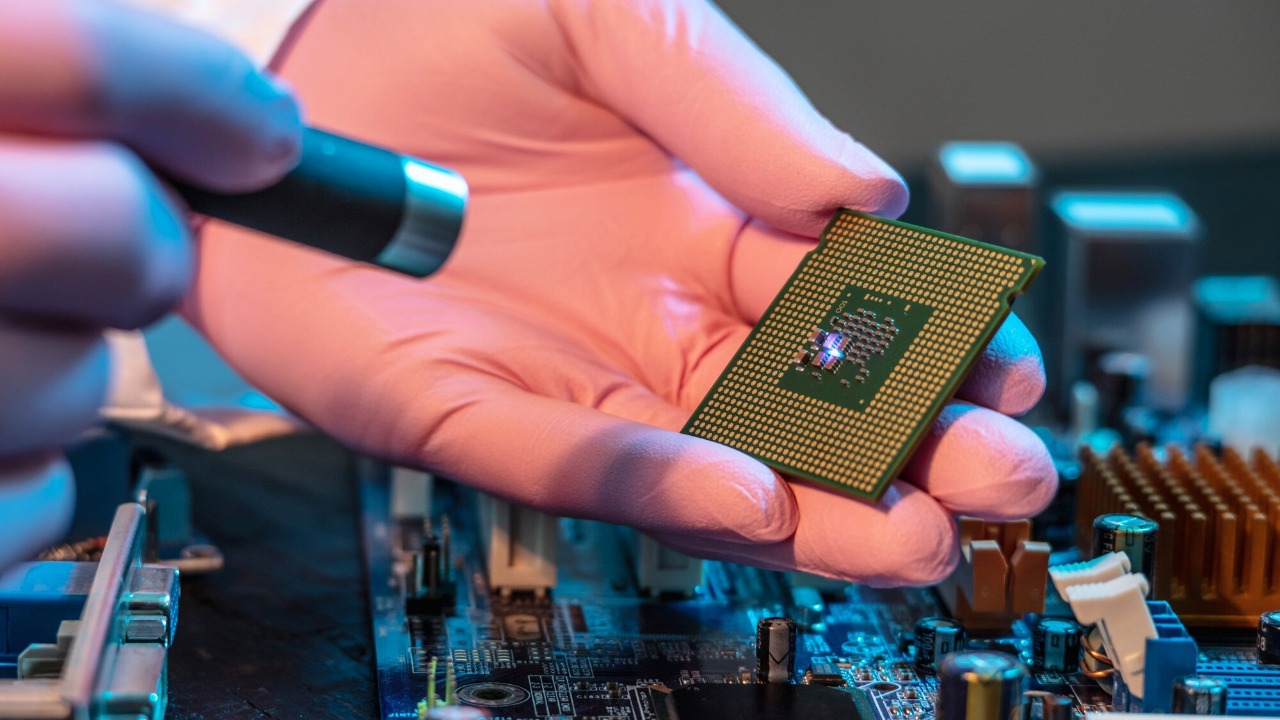
Alphabet’s push to sell its in-house AI chips to outside customers has abruptly reshaped expectations for the entire data center hardware trade. Instead of a tidy duopoly in accelerators, investors now have to price in a world where Google is not just a cloud platform but a direct rival to Nvidia and AMD in the most lucrative part of artificial intelligence infrastructure.
The market reaction has been swift, with Nvidia and AMD selling off while Alphabet has rallied, but the more important story is what this shift means over the next several years. I see three distinct opportunities emerging for investors: a potential rerating of Google as a full-stack AI supplier, a more volatile but still powerful growth path for Nvidia and AMD, and a chance for disciplined buyers to use the turbulence to build positions in all three names.
Google’s AI chip ambitions move from side project to center stage
The clearest signal that the landscape has changed is that Meta Platforms is now evaluating whether to run its data centers on Google-designed AI chips instead of relying solely on Nvidia and AMD. Meta Platforms (traded as NASDAQ META) is described as weighing Google hardware for its own facilities, a move that would validate Google’s tensor processing units as a viable alternative to the dominant GPUs and potentially give Meta an efficiency edge over rivals that stay locked into a single supplier. That evaluation is not just a technical footnote, it is a direct challenge to the pricing power Nvidia and AMD have enjoyed in the first wave of the AI boom.
Reports that Meta could buy “billions of dollars” worth of custom Google chips have already jolted the market, with Google jumping while Nvidia and AMD fell on the same day the talks surfaced. One account notes that on Nov 25, 2025, Google surged as investors digested the idea that its TPUs could be sold at scale to outside customers, while Nvidia and AMD sold off on fears of a new heavyweight competitor. Another report the same day, Nov 25, 2025, describes how Nvidia and AMD shares dropped sharply Tuesday after word that Meta could buy Google’s AI chips, underscoring how sensitive sentiment has become to any sign of customer diversification.
Nvidia and AMD push back, but the market is repricing risk
Nvidia is not taking this challenge quietly, and that matters for how I think about the stock from here. The company has already argued that its GPUs are a “generation ahead” of Google’s AI chips, a claim that highlights both its confidence in its roadmap and the intensity of the rivalry. Even as Shares of Nvidia fell 3% on Nov 25, 2025, after a report that Meta, one of Nvidia’s key customers, could strike a deal with Google to use its chips, Nvidia has stressed that its hardware and software ecosystem remains deeply entrenched in AI training and inference workloads, and that Google’s TPUs have only recently emerged as a viable alternative in the last few weeks according to that reporting.
AMD is in a more delicate position, since it is still scaling its AI accelerator business and relies on momentum and design wins to convince investors it can close the gap with Nvidia. When Meta Platforms began evaluating Google-designed chips, both Nvidia and AMD dropped sharply, and one account framed the move as potentially wiping out a large chunk of market value as investors reassessed how much of the AI pie would be shared with Google. The same report notes that Investing.com described Meta Platforms and Google as central to this shift, which is exactly why I expect volatility in both Nvidia and AMD to remain elevated as every new hyperscale contract becomes a referendum on their long term dominance.
How I would approach Alphabet after the AI chip shock
For Alphabet, the investment case is evolving from a pure advertising and cloud story into something closer to a vertically integrated AI platform. If Meta ultimately signs on to use Google’s chips in its own data centers, that would validate Google’s strategy of building custom silicon and selling it as a product, not just using it internally. One discussion of the situation notes that Google parent Alphabet, identified by its ticker GOOGL, is in talks to offer its AI chips to Meta and potentially to deploy them in customers’ own data centers, a shift that would move it squarely into the same arena as Nvidia and AMD and could justify a higher multiple on its cloud and AI revenue streams if the deals materialize, as described in that summary of Alphabet GOOGL talks.
For investors who want direct exposure to this new hardware angle, the mechanics of buying Alphabet stock are straightforward. Guides on how to buy Google stock emphasize the basics: open a brokerage account, add money to the account, search for Google by its ticker, decide how many shares to buy, and then submit the order. One such step by step breakdown, dated Sep 5, 2025, walks through how to Open a brokerage account and Search for Google, which is exactly the kind of process I would follow if I wanted to tilt my portfolio toward Alphabet’s growing AI chip ambitions while still benefiting from its core advertising and cloud businesses.
Positioning in Nvidia and AMD after the selloff
For Nvidia, I see the recent pullback as a reminder that even market darlings can be vulnerable to narrative shocks, not as evidence that its business is broken. The company still dominates the GPU market for AI, and its claim that its GPUs are a generation ahead of Google’s chips suggests it expects to maintain a performance lead even as competition intensifies. For investors who want to buy the dip, practical guides explain that you can buy Nvidia stock by opening a brokerage account, funding it, searching for Nvidia by its ticker, deciding how many shares to purchase, and then submitting the order, a process laid out in detail in a guide dated Oct 31, 2025 that notes how You can buy Nvidia stock and Submit the order.
There are also more strategy focused explanations that frame Nvidia as a long term play on AI, gaming, and high performance computing, and that encourage investors to think about position sizing and time horizon rather than trying to trade every headline. One such guide, dated Sep 8, 2025, describes how to buy Nvidia stock by opening your brokerage account, logging in, and then deciding how Nvidia fits into your broader portfolio, with an emphasis on understanding the company’s role in AI and in gaming or computing applications, as outlined in the section on How to Invest in Nvidia and Open your account. For those who prefer a more stepwise approach, another resource breaks it down into Step 1, how to choose a broker and open an account, Step 2, how to Research NVIDIA stock, and Step 3, how to Decide how much to invest, which is a useful checklist for anyone considering building or adding to a position in Nvidia after the latest bout of volatility, as described in the guide that highlights Step 1 How and Research NVIDIA Decide.
AMD presents a different risk reward profile, since it is still proving itself in AI accelerators even as it has a strong track record in CPUs and gaming consoles. For investors who believe AMD can carve out a meaningful share of AI workloads despite Google’s entry, the basic mechanics of buying the stock are similar to Nvidia’s. One guide dated Aug 6, 2025 explains that you can purchase AMD stock through a brokerage account, that you will need to add money to the account and then place your trade, and that many brokers now offer low cost or zero commission brokerage accounts for stock trading, as laid out in the section that begins with How You can purchase AMD stock. Another, more detailed overview dated Sep 23, 2025, frames AMD as a company that has been performing well by focusing on superior chips and AI, and walks through how to invest in Advanced Micro Devices by opening your brokerage account, logging in, and submitting your buy order, while also emphasizing the importance of understanding AMD’s AI roadmap, as described in the section on How to Invest in Advanced Micro Devices AMD. For those who want a checklist style approach, another resource breaks it into Step 1, how to choose a broker and open an account, Step 2, how to Research Advanced Micro Devices stock, and Step 3, how to Decid how much to invest and what risks you are willing to take, which is captured in the guide that highlights Step How to Research Advanced Micro Devices Decid.
Building a balanced AI hardware basket in a three way race
With Google now a credible contender in AI accelerators, I think the smartest way for many individual investors to play this space is as a basket rather than a single stock bet. Alphabet offers exposure to AI chips plus cloud and advertising, Nvidia remains the dominant GPU supplier with a powerful software moat, and AMD provides leveraged upside if it can keep winning share in both CPUs and accelerators. A widely shared video discussion dated Nov 25, 2025, framed the question provocatively by asking whether Google had effectively ended Nvidia and AMD, but the more nuanced takeaway is that the race is becoming a three way contest rather than a winner take all outcome, as debated in the clip labeled with Nov 25 and November 25 that asks Did Google Just END Nvidia and AMD Nov.
For investors who want to implement that basket, the practical steps are already mapped out across the various how to buy guides. You can open a brokerage account, add funds, and then allocate across Alphabet, Nvidia, and AMD in proportions that match your risk tolerance and conviction. The Google focused guide explains how to open and fund an account and then search for Google, the Nvidia guides walk through how to open and log into your brokerage and think about Nvidia’s role in AI and gaming, and the AMD resources emphasize researching Advanced Micro Devices and deciding how much to invest given the risks. Taken together, they provide a roadmap for building a diversified AI hardware portfolio that can benefit if Google’s chips gain traction, if Nvidia’s GPUs remain a generation ahead, and if AMD’s strategy of focusing on superior chips and AI continues to pay off, rather than trying to guess which single company will win every Meta scale contract.
More From TheDailyOverview
- Dave Ramsey says these two simple questions show whether you’re rich or poor
- Retired But Want To Work? Try These 18 Jobs for Seniors That Pay Weekly
- IRS raises capital gains thresholds for 2026 and what’s new
- 12 ways to make $5,000 fast that actually work

Elias Broderick specializes in residential and commercial real estate, with a focus on market cycles, property fundamentals, and investment strategy. His writing translates complex housing and development trends into clear insights for both new and experienced investors. At The Daily Overview, Elias explores how real estate fits into long-term wealth planning.

