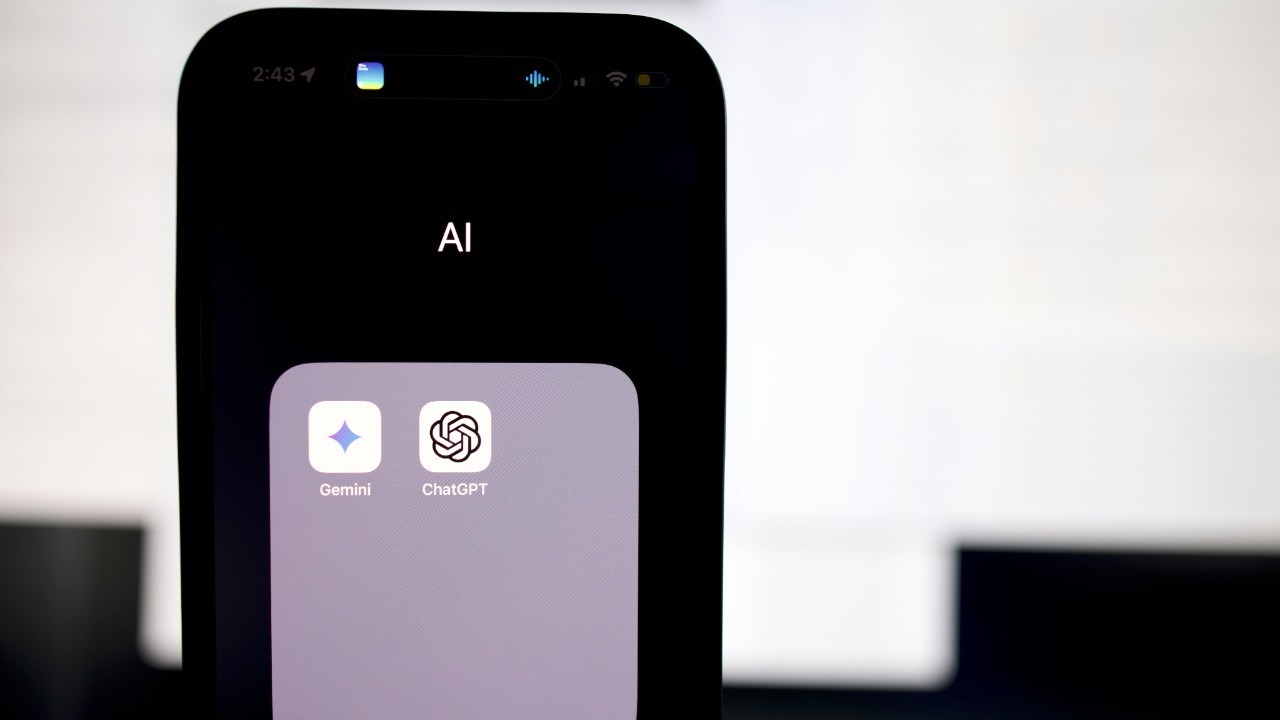
Google is quietly dismantling one of the biggest reasons people stay locked into ChatGPT: the hassle of starting over. Instead of treating your existing prompts, projects, and habits as sunk costs, Gemini is being reshaped so it can absorb that history, plug into the tools you already use, and undercut the subscription math that once favored OpenAI.
I see a clear strategy emerging. By combining import tools, deep integration with Google services, and aggressive pricing, Gemini is positioning itself as the path of least resistance for anyone who has been curious about switching but reluctant to abandon their ChatGPT workflows.
Gemini’s secret weapon: importing your old AI life
The biggest psychological barrier to leaving any AI assistant is the sense that years of prompts and carefully tuned chats will vanish the moment you cancel. That is exactly the pain point Google is now targeting. A new feature in development for Gemini is designed to let users directly import chat histories from other AI platforms, so the move feels more like switching email clients than burning down your second brain and rebuilding it from scratch.
That approach mirrors the broader tech problem where, even after all these years, it is still difficult to migrate everything cleanly between Android and iOS. The same friction has existed in AI, where you could change models but not easily carry over your conversational history. Reporting indicates that Google is preparing a Gemini option that specifically addresses this gap, so users can bring over their existing threads instead of manually copying and pasting archives from ChatGPT, a shift that would finally let Even long‑time power users move without feeling like they are losing their past work.
There are limits, at least initially. Early details suggest the import option will not move every type of saved artifact, such as more structured “memories” that some platforms store separately from chat logs. One report notes that it does not appear this option will allow you to migrate your saved memories across platforms, although the broader import capability should not be far away, which Still makes it a major step toward parity with what people already have inside ChatGPT.
Pricing and bundles that make subscriptions an easy call
Once the data hurdle is lowered, the next question is cost. Here, Google is leaning on its ecosystem scale. In one widely shared account, a user described how Google quietly lifted family restrictions on its AI bundle, turning Gemini Advanced plus 2 TB of cloud storage into a package that You can share across a household. That user’s TL;DR was blunt: they Ditched Cha because the combined value of Gemini Advanced and storage, priced at roughly the cost of a coffee each month per person, made it hard to justify paying separately for ChatGPT.
That kind of bundling matters because AI is no longer a novelty line item, it is part of the same subscription stack as Google One, iCloud, or Microsoft 365. When Gemini Advanced rides along with storage that people already need for Google Photos backups or Drive archives, the marginal cost of switching from ChatGPT shrinks dramatically. Instead of asking whether Gemini alone beats ChatGPT on features, users start asking whether a single Google subscription that covers AI, storage, and family access is “good enough” to replace multiple overlapping plans.
Features that go beyond ChatGPT’s comfort zone
Price and portability get people to consider a move, but features keep them there. On raw capability, Gemini has been closing gaps and, in some areas, pulling ahead. One analysis notes that While other chatbots tout “memory,” Gemini focuses on real utility, using Its multimillion‑token context window to digest entire books, multi‑hour transcripts, or dense codebases in a single session. That scale changes what people can realistically do, from analyzing a full legal contract history to reviewing an entire software repository without constant chunking.
Gemini also benefits from being wired directly into Google Search. In one head‑to‑head comparison, Gemini pulled more recent and verifiable updates, thanks to Google Search integration, while ChatGPT responded well but sometimes cited older developments. For anyone using AI to track fast‑moving topics like security patches, regulatory changes, or product launches, that freshness is not a nice‑to‑have, it is a baseline requirement. When your assistant can surface live web context and cross‑check it against your own documents, it starts to feel less like a static model and more like a dynamic research partner.
On top of that, Google has been layering customization features that echo and, in some cases, surpass what people built with GPTs. Earlier in the year, all Google Gemini users gained access to Gemini Gems for free, and a later update introduced Shareable Custom Gems that let people package a tailored chatbot experience and hand it to colleagues or friends. For teams that previously relied on custom GPTs to standardize workflows, Gemini Gems for specialized tasks like code review, marketing copy, or customer support make it easier to recreate those setups on Google’s side without feeling like you are downgrading.
Deep integration where you already work
Beyond raw model quality, the real battleground is where AI shows up in daily tools. Here, Google is playing to its strengths. In productivity, the company is building automation into Workspace through a system now branded as Google Workspace Studio. The official documentation for Google makes one limitation clear: Are only Google apps supported? What about third‑party apps? Currently only Google applications are supported, but third‑party integrations are planned. Even with that caveat, the direction is obvious. If Gemini can orchestrate Docs, Sheets, Gmail, and Calendar in a single flow, it becomes the default assistant for anyone whose workday already lives inside those apps.
On mobile, Gemini is slowly replacing the legacy Google Assistant, although not as quickly as originally promised. In an update late last year, Google said it was adjusting its previously announced timeline to make sure it delivers a seamless transition, and would continue its work to upgrade and train future versions of Gemini. That delay may frustrate early adopters, but it also signals how central Gemini is to Google’s platform strategy. Once the assistant swap is complete, Android users will not just be choosing between apps, they will be choosing whether to fight the default or lean into an AI that is baked into their phone’s operating system.
The payoff is already visible in consumer behavior. After a major September update, Gemini AI surged in mobile app stores, adding 13,000,000 users and overtaking ChatGPT in rankings. The timing aligned with three significant enhancements that made Gemini a more formidable rival to established players like ChatGPT, and the spike suggests that when Gemini is easy to access on phones and tightly integrated with Google accounts, people are willing to at least try it alongside or instead of OpenAI’s app.
Why switching now looks less risky than waiting
Underneath all of this is a broader shift in how people think about AI lock‑in. In one discussion about the competitive landscape, a commenter argued that Integration into existing ecosystems matters more for large language models than first mover advantage, which is not as decisive here as it was for social media or YouTube. That perspective, shared in a thread on Integration, helps explain why Meta AI has struggled to convert early buzz into durable usage, and why Google’s control over Android, Chrome, and Workspace gives Gemini a structural edge that pure‑play chatbots cannot easily match.
More From TheDailyOverview
*This article was researched with the help of AI, with human editors creating the final content.

Grant Mercer covers market dynamics, business trends, and the economic forces driving growth across industries. His analysis connects macro movements with real-world implications for investors, entrepreneurs, and professionals. Through his work at The Daily Overview, Grant helps readers understand how markets function and where opportunities may emerge.

