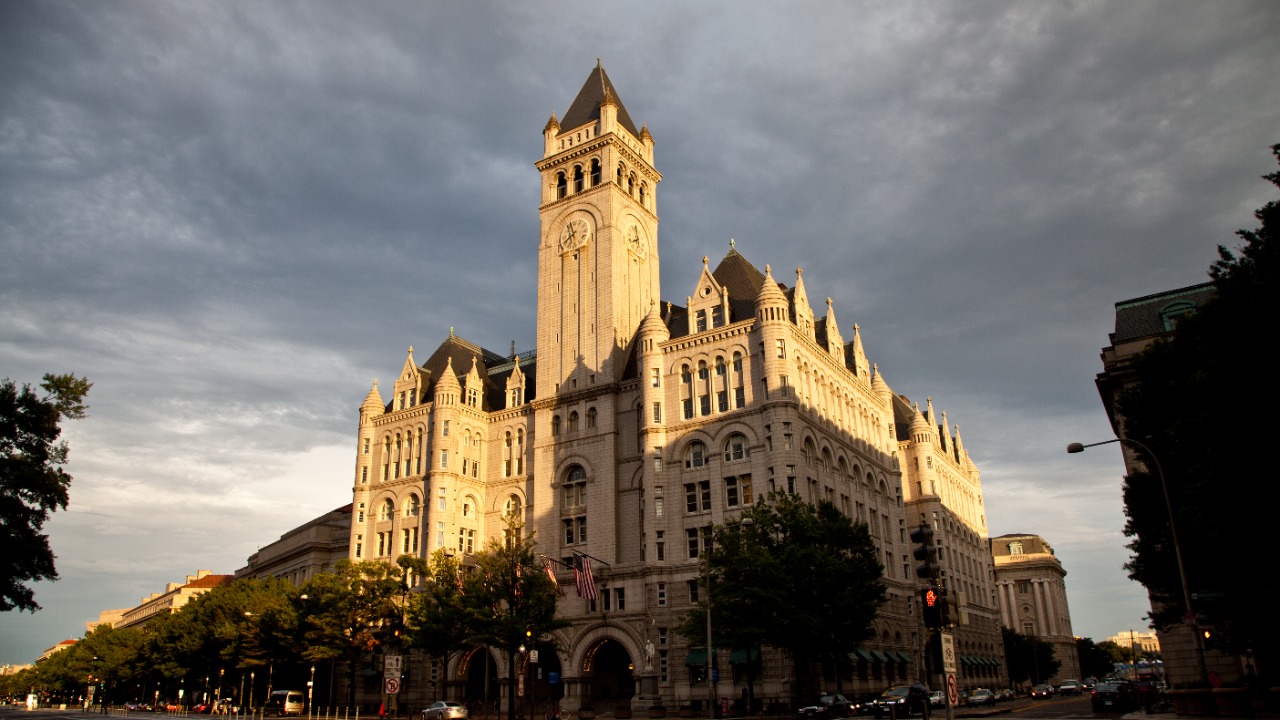
The federal government is preparing to part with one of Washington’s most politically charged properties, moving to sell the Old Post Office that once housed Trump International Hotel. The decision could end a decade of controversy over how a 19th century landmark in the heart of the capital became a luxury playground and then a distressed asset. It also sets up a new test of how the government balances preservation, public value, and the optics of doing business with a former tenant who is now back in the White House.
The landmark at the center of Pennsylvania Avenue
The Old Post Office is not just another surplus building, it is a defining piece of the federal streetscape on The Pennsylvania Avenue between the Capitol and the White House. Built in the late 1800s as the city’s main General Post Office, it served that role until 1914 at the beginning of World War, then spent decades in bureaucratic limbo as agencies came and went and demolition was repeatedly floated as an option. The structure’s clock tower and Romanesque arches have long made it a visual anchor of the avenue, and its location has ensured that any decision about its future carries symbolic weight for Washington as a whole, not just for real estate insiders.
That symbolism is reinforced by the way the building survived at all. According to the General Services Administration, local citizens and preservation advocates rallied to save the Old Post Office from the wrecking ball, with figures such as Nancy Hanks of the Nati arts community pushing the federal government to embrace reuse instead of demolition. The GSA eventually adopted a plan that mixed offices and retail inside the historic shell, a compromise that kept the tower open to the public and embedded the building in the broader effort to preserve significant federal architecture along The Pennsylvania Avenue corridor. Those choices laid the groundwork for the more radical transformation that would follow a generation later.
From federal office block to Trump-branded hotel
The modern saga began when the government decided that the aging complex no longer fit its office needs and sought a private partner to redevelop the site. The GSA selected a proposal to convert the Old Post Office into a luxury hotel, turning over long term control while retaining federal ownership of the land and structure. That deal eventually brought in The Trump and his company, which reimagined the property as Trump International Hotel, a high end venue that opened in 2016 with a soaring lobby carved out of the former mail sorting hall and suites tucked under the slate roof. The project instantly turned a once sleepy federal building into a magnet for political fundraisers, foreign delegations, and protests, all within sight of the White House.
The Trump Organization’s control of a federal landmark while its namesake served as president triggered years of ethics complaints and lawsuits, but the business story is just as important as the political one. After several years of operation, The Trump Organization sold its leasehold interest, and the hotel was reflagged as The Waldorf Astor under the umbrella of McLean based Hilton Worldwide Holdings. That shift did not end the building’s financial drama. Reporting on the property notes that the Old Post Office had already been placed on a list of federal assets that the GSA considered candidates for disposal, a sign that the government was rethinking whether it should remain the long term landlord for such a specialized hospitality use in the middle of its ceremonial core.
Foreclosure, a $100M twist, and a new leaseholder
The hotel’s second act under the Waldorf banner quickly ran into trouble. As travel patterns shifted and debt costs rose, the ownership structure behind the lease began to strain. By the summer of 2024, a Lender moved to take control of the property at a foreclosure auction, seizing the rights to operate the luxury Washington hotel for $100 after the previous investors defaulted. Coverage of the auction described how the lender group effectively stepped into the shoes of the prior leaseholder, inheriting both the upside of a trophy address and the challenge of making the numbers work in a softening high end hospitality market.
The entity that emerged from that process, BDT and MSD, did more than simply stabilize the situation. According to accounts of the foreclosure, BDT and MSD foreclosed and bought the lease at auction, and in doing so secured a first right of refusal to buy the underlying real estate if the federal government ever chose to sell. That right is now central to the unfolding story. The GSA has signaled that it is preparing to sell the Old Post Office outright to the leaseholder, a move that would convert a complex landlord tenant relationship into a clean sale and shift long term stewardship of the building from public to private hands. For a structure that has been part of the federal portfolio for more than a century, that is a profound change.
Why the GSA is ready to sell
The General Services Administration, which manages most civilian federal real estate, has been under pressure to shrink its footprint and shed costly or underused properties. In that context, the Old Post Office stands out as both a valuable asset and an administrative headache, a historic site that requires specialized maintenance and a sophisticated hospitality operator. The GSA’s own description of the building highlights the complexity of caring for its stonework, tower, and interior atrium, and notes that the agency is charged with both maximizing value and protecting historic fabric. By moving to sell, the GSA appears to be concluding that a private owner is better positioned to invest in the building’s long term upkeep while the government cashes out.
Reports on the pending transaction indicate that the Trump administration has already taken formal steps toward a sale, including notifying the District’s Historic Preservation Office and engaging with the current leaseholder about terms. The Old Post Office has been framed in internal reviews as a property that no longer aligns with core federal space needs, especially now that the government no longer occupies significant square footage inside. At the same time, the building’s status as a 19th century landmark in the heart of D.C. means any sale will be scrutinized for how it protects public access to the clock tower and other features that have long been open to visitors. The GSA will have to show that its disposal process respects those obligations even as it seeks to maximize proceeds.
Trump’s lingering shadow and what comes next
Even after the foreclosure and rebranding, the Old Post Office remains closely associated with Trump in the public imagination, and that connection is not just symbolic. Earlier in 2025, The Trump Organization was reported to be in talks to repurchase the Washington hotel lease, exploring whether it could regain control of the property it had sold only a few years earlier. Separate coverage described how The Trump Organization eyed a possible reclamation of the Old Post Office by converting the Waldorf back into a Trump International Hotel, a move that would have restored the brand to one of its most visible stages. Those discussions underscored how valuable the address remains to Trump’s business interests, even after the political and legal storms of his first term.
More From TheDailyOverview
*This article was researched with the help of AI, with human editors creating the final content.

Elias Broderick specializes in residential and commercial real estate, with a focus on market cycles, property fundamentals, and investment strategy. His writing translates complex housing and development trends into clear insights for both new and experienced investors. At The Daily Overview, Elias explores how real estate fits into long-term wealth planning.

