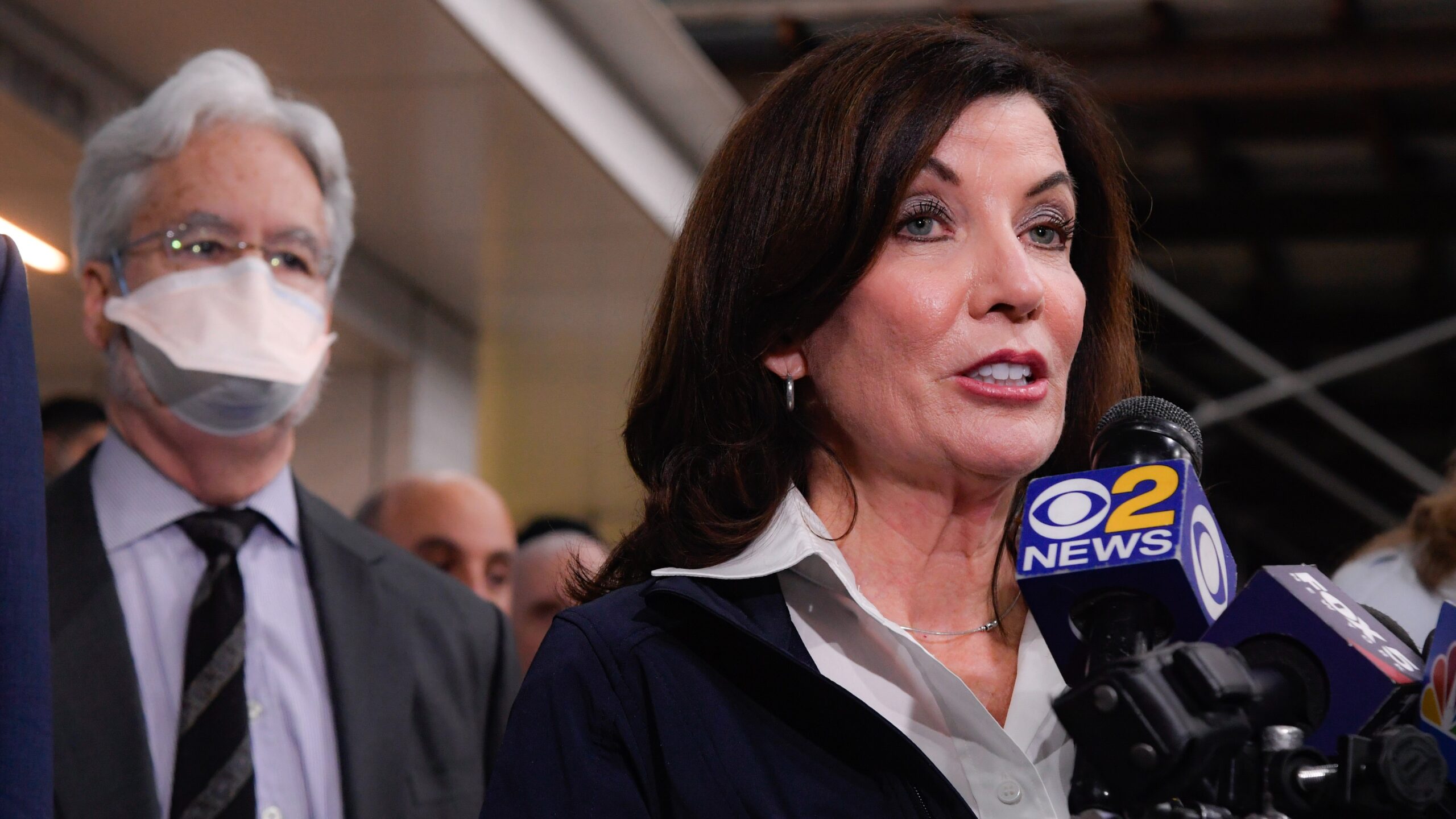
Gov. Kathy Hochul has staked out a clear line in New York’s budget fight, choosing to tax nicotine pouches like Zyn while refusing to raise income taxes on the wealthy. The clash has put her on a collision course with Assembly socialist Zohran Mamdani, who is demanding higher levies on top earners to close looming gaps in New York City’s finances. I see this as more than a skirmish over one product or one tax bracket, it is a test of what counts as progressive governance in a state that is both heavily unequal and heavily dependent on high earners.
At the center is a $260 billion spending plan that leans on targeted consumption taxes and a corporate levy extension instead of new millionaire surcharges. Hochul is betting that she can protect the state’s fiscal standing and its business climate while still claiming a public health win by going after nicotine pouches. Mamdani, backed by other left-leaning Democrats, is betting that voters are ready to ask more of the rich rather than of Zyn users.
Hochul’s $260 billion bet on stability over redistribution
Gov. Kathy Hochul has presented an executive budget of $260 billion that deliberately avoids raising personal income taxes on high earners. Instead, she is leaning on a three year extension of a corporate surcharge and a new levy on nicotine pouches to balance the books. Budget officials have framed this as a way to maintain services and investments without triggering an exodus of top taxpayers or employers, a concern that has grown as remote work makes relocation easier.
That corporate piece is not incidental. The plan extends a higher rate on large companies to help fund the $260B budget and pay down the state’s outstanding unemployment insurance debt. Budget director Blake Washington has warned that Businesses have increasingly gone to states that do not collect personal income taxes, and that reality is clearly shaping Hochul’s resistance to broader tax hikes. I read her approach as a classic centrist Democrat calculation, one that prioritizes keeping high earners and corporations in New York even if it frustrates the party’s left flank.
The Zyn tax as public health policy and political shield
Hochul’s most attention grabbing move is her push to tax ZYN and similar nicotine pouches at rates comparable to cigarettes. She has argued that these products are addictive and marketed in ways that appeal to younger users, so they should not enjoy a lighter tax treatment than combustible tobacco. In her budget rollout, Kathy Hochul tied the proposal to broader health goals, presenting the ZYN levy as part of a strategy to curb nicotine use rather than as a simple cash grab, even as she declined to pair it with higher income taxes on the wealthy.
The governor’s team has been explicit that this is meant to close a loophole in how the state treats nicotine. In one explanation of the plan, Kathy Hochul linked the new tax to funding priorities like a tuition freeze for CUNY and SUNY, effectively arguing that ZYN users should help underwrite public higher education. Another account from ALBANY described how the Governor folded the nicotine pouch tax into her broader budget plan, with the News10NBC Team highlighting it alongside other News, Traffic and Weather coverage. I see a dual purpose here: Hochul is using public health language to justify a politically safer revenue source at a moment when she is under pressure to ask more of the rich.
Mamdani’s push for taxing the rich, and a widening Democratic rift
On the other side of this fight, Zohran Mamdani has made clear he sees the absence of new taxes on the wealthy as a moral and fiscal failure. The Queens assemblymember has argued that New York City faces a serious budget shortfall and that higher levies on top earners and large corporations are the fairest way to close it. In one account of the brewing clash, Mamdani was described as ready to push Gov. Hochul on tax hikes as the city’s budget gap looms, while New York City Comptroller Brad Levine blamed the shortfall largely on the Adams administration, citing under budgeting of expenses under Mayor Eric Adams.
The political split is not just ideological, it is personal and strategic. In a separate report, Hannah Fierick detailed how Mayor Zohran Mamdani brushed off Gov. Hochul’s warnings about driving out wealth, pressing instead for a New York City tax hike on the rich right in an election year. Mamdani has reiterated his call to “ask New York City’s wealthiest and large corporations to pay more,” a line captured in Mamdani coverage that contrasted his stance with Hochul’s decision to spare millionaires and companies from the much feared hikes. I read this as a defining intra party argument over whether New York should lean into its progressive reputation or hedge against the risk of capital flight.
Who really pays: nicotine users, corporations, or the ultra rich?
When I look at the structure of Hochul’s plan, the distributional politics are hard to miss. The state is choosing to collect more from nicotine users and maintain a higher corporate surcharge, while leaving personal income tax rates on the wealthy untouched. One breakdown of the executive plan noted that Hochul presents a $260B executive budget without taxes on the rich even as Mamdani insists the city needs one to fix its finances. Another analysis of the statewide picture emphasized that New York has dodged a feared tax hike for millionaires and companies, even while the budget does include at least one new levy, and it is on nicotine pouches rather than on high earners, a contrast highlighted in New York City focused coverage.
The nicotine tax itself is projected to raise tens of millions of dollars, but it will fall most heavily on lower income and less educated adults. Public health data cited by the Hochul administration show that Smoking rates are highest among adults with less than a high school education and those with an annual household income of less than a certain threshold, and that is “really the thrust behind it,” according to budget director Blake Washington, who framed the policy as a way to reduce use among vulnerable groups. One local report noted that the administration projects $54 million in revenue from the tax, underscoring how much of the burden will be borne by nicotine users rather than by the ultra rich, a point laid out in detail in the Smoking focused coverage. To me, that raises a blunt question: is New York comfortable leaning on a regressive sin tax while leaving the state’s most affluent residents largely untouched?
Progressive branding vs centrist governance in an election year
The optics of all this matter because Democrats in New York have spent years branding the state as a progressive bulwark. Yet the concrete choices in this budget look more centrist than the rhetoric suggests. One account of the nicotine pouch proposal described how Kathy Hochul pushed a new New York State tax on ZYN and other nicotine products, and critics are fuming that she did not pair it with higher taxes on the rich. Another report on the broader clash framed it bluntly: Hochul defies Mamdani with a new budget featuring a tax on Zyn but not the rich, as Hochul argued otherwise and insisted her plan was both responsible and fair.
As I see it, this is the core tension that will define the coming legislative session. Hochul is trying to hold the center by protecting high earners and leaning on targeted taxes and corporate surcharges, while Mamdani and his allies push for a more aggressive redistribution that would ask more of the rich and less of nicotine users. The outcome will signal whether New York’s Democratic leadership is prepared to match its progressive branding with equally progressive tax policy, or whether the state will continue to balance its books by taxing products like Zyn while sparing the very people who have benefited most from its economy.
More From TheDailyOverview
*This article was researched with the help of AI, with human editors creating the final content.

Alex is the strategic mind behind The Daily Overview, guiding its mission to uncover the forces shaping modern wealth. With a background in market analysis and a track record of building digital-first businesses, he leads the publication with a focus on clarity, depth, and forward-looking insight. Alex oversees editorial direction, growth strategy, and the development of new content verticals that help readers identify opportunity in an ever-evolving financial landscape. His leadership emphasizes disciplined thinking, high standards, and a commitment to making sophisticated financial ideas accessible to a broad audience.

