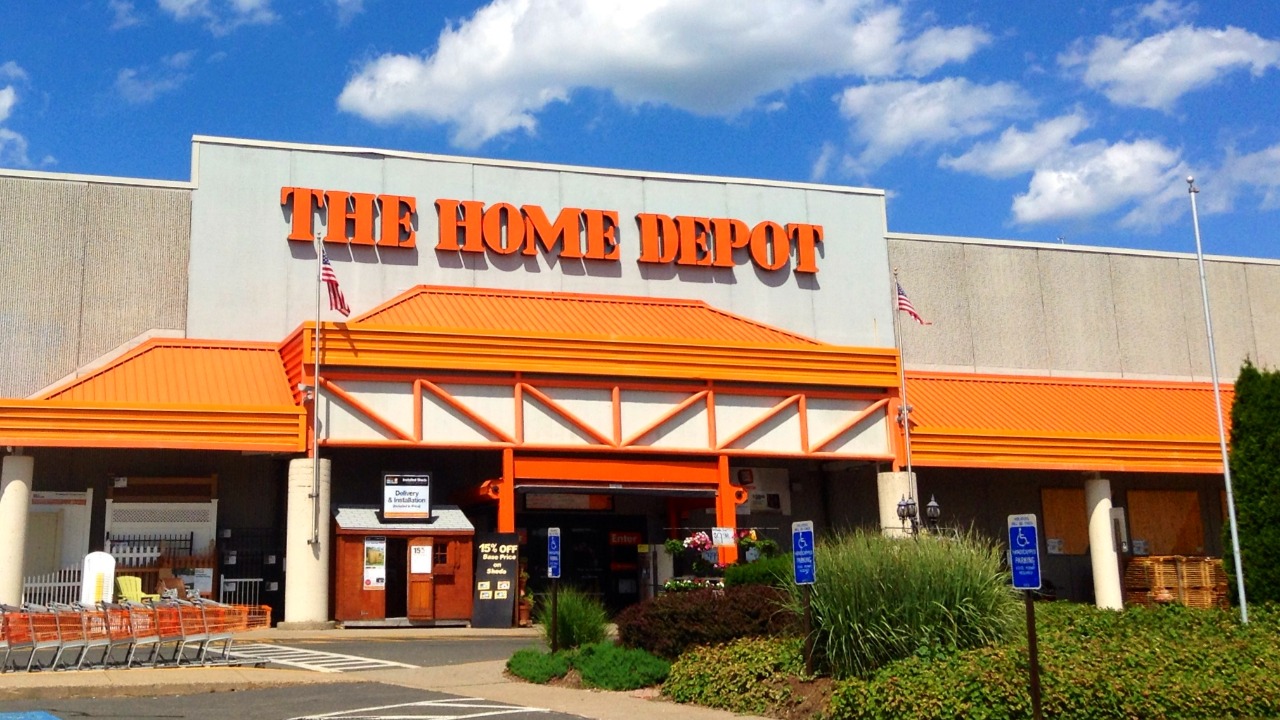
Home Depot is pointing to unseasonably calm weather and a sluggish housing market to explain why its latest quarter fell short, but the story does not end with the skies. The retailer’s own numbers, and its long history of invoking storms and seasons when sales disappoint, suggest deeper structural pressures that will not clear up with the next hurricane.
As the company trims its outlook and investors mark down the stock, I see a business caught between a high-rate housing freeze, fading pandemic tailwinds, and strategic choices that have left it heavily exposed to big-ticket projects that many households are now delaying.
Weather as scapegoat, or real headwind?
Home Depot executives are again leaning on the elements to explain why growth has stalled, arguing that fewer violent storms and milder conditions reduced demand for emergency repairs and seasonal projects. On Nov 17, 2025, the company framed its weaker third quarter as the product of “Weak Housing and Good Weather Get the Blame,” tying softer sales to both a sluggish property market and the absence of the kind of disruptive weather that usually drives traffic to its aisles for generators, tarps, and roofing supplies, a narrative reflected in reports that Home Depot Sales Are Down. Around the same time in Nov, management warned of “uncertainty” and cited fewer violent storms as one of three issues weighing on performance, reinforcing the idea that the company sees weather patterns as a central variable in its quarterly fortunes, as highlighted when Home Depot flagged another hit to profit expectations.
The emphasis on the skies is not new, and that history matters for how I interpret the latest explanation. Back on May 14, 2018, coverage of the company’s communications detailed a decades-long pattern of attributing shortfalls to storms, cold snaps, or heat waves, including a moment when Home Depot estimated that the company lost $100 m in sales during a harsh winter and separately pointed to $100 million in weather-related impact. When a retailer has been invoking the forecast for that long, I read the latest comments less as a fresh diagnosis and more as a familiar reflex, one that risks obscuring the more durable shifts in consumer behavior and housing dynamics now bearing down on the business.
Housing market chill hits the core business
Behind the weather talk sits a more fundamental drag: a housing market that has cooled under the weight of high mortgage rates and affordability constraints. On Nov 17, 2025, analysts noted that Home Depot’s latest earnings missed expectations and that the company trimmed its full-year profit outlook, explicitly linking the shortfall to a weaker backdrop for home sales and renovations, a connection underscored in Key Takeaways that tie Home Depot’s performance to the broader housing market. The logic is straightforward: when existing home sales slow and fewer people move, there are fewer kitchen overhauls, bathroom upgrades, and landscaping projects, and that hits the retailer’s high-margin categories first.
Management has effectively acknowledged this link by cutting both profit and sales expectations for the year, saying consumers are postponing home improvement projects and growing more cautious about big discretionary outlays. On Nov 17, 2025, the company lowered its guidance and described a “soft housing market” that is cutting into sales, a shift captured in reporting that Home Depot cut its profit and sales expectations as consumers delay projects. I see that as an admission that the core engine of demand, the churn of people buying, selling, and refinancing homes, is sputtering in ways that no change in the weather can fix.
Numbers that signal more than a passing storm
The financial details from the latest quarter reinforce the sense that Home Depot is grappling with more than a temporary squall. On Nov 17, 2025, the company reported that third-quarter net income decreased to $3.6 billion from $3.65 billion year over year, a modest decline on paper but a meaningful signal for a retailer that had grown accustomed to steady gains through the pandemic renovation boom, as reflected in coverage noting that Home Depot saw net income slip from $3.65 billion. Flat comparable sales and a dip in profit at this scale tell me that the company is no longer simply lapping unusually strong prior-year results; it is confronting a real plateau in demand.
Investors reacted quickly to that shift in trajectory. On Nov 17, 2025, Home Depot’s stock fell after the company cut its full-year outlook, with management again pointing to consumers putting off home improvement projects and a 1.3% decline in the third quarter, a move captured in reports that Home Depot stock falls after the guidance cut. When a retailer of this size trims its forecast and the market responds by marking down the shares, I read that as a verdict that the issues are not just cyclical noise but a sign of a tougher, more competitive landscape for big-box home improvement.
Consumer behavior is shifting under Home Depot’s feet
Even if the housing market were stronger, I see clear evidence that consumer behavior is evolving in ways that complicate Home Depot’s traditional playbook. The company has leaned heavily on big-ticket projects and professional contractors, a strategy that worked well when homeowners were flush with pandemic savings and cheap refinancing options, but that looks more fragile now that many households are facing higher borrowing costs and uncertain job prospects. On Nov 17, 2025, commentary on the company’s results described flat comps that still showed just enough activity to sustain the business, while also highlighting regional disparities and a patchwork of demand that mirrors the uneven U.S. housing market, a pattern captured in analysis of how Home Depot reflects the state of the housing market. That unevenness makes it harder for a national chain to rely on broad-based growth, especially when its footprint is so tightly tied to suburban and exurban development.
At the same time, the company is contending with a consumer who is more selective and more price sensitive than the one who flooded stores in 2020 and 2021. Reports on Nov 17, 2025, noted that Home Depot has suffered another blow to its profit expectations and that leadership is warning about “uncertainty” as three issues, including fewer violent storms, weigh on demand, a message that aligns with the idea that shoppers are pulling back on discretionary projects and focusing on essentials, as described when Home Depot flagged those headwinds. I interpret that caution as a sign that the company is still searching for the right balance between serving professionals and do-it-yourselfers at a time when both groups are recalibrating what they can afford to tackle.
A retailer at an inflection point, not just a bad-weather quarter
When I put the pieces together, the pattern looks less like a one-off quarter spoiled by calm skies and more like a retailer hitting an inflection point after years of extraordinary demand. On Nov 17, 2025, multiple accounts tied Home Depot’s weaker results to a combination of “Weak Housing and Good Weather Get the Blame,” a soft housing market, and consumers postponing projects, with the company responding by cutting its outlook and acknowledging that home improvement demand has cooled, as seen when Home Depot linked its sales decline to those forces and when Home Depot cut its profit and sales expectations. Add in the modest but telling drop in net income from $3.65 billion to $3.6 billion and the stock’s slide after the guidance cut, and it becomes clear that investors are no longer willing to accept weather as a sufficient explanation.
For a company that has, as of May 14, 2018, a documented history of citing storms and seasons when results disappoint, including the period when Home Depot estimated a $100 m hit and separately referenced $100 million in lost sales, the temptation to lean on the forecast is understandable. But as the housing market stays soft, regional disparities widen, and consumers grow more cautious, I see the real test for Home Depot not in whether the next storm season is more active, but in whether the company can adapt its model to a world where easy home equity, constant churn in homeownership, and pandemic-fueled renovation sprees are no longer guaranteed tailwinds.
More From TheDailyOverview
- Dave Ramsey says these two simple questions show whether you’re rich or poor
- Retired But Want To Work? Try These 18 Jobs for Seniors That Pay Weekly
- IRS raises capital gains thresholds for 2026 and what’s new
- 12 ways to make $5,000 fast that actually work

Grant Mercer covers market dynamics, business trends, and the economic forces driving growth across industries. His analysis connects macro movements with real-world implications for investors, entrepreneurs, and professionals. Through his work at The Daily Overview, Grant helps readers understand how markets function and where opportunities may emerge.

