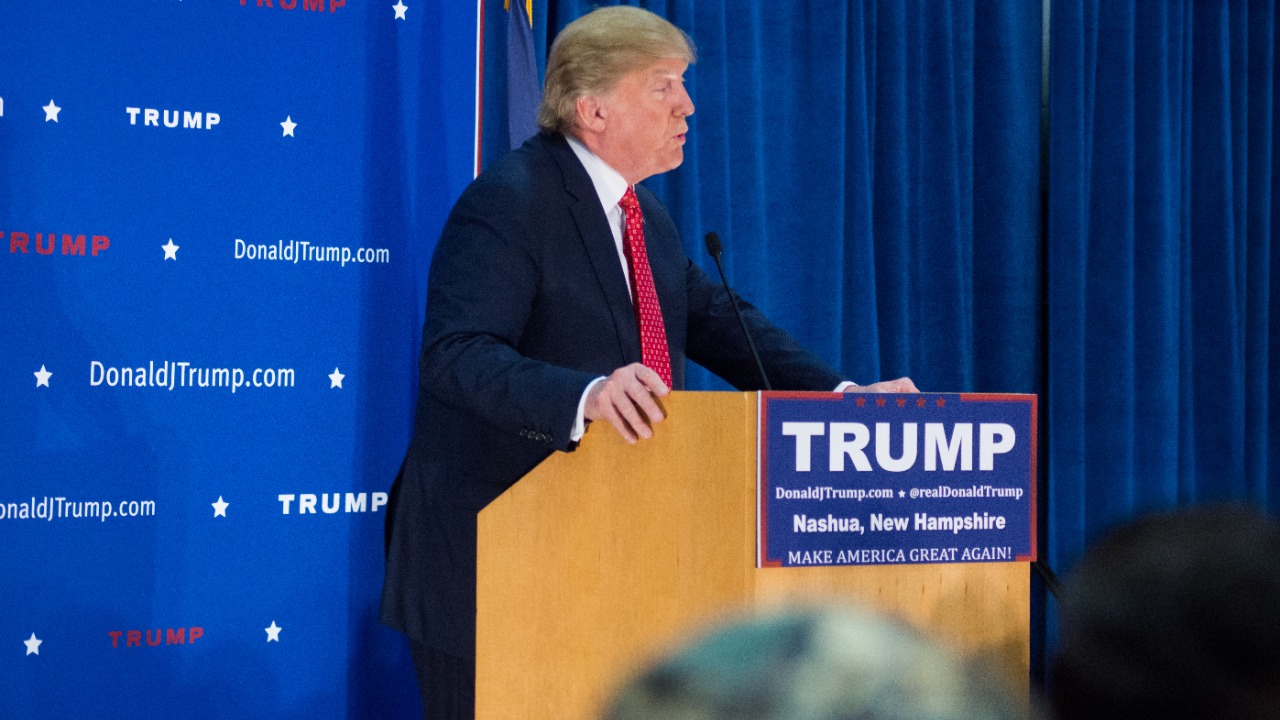
Federal agents in Houston spent months quietly tracking a pipeline of advanced artificial intelligence hardware slipping out of the United States and into China, only to see the political ground shift beneath them just as they moved in. While prosecutors detailed a $160 million smuggling scheme built on fake invoices and shell companies, President Donald Trump signaled a willingness to loosen the very export rules those traffickers had tried to evade. The collision of a major enforcement victory with a sudden policy rethink captures the tension at the heart of America’s AI rivalry with Beijing.
At one level, the Houston case shows how aggressively Washington is trying to choke off China’s access to cutting edge Nvidia chips that power everything from chatbots to military simulations. At another, Trump’s overtures to Beijing and talk of a “deal” on chip exports suggest that even the toughest criminal cases can be undercut by a White House eager to trade away leverage. I see the gap between courtroom and negotiating table as the real story, and it is widening fast.
Houston’s AI pipeline and the birth of “Operation Gatekeeper”
The smuggling network that investigators traced back to Houston was not a one-off side hustle, it was a structured logistics system built to move some of the world’s most advanced AI chips out of the country at scale. Federal prosecutors with the Southern District of Texas described a web of front companies, freight forwarders and overseas buyers that turned Houston into a hub for illicit exports to China. The operation, which investigators dubbed “Operation Gatekeeper,” was designed to bypass export controls that restrict the sale of high performance Nvidia GPUs to Chinese entities because of their potential military and surveillance uses.
Local reporting highlighted how a Houston based smuggling ring quietly funneled these chips across the western U.S. before they were packed into shipments that looked like routine computer hardware. According to The Brief summary from prosecutors, the network handled roughly $160 million in restricted AI components and generated about $50 million in overseas payments, figures that underscore how lucrative the trade had become. By the time agents moved in, Houston was no longer just an energy capital, it was a key node in a shadow supply chain feeding China’s AI ambitions.
Inside the $160 million Nvidia GPU scheme
At the center of the case were Nvidia’s most coveted accelerators, the H100 and H200 GPUs that cloud providers and research labs worldwide scramble to secure. Prosecutors said conspirators used straw purchasers and intermediaries to buy these chips from authorized distributors, then quietly rerouted them to China in defiance of export bans. One detailed complaint against a broker named Gong alleged that co conspirators obtained Nvidia GPUs through layers of shell entities and mislabeled the goods as generic computer parts to slip past customs.
Federal officials put the total value of the diverted hardware at $160 m, a figure that matches the $160 million estimate tied to Operation Gatekeeper. Charging documents described how Two Chinese nationals were detained in connection with the scheme, which relied on a mix of falsified export declarations and complex routing through third countries to obscure the final destination in China. For Nvidia, the case underscored how its most advanced chips had become both a commercial prize and a geopolitical flashpoint, with criminal networks stepping in wherever formal sales were blocked.
How the Department of Justice built its China-linked case
The Department of Justice framed the takedown as part of a broader campaign to enforce export controls on AI hardware and related technologies. In a detailed account of the investigation, the DOJ described dismantling a sophisticated, multi jurisdictional network that stretched from Texas to Asia. Officials said the case involved coordination across multiple U.S. Attorney’s Offices, Homeland Security investigators and the FBI, with agents tracing wire transfers, shipping records and email traffic to map out the flow of goods and money.
Separate summaries of the enforcement action emphasized that DOJ takes down operations like this not only to punish individual defendants but to send a signal to other would-be traffickers. Officials highlighted that the network was moving $160 worth of AI chips to China in violation of export rules, a shorthand reference to the $160 million valuation that has become a headline figure in the case. By charging executives, freight operators and overseas buyers together, the Department of Justice tried to show that every link in the chain, from Houston warehouses to Chinese data centers, is now within reach of U.S. law.
The Missouri City connection and the human faces of the ring
Behind the nine figure totals are individuals who treated export controls as a cost of doing business rather than a hard red line. One complaint described a Missouri City man who allegedly tried to smuggle $160M in AI chips to China through a Houston linked ring, using a patchwork of small shipments and falsified paperwork to avoid detection. The FBI said that this Missouri City contact was part of a broader network that moved hardware across the western U.S. before it disappeared into overseas freight, illustrating how suburban entrepreneurs and small firms can become key players in global technology diversion.
Another strand of the case focused on Texas men who allegedly orchestrated shipments and payments, including Alan Hao Hsu, who now faces sentencing and could receive up to 10 years in prison. Reporting described how His company and associates carefully calibrated every detail, from invoice descriptions to routing choices, to deceive regulators and banks. The portrait that emerges is not of rogue hackers but of business executives and logistics professionals who saw a chance to profit from China’s hunger for Nvidia chips and were willing to gamble that enforcement would not catch up.
What made these Nvidia GPUs so valuable to China
The hardware at the heart of the case is not interchangeable with ordinary graphics cards, it is the backbone of modern AI development. Nvidia’s H100 and H200 accelerators are optimized for training large language models and other compute intensive systems, and U.S. export rules treat them as dual use items with potential military applications. That is why the criminal complaint against Gong described how co conspirators disguised goods as generic computer parts, hoping customs officials would not recognize that these were restricted Nvidia GPUs rather than commodity hardware.
Technology analysts have noted that China’s access to such chips is constrained by U.S. export controls, which is why smuggling networks are willing to shoulder the risk of moving $160 million worth of inventory. A separate account of the case stressed that Executives at technology companies were charged with illegally shipping Nvidia GPUs worth $160 million to China, highlighting that these chips are seen as crucial for both AI research and potential military use. In that context, every diverted shipment is not just a lost sale for U.S. firms, it is a potential boost to China’s ability to train advanced models for intelligence analysis, cyber operations or autonomous weapons.
Trump’s export “review” and the market’s reaction
Even as prosecutors laid out the details of the Houston ring, financial markets were already trading on a different story: the possibility that President Trump might relax the very export rules that made smuggling necessary. Investors seized on reports that the administration was reviewing chip export restrictions to China, a move that sent Nvidia stock higher and sparked a rally in chipmakers. The prospect of expanded legal sales to Chinese customers, even if subject to a 25% fee to the government or other conditions, was enough to shift sentiment from enforcement risk to growth opportunity.
That market optimism collided awkwardly with the timing of the criminal charges. One account noted that The US announced charges for smuggling old Nvidia chips to China only hours before Trump gave the green light to a review of export rules, creating the impression that enforcement and policy were moving in opposite directions. From my perspective, that juxtaposition sends a confusing signal to both allies and adversaries: on one hand, the government is dismantling a China linked AI tech smuggling network, on the other, the president is publicly entertaining the idea of reopening the legal channel those traffickers were trying to recreate in the shadows.
“G2” bargaining and why Europe is nervous
Trump’s approach to chip exports fits into a broader pattern of what some analysts describe as “G2” bargaining, a vision of the world where Washington and Beijing cut big power deals that leave everyone else adjusting on the fly. European policymakers have watched this dynamic with growing unease, especially as they try to align with U.S. export controls while protecting their own technology sectors. A detailed brief on the evolving tech war noted that European firms know they cannot evade U.S. restrictions and that The EU’s earlier attempt to shield its companies from American sanctions pressure largely failed.
In that context, the expectation that President Trump might use chip exports as a bargaining chip with an emboldened China is unsettling for allies who have already paid economic costs to align with Washington. The same analysis warned that Trump’s G2 style could embolden Beijing by signaling that tough measures are negotiable and perhaps only temporarily in place. When I look at the Houston case through that lens, it is not just a domestic law enforcement story, it is a test of whether the United States can maintain a coherent front with partners who are watching to see if Washington trades away hard won leverage for short term concessions.
Congress pushes back with new AI chip restrictions
While the White House flirts with flexibility, some in Congress are moving in the opposite direction, seeking to harden the legal framework around AI exports to China. Representative Gregory Meeks, the Ranking Member of the House Foreign Affairs Comm, introduced legislation in Washington that would explicitly block sales of advanced AI chips to Chinese entities across the AI technology stack. The proposal, announced by Representative Gregory Meeks, reflects a view on Capitol Hill that export controls need to be codified and expanded rather than left to the shifting preferences of any single administration.
From my vantage point, the Meeks bill is an attempt to close the gap between enforcement and policy that the Houston case exposed. If Congress locks in strict prohibitions on advanced AI chip sales to China, then smuggling networks will still exist, but they will not be able to count on a future political deal to legitimize their business model. The legislation also signals to allies that there is a durable bipartisan consensus around limiting China’s access to high end AI hardware, even if President Trump’s rhetoric sometimes suggests a willingness to bargain those limits away.
What the Houston bust reveals about the next phase of the tech war
When I put all of these threads together, the Houston bust looks less like an isolated criminal case and more like a preview of the next phase of the U.S. China tech war. U.S. authorities have already shown that they can dismantle a smuggling ring moving $160m worth of AI chips to China, and that they are willing to pursue Executives, freight operators and overseas buyers alike. At the same time, the market’s reaction to Trump’s export review and the anxiety in Europe about G2 bargaining suggest that enforcement victories will not matter if the strategic message from Washington is that everything is negotiable.
The Department of Justice can keep bringing cases, and the FBI can keep breaking rings from Houston to Missouri City, but the real test is whether U.S. policy toward China on AI remains firm enough that smugglers and foreign governments believe the rules will stick. If Trump continues to signal that he is open to cutting deals on chip exports, Beijing will have every incentive to wait out the current wave of prosecutions while networks like Operation Gatekeeper regroup. The stakes are not just about who sells more Nvidia GPUs, they are about whether the United States can align its courts, its Congress and its commander in chief around a coherent strategy for the age of artificial intelligence.
More From TheDailyOverview

Grant Mercer covers market dynamics, business trends, and the economic forces driving growth across industries. His analysis connects macro movements with real-world implications for investors, entrepreneurs, and professionals. Through his work at The Daily Overview, Grant helps readers understand how markets function and where opportunities may emerge.