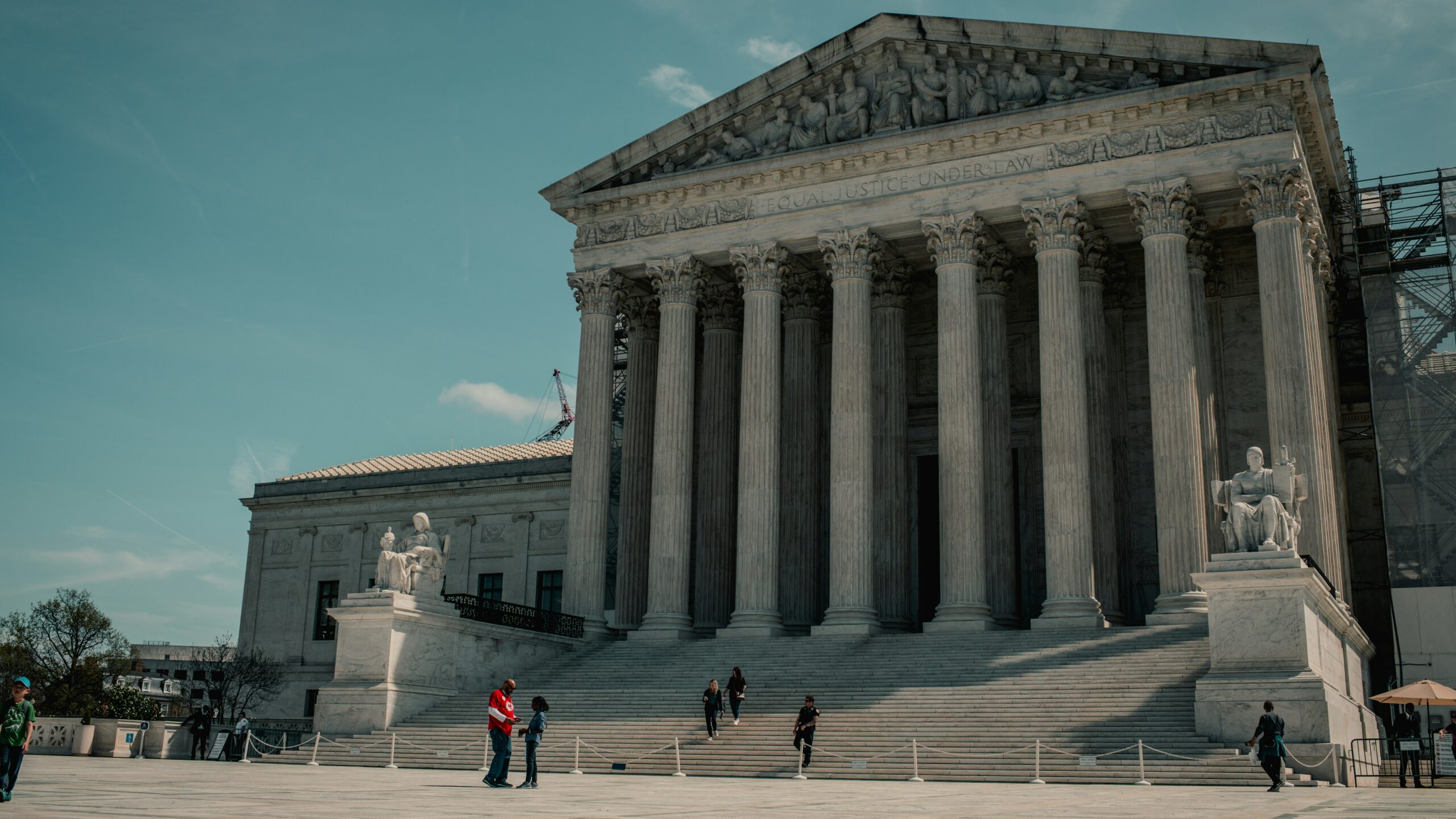
The Supreme Court may rule as soon as this Friday on whether President Trump’s sweeping global tariffs, imposed under emergency powers, can legally stand. A lower court has already declared the duties an illegal use of executive authority, yet left them in place while the case moves through appeals. The outcome will determine whether American consumers and businesses continue absorbing sharply higher import costs or get relief from a policy that has already tripled tariff payments for midsize companies.
What the Court Is Deciding and Why It Matters Now
The legal fight centers on whether the president can use the International Emergency Economic Powers Act, or IEEPA, to impose broad tariffs on imports from dozens of countries. A federal court found that Trump’s tariffs represent an illegal use of emergency power, concluding that IEEPA was never designed to regulate trade policy on this scale. The court, however, chose not to block the duties while the administration appeals, meaning importers and consumers are still paying them. That procedural limbo is what makes the Supreme Court’s next move so consequential. A ruling could either validate the executive branch’s authority to set tariffs unilaterally or force the administration to seek congressional approval.
According to a media advisory from George Washington University, the justices may act on the case as early as February 19, 2026. The stakes extend well beyond trade law. If the Court upholds the tariffs, it would confirm that a sitting president can treat trade deficits as a national emergency and bypass Congress on import duties. If it strikes them down, the administration would lose its primary legal mechanism for the reciprocal tariff program it has built over the past year, and future presidents could find it harder to invoke emergency powers in economic disputes with trading partners.
The Emergency Powers Argument Behind the Tariffs
The administration’s legal foundation rests on a September 2025 executive order titled “Modifying the Scope of Reciprocal Tariffs and Establishing Procedures for Implementing Trade and Security Agreements.” That order, published on the official White House site, frames persistent U.S. trade deficits as an “unusual and extraordinary threat” to the nation, the exact language IEEPA requires to trigger emergency economic powers. The order adjusted tariff rates on countries including China, Vietnam, and Taiwan, and created procedures for bilateral trade agreements that could reduce or eliminate duties for nations that agree to new terms Washington deems reciprocal.
Official trade data lends some factual weight to the deficit concern, even if critics dispute whether deficits qualify as an emergency. The U.S. Bureau of Economic Analysis reported that the 2025 annual goods deficit remained large, with country-level breakdowns showing significant imbalances with major Asian exporters. But framing a trade deficit as a security emergency is a dramatic expansion of presidential power. Legal scholars opposing the tariffs argue that Congress, not the White House, holds the constitutional authority to regulate commerce with foreign nations, and that IEEPA was designed for financial sanctions and asset freezes aimed at specific actors, not for rewriting the tariff schedule across broad swaths of the global economy.
How Everyday Shoppers Already Feel the Squeeze
Beyond the legal abstractions, the tariffs have produced measurable pain for American businesses and, by extension, their customers. A JPMorgan Chase Institute study found that tariffs paid by midsize U.S. companies tripled over the past year, underscoring how quickly the new duties have bitten into operating budgets. Midsize firms, which often lack the supply chain flexibility of large multinationals, have been forced to absorb or pass along those costs. When a regional retailer or manufacturer sees its import duties jump that steeply, the math eventually reaches the checkout counter through higher shelf prices, reduced product variety, or both.
A separate layer of cost pressure arrived over the summer, when a presidential action suspended duty-free de minimis treatment for low-value imports from all countries. Previously, packages valued below a set threshold entered the U.S. without duties, a provision that powered the business models of cross-border e-commerce platforms shipping directly to American consumers. The suspension, authorized under 19 U.S.C. 1321(a)(2)(C), took effect once customs systems were in place to collect duties on those shipments. For shoppers who relied on inexpensive direct-from-factory goods, the change meant immediate price increases on orders that had previously slipped through duty-free, while small online sellers faced new paperwork and uncertainty over how customers would react to higher landed costs.
Corporate America Scrambles to Adjust
The tariff regime has forced companies across sectors to rethink where they source goods and how they price them. Reporting from the Financial Times describes how corporate import costs have spiraled as firms face duties on components and finished products alike. Some manufacturers have begun shifting procurement away from heavily tariffed countries, but building new supplier relationships takes time and capital. In the interim, businesses face a difficult choice: eat the added cost and accept thinner margins, or raise prices and risk losing customers to competitors who found workarounds faster or who rely more heavily on domestic inputs.
Industry-level statistics help show where the pressure is most acute. The Bureau of Economic Analysis industry factsheets highlight sectors deeply integrated into global supply chains, including electronics, apparel, and auto parts, as especially exposed to tariff shocks. Many of these industries depend on complex networks of overseas suppliers for intermediate goods, making rapid reshoring unrealistic. The irony is that the tariffs were designed to shrink the trade deficit and encourage domestic production, yet in the short term they have raised costs for U.S. manufacturers that still rely on imported inputs, potentially undermining their competitiveness at home and abroad while they race to reconfigure sourcing strategies.
What a Supreme Court Ruling Could Mean Next
However the Supreme Court rules, the decision will reverberate across boardrooms, households, and foreign capitals. Upholding the tariffs would effectively endorse the idea that presidents can invoke emergency economic powers to reshape trade flows without fresh legislation, encouraging future administrations of either party to treat economic imbalances as national security threats. Companies would then have to assume that sudden, sweeping tariff changes could become a recurring feature of U.S. trade policy, embedding geopolitical risk into long-term investment and sourcing decisions. Allies and rivals alike would also need to recalibrate their expectations when negotiating with Washington, knowing that a White House dissatisfied with trade outcomes could escalate unilaterally.
Striking the tariffs down, by contrast, would curtail the use of IEEPA as a catch-all tool for trade disputes and push tariff setting back toward Congress, where coalition-building and legislative compromise are slower but more predictable. For businesses and consumers, that could mean greater stability in the rules governing cross-border commerce, even if it also limits the administration’s leverage in extracting concessions from trading partners. In the near term, a ruling against the tariffs could deliver direct relief in the form of lower duties and, over time, somewhat lower prices, though how quickly those savings reach store shelves would depend on how fast companies renegotiate contracts and unwind the hedges they put in place to survive a year of emergency-driven trade policy.
More From The Daily Overview
*This article was researched with the help of AI, with human editors creating the final content.

Grant Mercer covers market dynamics, business trends, and the economic forces driving growth across industries. His analysis connects macro movements with real-world implications for investors, entrepreneurs, and professionals. Through his work at The Daily Overview, Grant helps readers understand how markets function and where opportunities may emerge.

