
In the world of billionaires, Jeff Bezos stands out not only for his wealth but also for the staggering speed at which he accumulates it. Examining how quickly Bezos earns the equivalent of an average person’s yearly salary offers insights into his wealth accumulation and its broader implications.
Understanding Jeff Bezos’s Wealth Accumulation

Jeff Bezos’s net worth is a testament to the vast financial empire he has built. As the founder of Amazon, his primary source of wealth stems from the company’s massive success. As of recent estimates, Bezos’s net worth is in the hundreds of billions, positioning him among the richest individuals on the planet. While Amazon remains the cornerstone of his wealth, Bezos has diversified his income sources through strategic investments in various sectors.
Amazon’s role in Bezos’s financial success cannot be understated. The company, which started as an online bookstore, has grown into a global e-commerce giant, diversifying into cloud computing, artificial intelligence, and more. Bezos has also made significant investments in other areas, such as space exploration through Blue Origin and media with the purchase of The Washington Post. When compared to other billionaires, Bezos’s approach to wealth accumulation is marked by a combination of innovation and strategic expansion, setting him apart from his peers.
Calculating Your Yearly Salary in Bezos Time

To grasp how quickly Jeff Bezos earns what most of us would consider a respectable yearly salary, we need to break down the math. By calculating his earnings on a per-second basis, one can see the staggering speed of his wealth accumulation. This calculation can be eye-opening when juxtaposed with the average annual salaries of most workers. For instance, if we consider the average income in the United States, Bezos’s earnings dwarf these figures within mere seconds.
According to some estimates, Bezos’s income can be calculated to the extent that he earns thousands of dollars in a matter of seconds. This real-time earnings capability means that in the time it takes to read this sentence, Bezos could have already surpassed an average person’s paycheck for the year. Such comparisons highlight the vast disparity in income levels between the ultra-rich and the general population.
The Mechanics Behind Rapid Wealth Growth

Amazon’s market dominance plays a significant role in Bezos’s wealth growth. The company’s ability to innovate and dominate various industries has resulted in substantial stock price increases, directly impacting Bezos’s net worth. The stock market’s influence on his wealth is profound, as fluctuations can lead to significant changes in his financial standing. In fact, during market spikes, Bezos’s wealth can increase by billions in a single day.
Beyond Amazon, Bezos’s wealth is bolstered by strategic investments in other ventures. His involvement in space exploration with Blue Origin and his acquisition of The Washington Post are part of a broader strategy to diversify his income sources. These ventures not only contribute to his financial growth but also reinforce his influence in different industries.
Economic Implications of Extreme Wealth Disparity

The wealth gap between billionaires like Bezos and average earners raises important questions about economic inequality. The concentration of wealth in the hands of a few individuals can have profound effects on economic mobility and social classes. As income disparity grows, the ability for individuals to rise within the economic system becomes increasingly challenging.
Policy considerations often focus on how to address this wealth disparity. Debates on taxation and wealth redistribution have gained momentum as society grapples with the implications of extreme wealth concentration. These discussions are crucial in determining how to create a more equitable economic landscape for all.
Public Perception and Social Responsibility

Public reactions to extreme wealth can vary, with some viewing it as a reflection of success and innovation, while others see it as a symbol of economic imbalance. Jeff Bezos’s wealth has made him a subject of public scrutiny, with expectations for him to use his resources for philanthropic purposes. His contributions to charitable causes are often weighed against the scale of his fortune, leading to discussions about the responsibilities of the ultra-wealthy in addressing global issues.
The role of billionaires in corporate responsibility is also a topic of interest. As influential figures, they have the capacity to drive change and address pressing global challenges. Society often looks to them to leverage their resources and influence for the greater good.
Reflection on Wealth and Time
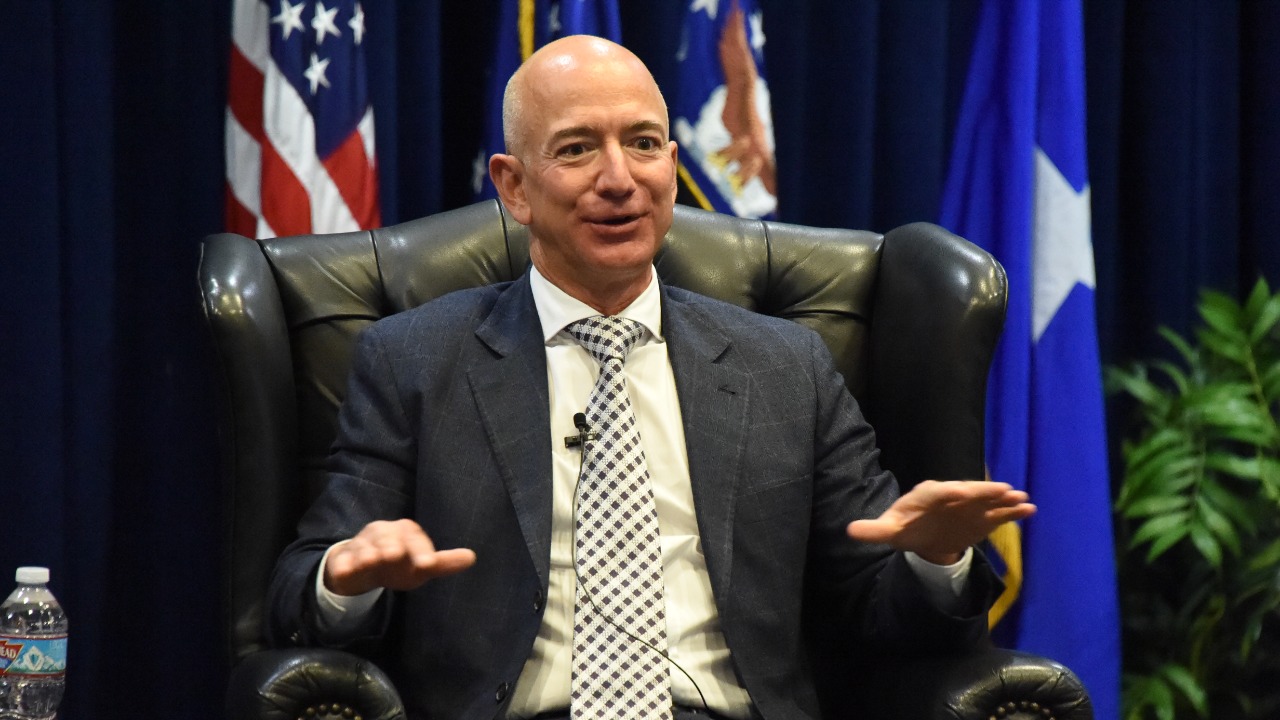
Reflecting on Bezos’s earnings prompts individuals to consider their own perspectives on wealth and time. The notion of time as a currency becomes apparent when considering the speed at which wealth can be accumulated by those with vast resources. This philosophical aspect challenges traditional views on wealth and encourages a broader understanding of economic power dynamics.
The future of wealth accumulation may witness shifts in economic power, as emerging technologies and industries create new avenues for financial growth. Understanding these trends is crucial for navigating the evolving landscape of wealth and its distribution in society.

Grant Mercer covers market dynamics, business trends, and the economic forces driving growth across industries. His analysis connects macro movements with real-world implications for investors, entrepreneurs, and professionals. Through his work at The Daily Overview, Grant helps readers understand how markets function and where opportunities may emerge.

