Greenland is often framed as a remote ice sheet on the edge of the map, but beneath that ice lies a resource story that could reshape global power. From rare earth elements to oil and gas, the island’s subsurface wealth has been valued in the trillions of dollars, a figure that helps explain why Washington, Beijing and Brussels are suddenly paying close attention. I want to unpack how much of that value is real, how much is speculative, and why unlocking it will be far harder than the headline numbers suggest.
On paper, Greenland looks like one of the richest pieces of real estate on Earth, yet its surface economy is tiny and fragile. The tension between those two realities, and the environmental risks of bridging them, will determine whether the island’s mineral and energy endowment becomes a blessing, a geopolitical flashpoint, or both.
Greenland’s tiny economy versus trillion‑dollar hype
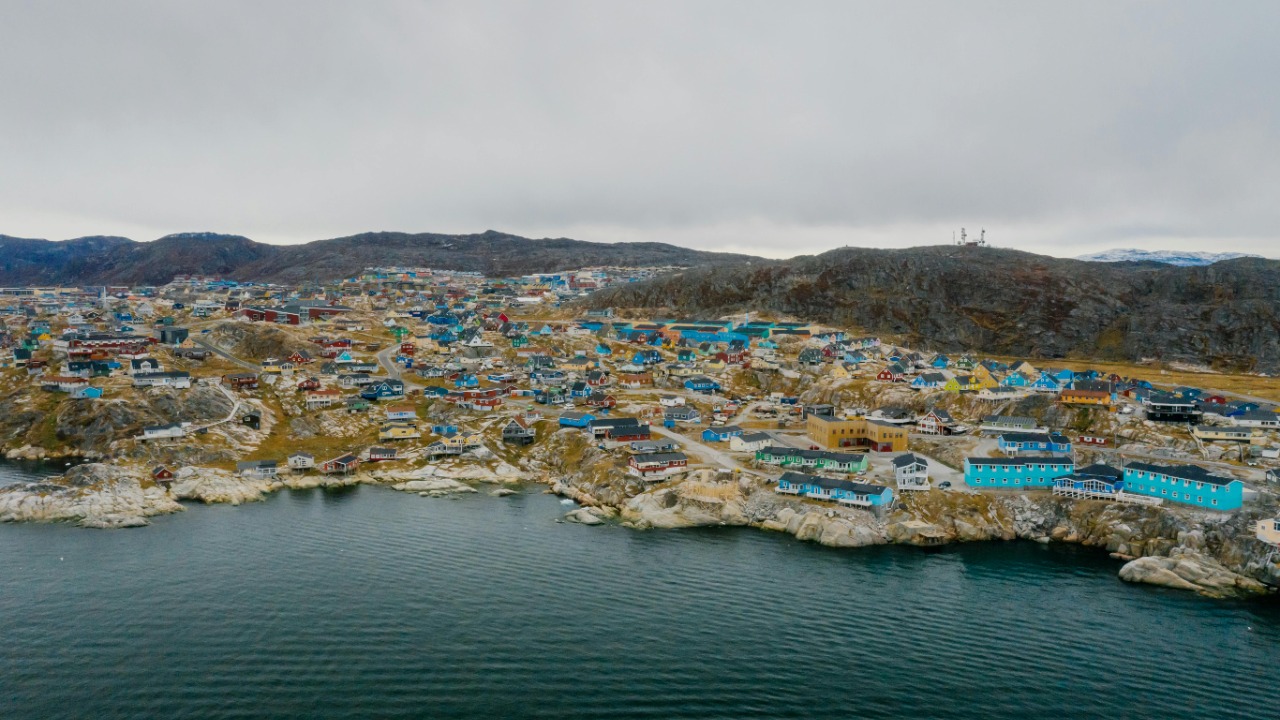
To understand the scale of the disconnect, I start with Greenland’s current economic base. Despite its vast landmass, the territory has a population of only 57,000, and its output is dominated by fishing, public services and Danish transfers rather than heavy industry. Analysts who have looked at how large (or small) the economy is note that public spending and subsidies account for roughly 20 percent of its GDP, which underlines how dependent daily life remains on external support rather than on the resources under the ice. When I compare that modest base to the rhetoric about Greenland as a future resource superpower, the gap is striking.
The Greenlandic authorities themselves acknowledge that the economy is slowing, with modest growth and serious challenges for public finances. A recent assessment of The Greenlandic economy points to structural pressures from an aging population, high public costs and limited private‑sector diversification. That means any large‑scale mining or energy development is not just a commercial bet, it is also seen by local leaders as a potential lifeline to stabilize budgets and reduce reliance on Denmark. The risk, as I see it, is that this fiscal pressure can make eye‑watering resource valuations look irresistible, even when the underlying projects are technically and financially precarious.
Rare earths and critical minerals under the ice
The most immediate driver of outside interest is not oil, but rare earth elements and other critical minerals. Greenland is home to substantial deposits of rare earths, uranium and other metals that are essential for electric vehicles, wind turbines and advanced electronics. One industry analysis of Greenland Potential as a New Source of Rare Earth Minerals argues that as demand for these critical materials rises, the island could become a key alternative to existing suppliers. That is particularly attractive to Western governments that want to reduce their dependence on China for the building blocks of the energy transition.
Geologists have gone further, suggesting that the island’s sub‑ice reserves of specific rare earths could be globally significant. One scientific overview notes that, critically among REEs, Greenland is predicted to hold sufficient sub‑ice reserves of dysprosium and neodymium to supply a large share of future demand, which matters because these elements are hard to substitute in high‑performance magnets. That helps explain why the White House has started to frame Greenland’s critical minerals as a way to break China’s dominance in the supply chain. In my view, that strategic framing is what turns a remote mining play into a front‑line issue in great‑power competition.
Oil, gas and the trillion‑dollar question
Beyond minerals, the most eye‑catching numbers relate to hydrocarbons. Estimates from the US Geological Survey suggest that northeast Greenland could hold around 31 billion barrels of oil equivalent when both oil and gas are counted. Those Estimates are based on Geological Survey methods that combine seismic data, analog fields and probabilistic modeling, and they are large enough that, at prevailing prices, the notional in‑ground value runs into the trillions of dollars. I have to stress, though, that “in‑ground” is not the same as “in‑the‑bank”, particularly in one of the harshest offshore environments on the planet.
Geologists point out that the scale of Greenland’s hydrocarbon potential and mineral wealth has already stimulated extensive research by Denmark and the wider scientific community. Yet, unlike the North Sea, there are no proven crude oil reserves in production, and previous exploration rounds have not yielded commercial fields. As the climate warms, some coastal areas are becoming more accessible, but at the same time, Greenland’s icebergs can threaten oil rigs, and shifting glaciers leave waters too shallow for ship traffic. From an investor’s perspective, that combination of high theoretical volumes and extreme operational risk is exactly why so much of the oil story remains on paper.
Trump, valuations and the cost of digging it all up
When President Donald Trump revived the idea of acquiring Greenland, his advisers repeatedly pointed to the island’s mineral and energy wealth as justification. Internal discussions of a large US role in mining have been met with skepticism from industry experts, who warn that any serious plan would require “billions upon billions” of dollars in capital over decades before turning a profit. Analysts who have examined Trump Greenland mining proposals describe a shaky economic case, where the strategic logic may be stronger than the near‑term financial returns. From my vantage point, that is a classic resource‑frontier dilemma: the first movers absorb huge costs to prove up reserves that later entrants can exploit more cheaply.
To put a price tag on the territory itself, one influential study by AAF tried to estimate what Greenland might cost if it were hypothetically for sale. The researchers compared the island’s strategic location and resource potential with similarly sized economies, then adjusted for per capita income and land area to arrive at a valuation in the trillions of dollars. Their work on Greenland’s potential value is not a market price, but it captures how policymakers in Washington and Copenhagen think about the island as a strategic asset. Earlier Prior Greenland bids, including historic US offers to Denmark, were tiny by comparison, which underlines how much the perceived worth has risen as rare earths and Arctic shipping lanes have moved up the global agenda. A separate look at Prior Greenland bids also notes that some mining projects were halted in 2021, citing environmental concerns, a reminder that local politics can derail even well‑financed plans.
Why most of the wealth is still untapped
For all the talk of trillions, commercial extraction in Greenland remains limited. Despite Greenland’s vast untapped reserves, commercial extraction remains limited so far, and harsh operating conditions, high costs and low mineral concentrations have deterred large‑scale development. One miner that has courted Western investors stresses that Despite Greenland interest from the US and EU, the economics of building mines, ports and processing plants in a landscape of shrub and barren rock are punishing. When I look at the project pipelines, what stands out is how many are still in exploration or permitting, rather than construction.
At the same time, global attention has turned Greenland into a geopolitical search term in its own right, with investors, governments and activists all probing Greenland’s future. The White House has floated ideas for direct investment in mining ventures, arguing that partnering with local firms on The White House backed projects could secure supplies of key metals while supporting Greenlandic self‑rule and reducing reliance on China. Yet environmental groups and many residents are wary of turning fragile fjords and hunting grounds into open‑pit mines or offshore drilling zones. As the climate warms and As the As the glaciers accelerate, the paradox deepens: melting ice makes some resources more accessible, but it also magnifies the physical and ethical risks of exploiting them.
More From The Daily Overview

Grant Mercer covers market dynamics, business trends, and the economic forces driving growth across industries. His analysis connects macro movements with real-world implications for investors, entrepreneurs, and professionals. Through his work at The Daily Overview, Grant helps readers understand how markets function and where opportunities may emerge.

