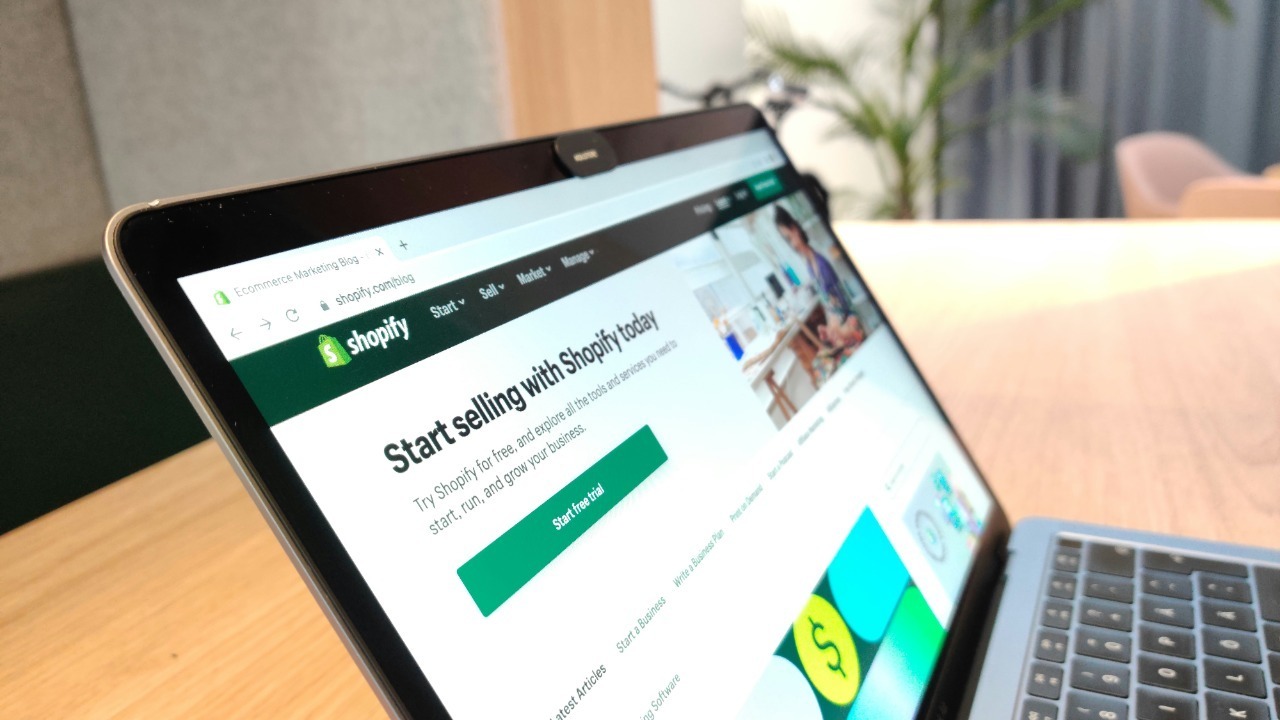
Agentic AI is moving from hype to infrastructure, and commerce is where the shift is most visible. By aligning Google’s search-scale reach with Shopify’s merchant network, the new Universal Commerce Protocol promises to let software agents shop, compare, and check out across the open web as easily as a human in a single app. If it works, the partnership could reset how power is distributed between platforms, brands, and the long tail of online retailers.
Instead of isolated “buy” buttons and walled-garden carts, the Google and Shopify tie-up is aiming for a fabric that connects discovery, decision, and payment into one continuous, machine-readable flow. I see that as the real revolution: not just smarter recommendations, but autonomous agents that can act on a shopper’s intent anywhere, while merchants keep control of their products, prices, and data.
From search results to shopping agents
Google is treating agentic commerce as a core bet, not a side experiment. The company has introduced the Universal Commerce Protocol, or UCP, as an open-source standard that defines how AI systems, retailers, and payment providers talk to each other across the entire shopping journey, from discovery to fulfillment. In technical terms, UCP gives agents a common language to understand product data, inventory, pricing, and order status, which is why Google describes the Universal Commerce Protocol as the backbone for the next generation of AI-driven retail.
On top of that foundation, Google is rolling out tools that turn its surfaces into active shopping agents rather than passive ad slots. The company has detailed how How It Works in UCP terms: AI agents can compare offers, assemble multi-step tasks like back-to-school lists, and execute purchases with payment options that include existing processors, with PayPal integration flagged as coming soon. In parallel, Google is positioning its new AI-powered shopping tool so that agents can buy from ecosystems like Shopify and Walmart while operating transparently and within clear rules, a point underscored by guidance that But to successfully deliver for customers, these agents must operate transparently and respect retailer policies.
Shopify’s catalog as the open web’s product spine
Shopify is meeting Google’s protocol push with its own structural shift, turning its merchant data into infrastructure for the wider web. The company has committed to opening its Shopify Catalog and core infrastructure so that brands using other platforms can still plug into its product graph, enabling richer discovery, cross-merchant pricing comparisons, and more consistent inventory visibility. By exposing the Shopify Catalog and related services, Shopify is effectively inviting Google’s agents, and others, to treat its ecosystem as a canonical source of product truth.
That move builds on Shopify’s broader momentum as a destination for merchants migrating from rivals and looking for more flexible AI tooling. Guidance for a BigCommerce to Shopify Migration notes that this upward trend indicates that Shopify is on the verge of reshaping the e-commerce market, which matters because agentic systems are only as good as the data they can reach. When Shopify also backs an open standard for checkout that is payment-processor agnostic and supports multiple technical approaches, it signals that the company wants its merchants’ products to be purchasable inside any supported AI commerce channel, not just on Shopify storefronts, a direction it has outlined as How merchants will apply the Universal Commerce Protocol.
Inside the Universal Commerce Protocol
At the heart of the tie-up is UCP itself, which Google describes as an open-source protocol designed to standardize how AI agents, retailers, and payment providers exchange information. In practical terms, UCP defines schemas for offers, carts, identity, and fulfillment so that an agent can move from a product recommendation in a chat interface to a completed order with minimal custom integration work. Google’s own explanation of What the Universal Commerce Protocol is emphasizes that it is meant to create a standardized system for AI-powered shopping, fostering a more personalized experience while keeping the underlying rules open to the industry.
Crucially, UCP is not a solo project. It has been Developed in collaboration with commerce players including Shopify, Etsy, Wayfair, Target, and Walmart, which means the protocol is being shaped by marketplaces, big-box retailers, and independent merchant platforms at the same time. That breadth matters because it increases the odds that agents built on UCP can reach inventory from DevelopedUniversal Commerce Protocol as the mechanism that lets agents perform multi-step tasks on behalf of users.
Business Agents, Direct Offers, and the new sales stack
For merchants, the Google-Shopify alignment is not just about standards, it is about new AI-native tools that sit where sales associates and performance marketers used to operate. Google has introduced a Business Agent feature that it describes as a virtual sales associate for merchants, capable of handling product questions, guiding shoppers through options, and even managing post-purchase support across channels. Reporting on this new commerce framework notes that On the merchant side, Google is also lining up integrations with payment providers such as Stripe and Visa, which makes it easier for Business Agents to close sales without forcing shoppers into unfamiliar flows.
On the marketing side, Google is pairing these agents with new campaign primitives that are built for machine decision-making rather than manual bid tweaks. With Direct Offers, retailers can define the promotions they want to run in their campaign settings, then let Google’s AI decide when and where to surface those offers to maximize relevance and conversion. The company has framed With Direct Offers as a way to reach the next generation of shoppers who expect personalized deals in real time, not static coupon codes. For SEO and content teams, the shift is equally significant, as Google’s rollout of agentic commerce tools is already prompting analysis of what these changes mean for search visibility and how brands should adapt their Google strategies when AI agents, rather than humans, are the primary audience for product pages.
Democratizing agentic commerce beyond the giants
The most important question is who benefits from this new infrastructure, and early signals suggest the answer is not limited to the largest retailers. Analysts of the UCP rollout argue that Determinism is the disease in legacy advertising, where fixed funnels and rigid attribution models favored incumbents with the biggest budgets. In their view, the combination of open protocols and agentic AI could loosen that grip by letting smaller brands compete on relevance and service quality inside agent-driven experiences, a thesis captured in the claim that Determinism is what this new architecture is trying to cure. The same analysis stresses that Outside media still matters, but not for the reasons most marketers think, because media in an agentic world is less about persuasion and more about feeding signals into systems that already know what a shopper wants.
That logic lines up with a broader trend in retail technology, where Agent Commerce Protocols are described as the next phase of transformation connecting conversational, social, and quick-commerce platforms, effectively blurring the lines between engagement and transaction. As these protocols mature, they promise to give retailers more operational agility, letting them respond to demand spikes or supply shocks in near real time through connected agents, a dynamic highlighted in discussions of how Agent Commerce Protocols will reshape retail operations. At the same time, the democratization of AI is accelerating, with tools that once required enterprise budgets now available as plugins or APIs, a shift captured in the observation that the trend is democratization of AI, where capabilities that used to be reserved for big-budget retailers are now accessible as an API that fosters innovation at the long tail of e-commerce.
A new balance of power in online retail
For all the technical detail, the Google and Shopify partnership is ultimately about reshaping who controls demand and data in online retail. One analysis notes that Google is making a key push into AI-powered shopping with UCP, raising explicit questions about Amazon’s retail dominance as agents gain the ability to orchestrate multi-step tasks across merchants like Target, Shopify, and Etsy. By positioning Google and Shopify, alongside Target and Etsy, as core collaborators in UCP, the effort signals a coalition of non-Amazon players trying to ensure that the next era of commerce is not locked inside a single marketplace.
At the same time, Google and Shopify Introduce Universal Commerce Protocol for Agentic Commerce as a joint initiative, which underscores that neither company wants to own the standard outright. The framing that Google and Shopify together, and that it is meant to ensure products can be discovered and purchased in AI-powered environments, points to a shared interest in keeping the web open enough for agents to roam. If that vision holds, the agentic commerce revolution will not just be about convenience for shoppers, it will be about a new balance of power where protocols, not platforms, decide how value flows between search, social, and storefronts.
More From The Daily Overview

Grant Mercer covers market dynamics, business trends, and the economic forces driving growth across industries. His analysis connects macro movements with real-world implications for investors, entrepreneurs, and professionals. Through his work at The Daily Overview, Grant helps readers understand how markets function and where opportunities may emerge.

