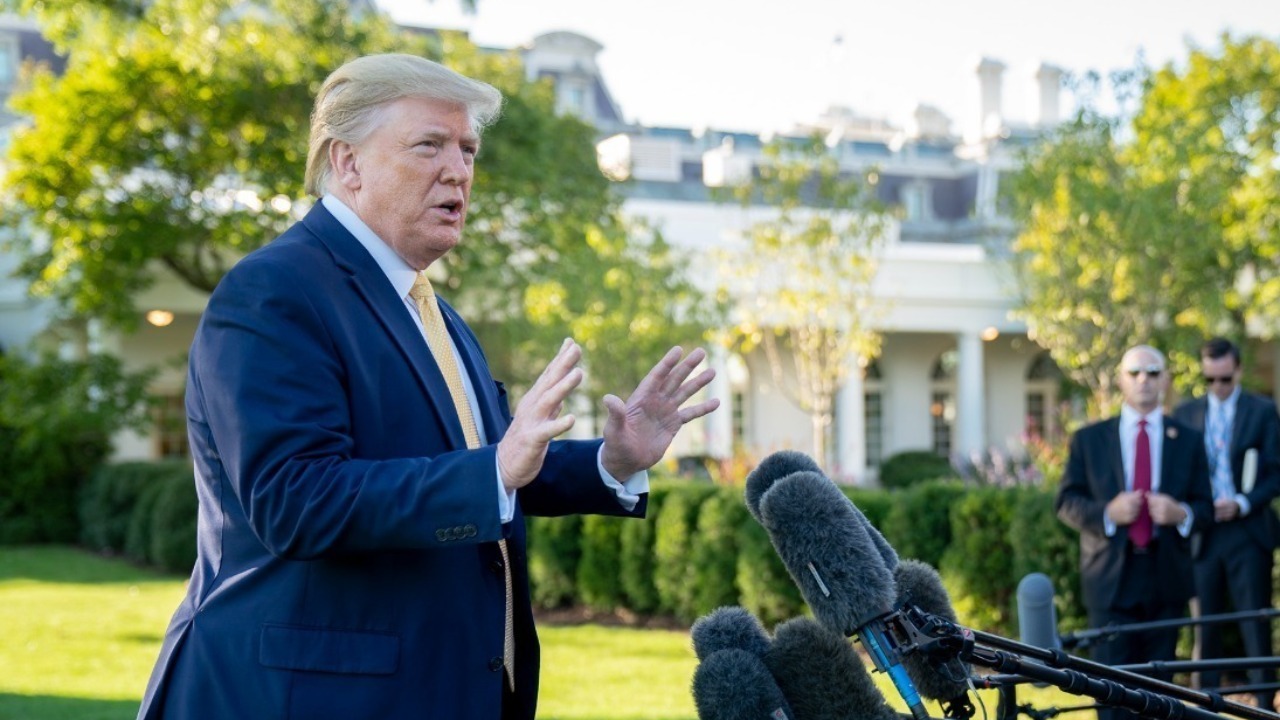
The return of President Trump has reset Washington’s priorities, from tariffs and industrial policy to tax incentives and child investment accounts. For investors, the question is no longer whether the rules are changing, but how to position portfolios so those shifts become tailwinds instead of shocks. I see three big levers that matter now: where federal money is flowing, which sectors the White House is favoring, and how households can use new tools to protect and grow their own balance sheets.
Trump’s new world order is not abstract geopolitics, it is a concrete mix of budget choices, trade confrontations, and targeted tax breaks that are already moving prices in stocks, bonds, and everyday goods. To cash in on that shift, you need to understand the policy plumbing, then translate it into sector bets, personal tax strategies, and spending decisions that reflect the new reality rather than the old one.
Follow the money in Trump’s 2026 budget and tax agenda
Any attempt to profit from a changing policy regime starts with the federal budget, because that is where priorities become line items. Trump’s fiscal year 2026 proposal would keep base discretionary spending level in nominal terms, while carving out specific increases for defense and border security, a pattern that signals continued support for contractors tied to national security and immigration enforcement. According to What, the 2026 budget features an overall cap on base discretionary spending but allows some agencies to see a $2.8 billion increase, which is a clear tell on where federal demand is likely to grow.
Tax policy is the second pillar of this cash flow map. Earlier this year, Trump pushed through the OBBBA, and tucked into that package are Trump accounts, a new government created investment program for children that lets Individuals contribute up to a capped amount each year. Reporting on the economic policies shaping Trump’s return notes that Tucked into the OBBBA, Trump accounts are administered with input from Treasury’s Office of Tax Analysis, which underscores that this is not a symbolic gesture but a structured, long term savings tool. For families, that means a new tax advantaged bucket that can hold broad index funds or targeted ETFs, effectively turning a political initiative into a compounding engine for the next generation.
Use Trump Accounts and household strategy as your personal policy hedge
At the household level, the most direct way to harness Trump’s policy shift is to use the new Trump Accounts aggressively and intelligently. Treasury and the IRS have already issued guidance in Notice 2025 68 PDF, which lays out how these accounts work, including eligibility, contribution mechanics, and annual limits. The guidance explains that Notice 2025 68 PDF provides a general overview of Trump Accounts and confirms a contribution limit of $5,000 per year, which gives parents and grandparents a concrete target for annual funding. I would treat that ceiling as a planning anchor, much like the 529 or Roth IRA limits, and automate contributions so the political window for this benefit does not close before you have fully used it.
Beyond new accounts, the broader wealth management playbook in a volatile policy environment is to focus on what is actually within your control. A recent market note stresses that investors should Focus on what’s possible to control, from asset allocation to spending discipline, rather than trying to outguess every tariff headline or diplomatic flare up. In that spirit, I would pair Trump Accounts with a diversified core portfolio and a clear cash reserve, using the new tax shelter for long horizon equity exposure while keeping short term needs in high quality instruments like agency MBS and CMBS, which are highlighted in Focus as part of a resilient income strategy.
Target the sectors Trump’s second term is tilting toward
On the equity side, the clearest way to monetize Trump’s new order is to overweight the sectors that his Second Term is structurally favoring. Legal and policy analysis of what is Ahead for Nine Key Sectors suggests that antitrust enforcement will be more selective, with Trump’s administration expected to focus on perceived abuses by large technology platforms while easing pressure on other industries. The Outlook is that Trump will still support bipartisan scrutiny of dominant firms, but with a tilt toward deregulation in areas seen as critical to national competitiveness, a stance outlined in Antitrust. For investors, that argues for careful stock picking within Tech and communications, favoring companies aligned with domestic infrastructure, cybersecurity, and defense applications over those most exposed to content moderation or data privacy fights.
Market oriented guides to Trump’s Second Term point to a cluster of industries that have historically benefited from his mix of tax cuts, deregulation, and reshoring rhetoric. One breakdown of the Top 5 Industries for Stock Trading under Trump’s Second Term highlights that Tech stocks underwent substantial growth in the prior Trump era, helped by lower corporate tax rates and a friendlier regulatory tone, and flags energy, defense, and traditional manufacturing as additional winners. I would not chase every meme name in these spaces, but I would build watchlists of profitable mid cap industrials, pipeline operators, and software firms with heavy federal or state contracts, using tools like Top Industries for Stock Trading to identify which subsectors are seeing renewed retail and institutional interest.
Trade the tariff shock: from portfolios to big ticket purchases
Trump’s revived tariff strategy is the most visible piece of his new world order, and it cuts both ways for investors and consumers. President Trump has leaned on the International Emergency Economic Powers Act to impose IEEPA tariffs on a wide range of trading partners, lifting average U.S. tariff rates from historic lows to levels that are materially higher on targeted goods. According to a detailed analysis of the Trump tariffs, the Trump tariffs are the main driver of this shift, with average rates on affected imports rising by several percentage points, all before foreign retaliation, as summarized in the Key Findings. For equity investors, that creates relative winners in domestically focused producers and pain for import heavy retailers and manufacturers that cannot easily rework their supply chains.
For households, tariffs show up first in the price tag on cars, appliances, and electronics, which means timing matters. Personal finance experts advising on Trump’s tariffs have suggested that if you were already planning a big purchase, such as a new SUV or a high end refrigerator, it can make sense to accelerate that decision before the full price impact filters through inventories. One widely cited set of tips notes that consumers should go ahead and make that big purchase if it was already in the budget, because automakers like Toyota have already warned of price hikes on some of its top selling cars, guidance captured in Apr where Singletary lays out a practical playbook. I would extend that logic to home improvement projects that rely heavily on imported materials, front loading them where possible while keeping discretionary gadget upgrades on a slower, more price sensitive schedule.
Position for global realignment and the broader market cycle
Trump’s foreign policy is also reshaping where capital flows, particularly in regions where Washington is trying to counter Beijing. In Latin America, the Trump administration is signaling a push to roll back China’s advances by encouraging supply chain shifts and new investment that loosen Beijing’s chokehold on critical minerals and infrastructure. Reporting on this strategy notes that for most countries in the region, closer economic ties with Beijing were driven by economic considerations, not ideological alignment, which leaves room for U.S. backed projects to compete on financing and market access, a dynamic described in Jan. For investors, that suggests looking at U.S. listed companies with Latin American logistics, mining, and energy exposure, as well as local sovereign and corporate bonds that could benefit from a new wave of infrastructure deals.
All of this is unfolding against a market backdrop that is more constructive than the political noise might imply. A 2026 market outlook notes that in 2025, equity gains broadened beyond mega cap technology leaders, with cyclical sectors such as industrials and financials participating more fully as the economy digested higher rates and shifting policy. The same outlook points to ongoing investment in areas like AI, EVs, and heat pumps as structural growth drivers, even as valuations in the largest Tech names cool, a pattern captured in Jan. In that environment, I would lean into a barbell strategy, pairing quality cyclicals that stand to gain from Trump’s domestic focus with selective exposure to innovation themes that transcend any single administration.
Lean on deregulation, alternative assets, and disciplined risk taking
Underneath the headlines, Trump’s economic philosophy has not changed much: it is still a Return to Deregulation and National Priorities that favors lower taxes, lighter rules, and a bias toward domestic production. A strategic guide to what to invest in now that Trump won describes The Trump Administration’s Economic Vision as one that supports traditional energy, infrastructure, and alternative assets like Bitcoin operations, arguing that these areas could see friendlier treatment from regulators and tax authorities. The same analysis notes that The Trump agenda is likely to keep emphasizing national projects over multilateral climate commitments, which can create opportunities in pipelines, refineries, and mining, as outlined in The Trump. I would treat these as tactical allocations, sized modestly within a diversified portfolio, because policy tailwinds can reverse quickly if public opinion or congressional control shifts.
Finally, it is worth remembering that even in a Trump driven market, the biggest gains often come from owning broad exposure to the sectors that benefit, rather than trying to guess the next headline stock. A practical way to express that view is through sector ETFs that track Industrials, Financials, and Energy, combined with a core allocation to the S&P 500 or total market funds. For investors who want to lean more directly into the Trump trade, some platforms have curated lists of stocks and industries to watch under Trump’s Second Presidency, highlighting how Tech, defense, and traditional manufacturing have responded to past policy cycles, as seen in Tech. I would use those lists as a starting point, not a shopping cart, layering in my own risk tolerance, time horizon, and tax situation before committing capital to Trump’s new world order.
More From The Daily Overview

Grant Mercer covers market dynamics, business trends, and the economic forces driving growth across industries. His analysis connects macro movements with real-world implications for investors, entrepreneurs, and professionals. Through his work at The Daily Overview, Grant helps readers understand how markets function and where opportunities may emerge.

